By Rick VanSickle
We’re sitting at a table under a giant canopy, birds are chirping and the view looking out to the gently sloped, perfectly manicured Mason Vineyard is breath-taking.
We’re smack dab in the middle of this summer’s punishing heat dome, yet a cooling breeze is cascading down the escarpment making it quite comfortable as owner and winemaker Kelly Mason prepares to pour her range of exciting new vintage wines for us to taste.
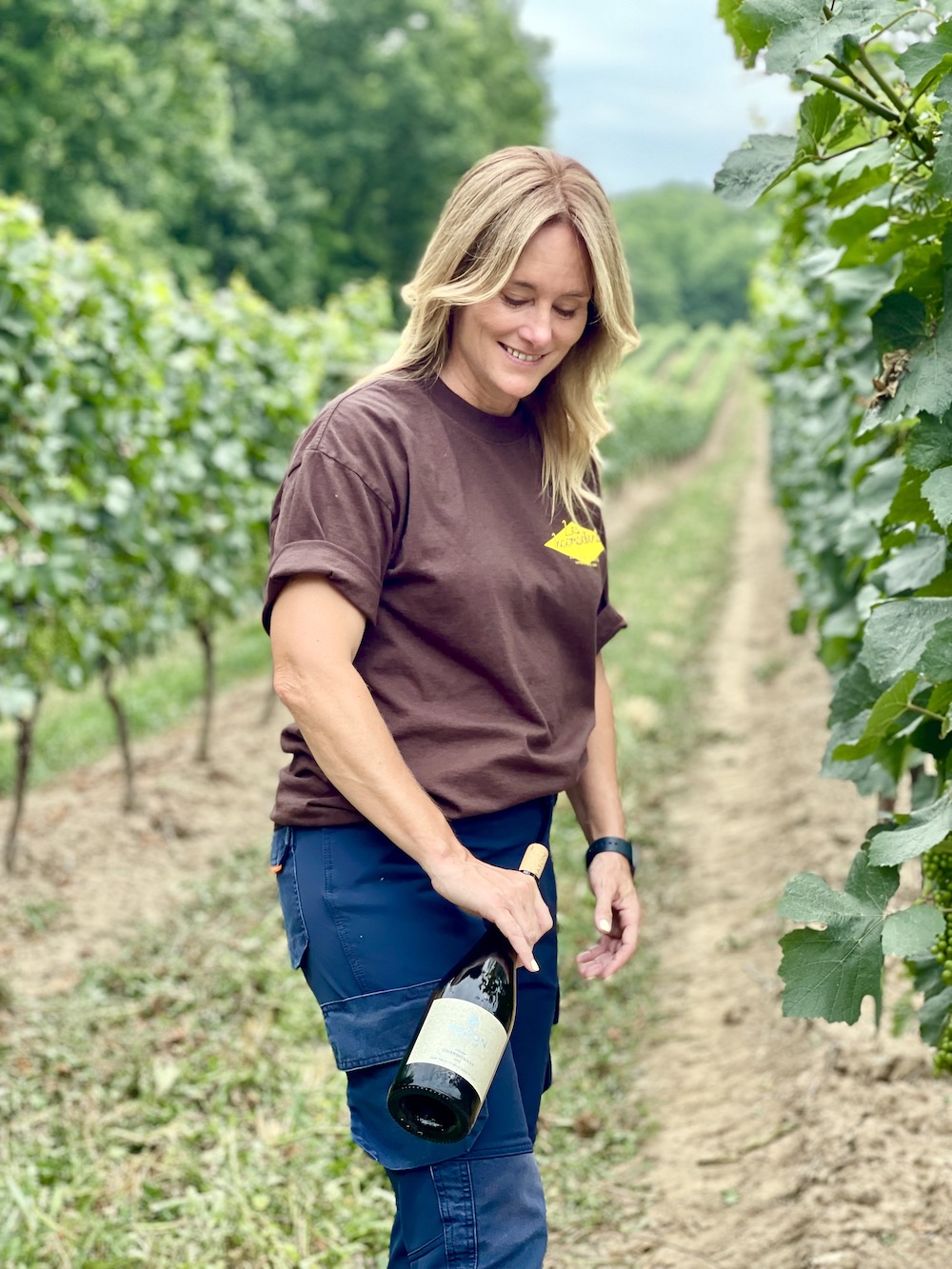
It’s the best of times for Mason (above). Her premium lineup of terroir-driven estate wines, mostly Pinot Noir, Chardonnay and Cabernet Franc, and her eclectic Collab Series with other noted winemakers, is well established and her dedicated customers are quick to snap up whatever she puts into bottles.
As I look around the peaceful property just off Old Highway 8 and a stone’s throw away from Tawse Winery in the sweet spot of the Twenty Mile Bench, the latest evolution of Mason’s project becomes evident. A full-on guest experience has been added to Mason Vineyard in what she rightly calls a “game changer.”
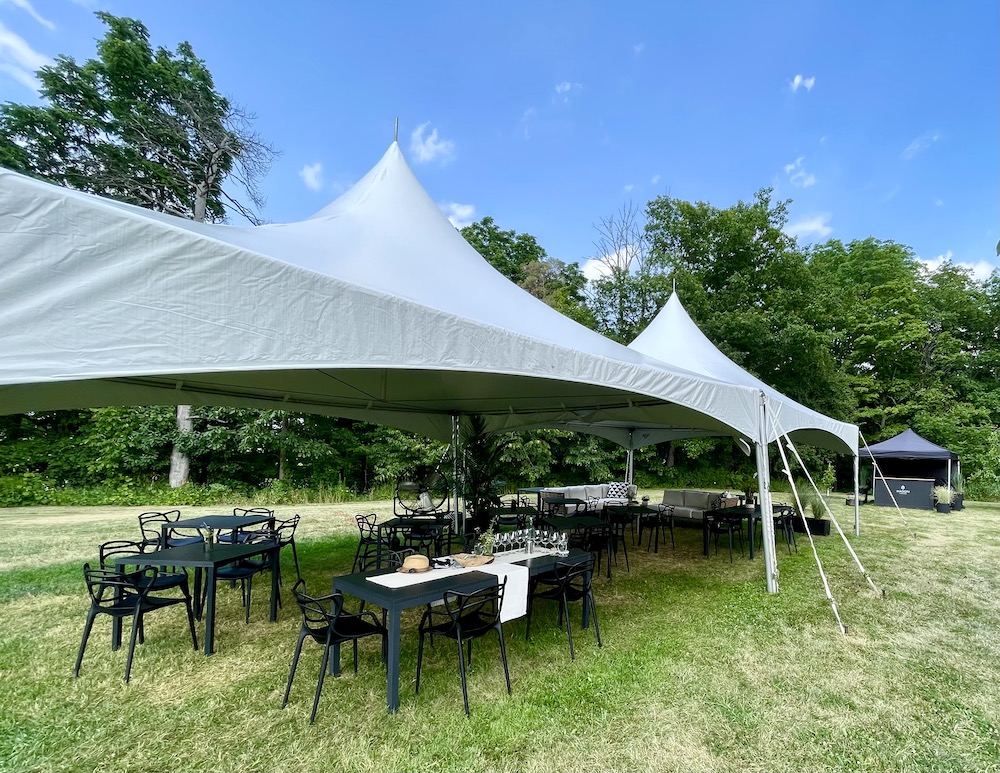
Mason says she likes to add something special every year to Mason Vineyard. The 2025 “surprise” is a multi-tiered, on-site tasting experience at various locations in and around the vineyard curated by herself and her new team of two sommeliers, two servers and other staff members now part of Mason’s growing squad. “I have a small team, and it blows my mind,” Mason says. “It’s a really great team, they really care.”
Several tasting stations are set up on the property where guests can choose different levels of service, some led by Mason herself and others with her new wine team. Here’s what you can expect by reserving your spot in advance here:
Taste the Vineyard
Discover the essence of Mason Vineyard with a seated tasting set among the vines. Hosted by a member of Mason’s hospitality team, this 50-minute experience features six Mason wines — an immersive experience through the distinct expressions of the estate’s single vineyard site. $40 per person for 50 minutes. Complimentary for Mason Circle members + 3 guests.
Sip and Savour
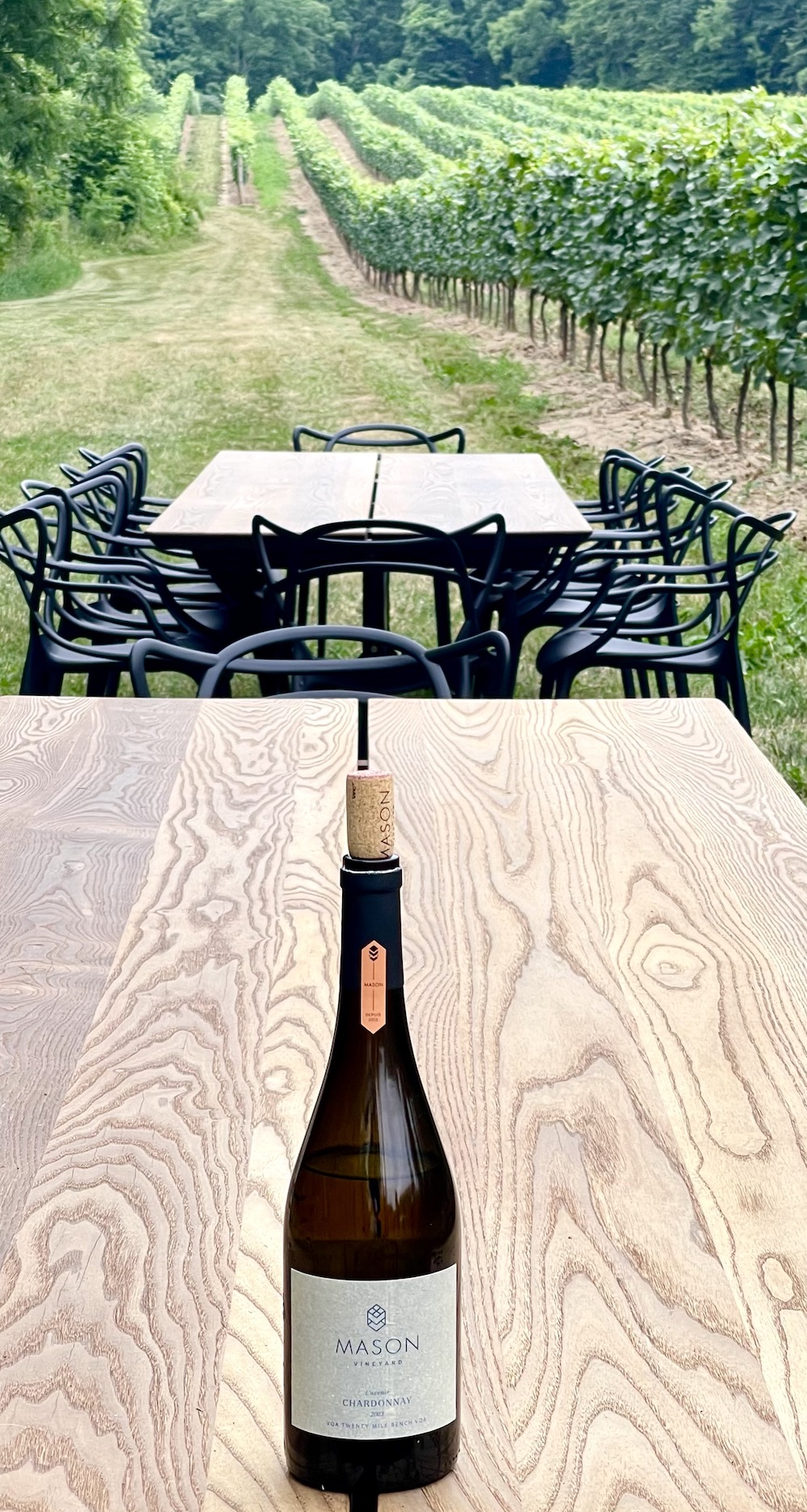
Discover the beauty of Mason Vineyard at your own pace. This relaxed, by-the-glass experience invites guests to choose from a selection of the estate’s wines and enjoy them at your leisure. $15 per glass for 50 minutes. Not complimentary for members.
La Propriétaire
Join founder and winemaker Kelly Mason for an immersive experience that brings the story of Mason Vineyard to life. From vineyard to glass, explore the philosophy, farming, and winemaking behind the estate-grown wines — all in the company of the person who knows them best. This guided 75-minute visit includes a walking tour of the vineyard and a seated tasting, led by Mason. Discover firsthand how site, farming, and minimal intervention winemaking shape each of our estate wines. $60 for 75 minutes. Complimentary for The Enthusiast, Mason Circle members + 3 guests.
Note: You can also purchase Mason wines in the new retail store during regular hours from Thursday to Sunday, 11a.m. 6 p.m.
Mason is particularly proud of the fact that she has so many dedicated fans of her wines and all but one of the experiences are free to them. “Those customers are those who have been with me from the very beginning,” she says. “It’s been crazy, the coolest thing for me. These customers just keep coming back. So, this is my way of thanking them.”
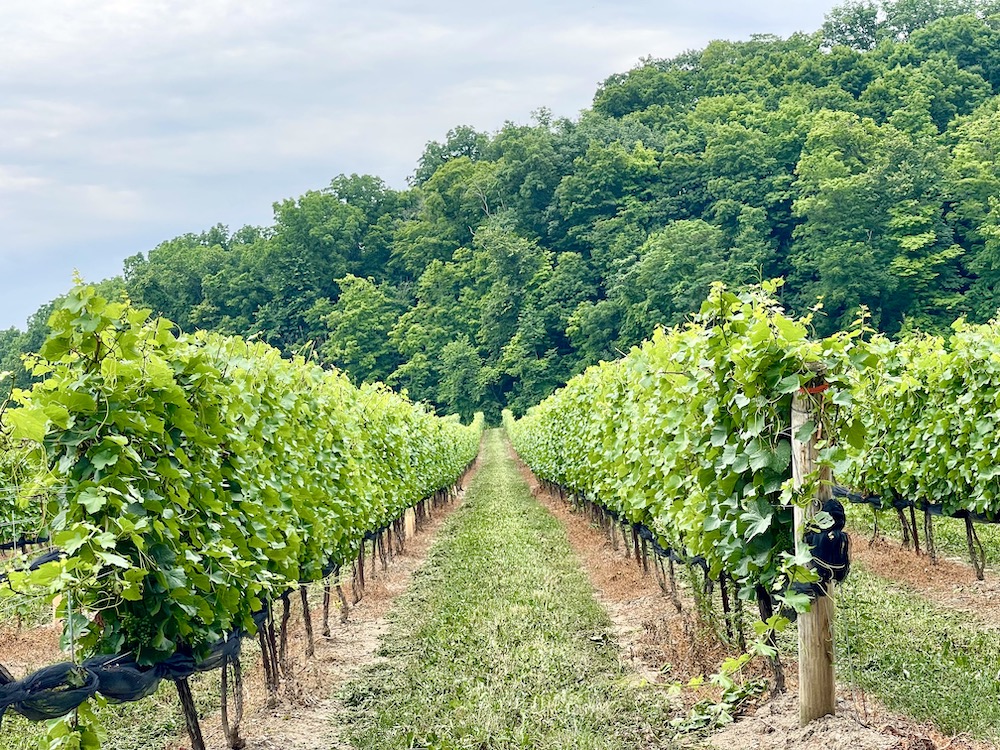
The vineyard consists of 13 acres planted to mostly Chardonnay, Pinot Noir, and Cabernet Franc with older vine Cabernet Sauvignon, that Mason is considering replanting.
Mason’s approach to wine is not new or unique to Niagara, she says. “We just exist in a hard-to-reach corner of the winemaking spectrum. And being small and obsessive means our winery businesses and activities don’t follow the convention of higher volume wineries.”
The passion here for Mason and long-time assistant winemaker Brooke Husband is “to make small lot wines from single vineyards on exceptional terroir, which are expressions of place following obsessive vineyard management methods and low yields while pursuing sustainable or organic practices.” The grapes are hand harvested in clusters with attentive hand sorting, then fermented from wild yeasts, avoiding manipulation and intervention and “attentively aged with appropriate time to express the vintage.”
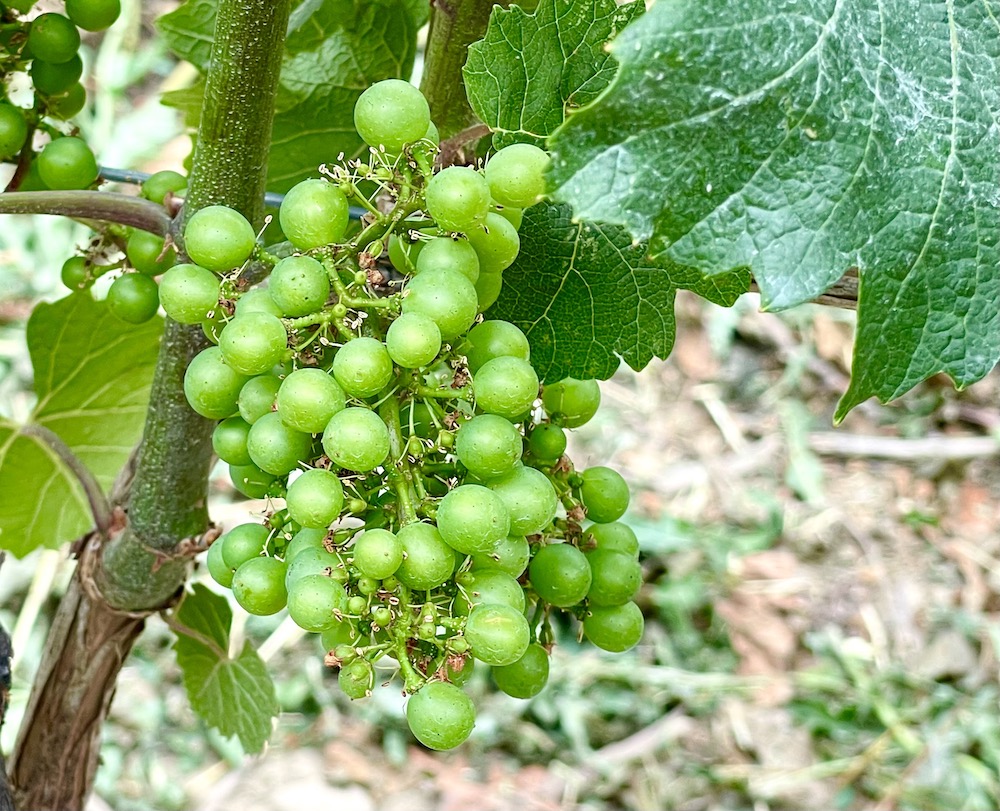
For Mason, “this philosophy and process is our definition of quality. And those who love Mason wine understand our passion and purpose, and that exceptional wine is as much about the people and place as it is the experience of tasting it.”
Single-vineyard Pinot Noir and Chardonnay is “my life’s passion, I searched for the most ideal site to grow these varieties; one which would best suit my goals for taste profile, be most favourable for the health of the specific French clones of Chardonnay and Pinot Noir that I sought to grow while importantly allowing me to make the wine using low intervention, native wild yeasts from the vineyard and as close to organic as the environment would allow. I found what I was looking for with Mason Vineyard’s site.”
The Mason Vineyard brand has grown from her beloved Pinots and Chards to include Cabernet Franc and her popular Collab Series. Now part of the mission at Mason Vineyard, Mason works collaboratively with peer winemakers, both new and established, “because this strengthens our region and each other,” she says. “When two winemakers work together to make one wine, they share knowledge and inspiration resulting in exciting new approaches and discoveries. And it’s also fun.”
One of the cool things about the Collab Series, Mason points out, is that the wines are created from grapes sourced from other vineyards and the production, tanking and cellaring is at other wineries. “It’s within these variables that so much of the experimentation and creativity is put into play,” Mason says.
To date, collaborators have included Husband, Thomas Bachelder (Bachelder Wines), Barb Condotta (Honsberger) and Craig McDonald (Trius, Peller), and as you will see in this tasting report, JL Groux (Stratus).
I sat down with Mason, who we should note, is also the winemaker at Domaine Queylus, to taste through her newest wines. Here is what I liked:
The sparkling wines
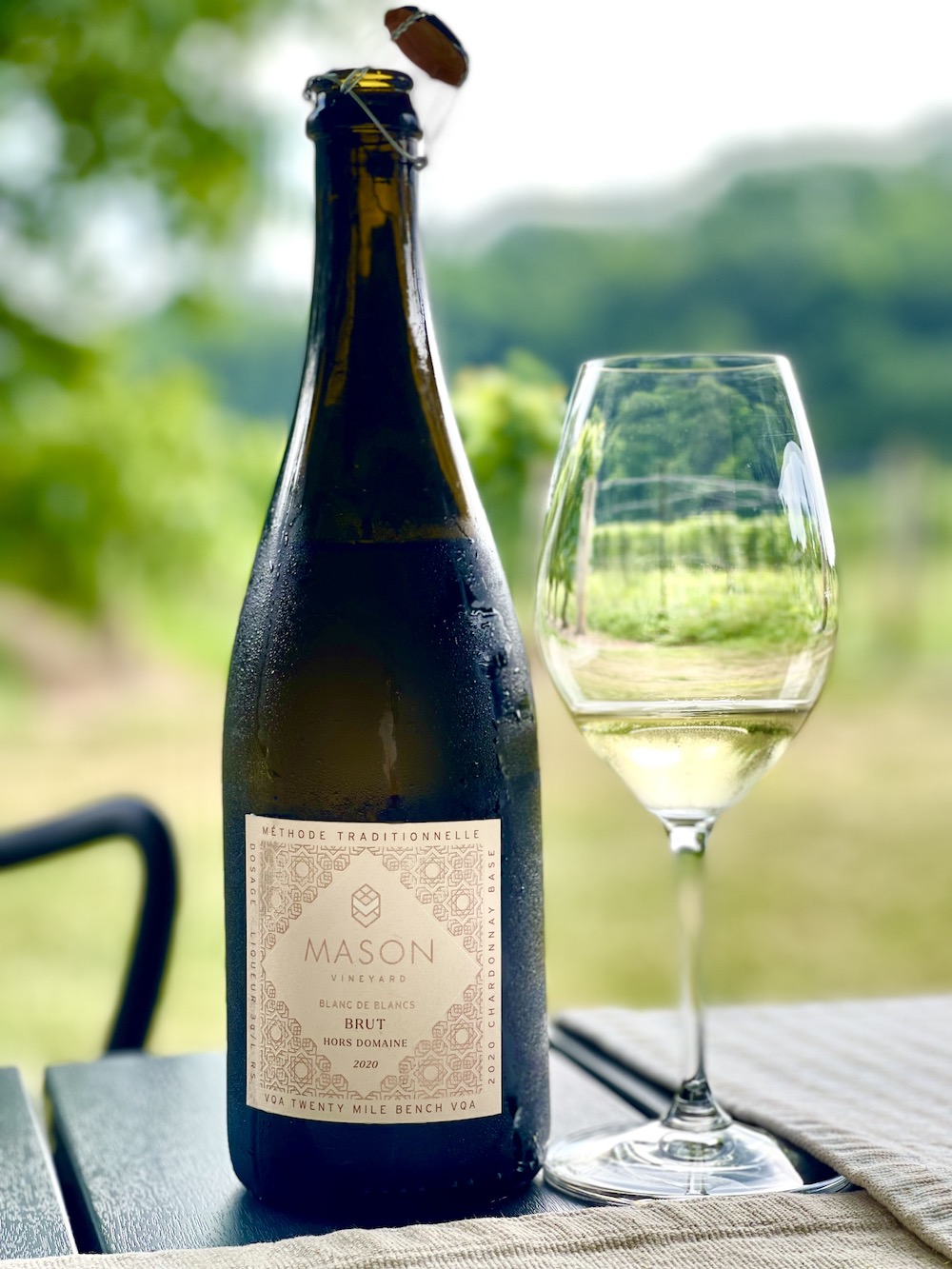
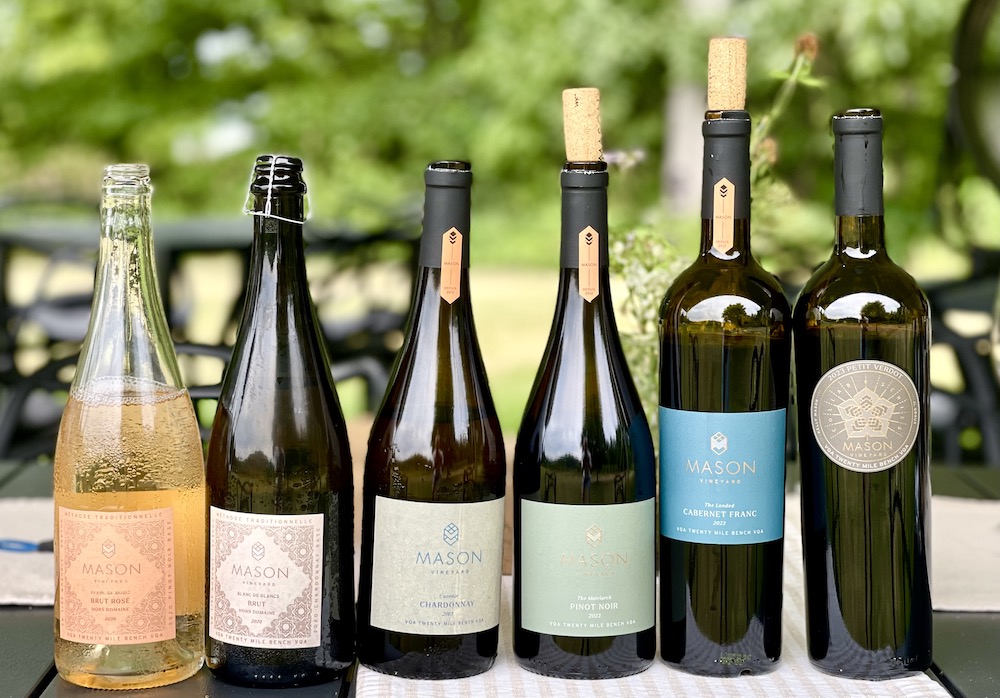
Mason Vineyard Blanc de Blancs Brut Hors Domaine 2020 ($55, 93 points) — This méthode traditionnelle Blanc de Blancs was aged on its lees for 48 months with a 2 g/L dosage of still Chardonnay. This lovely sparkler starts with a subtle flinty/lanolin note followed by intense yet elegant lemon brioche, pear/quince, nectarine, and saline with a gentle bead in the glass. It’s more vigorous on the palate with flinty/stony notes, fresh saline, pear, apple, lemon zest with a rounded texture that’s gains weight through a fresh and racy finish. Very fine bubbles with room to cellar 3-4 years.
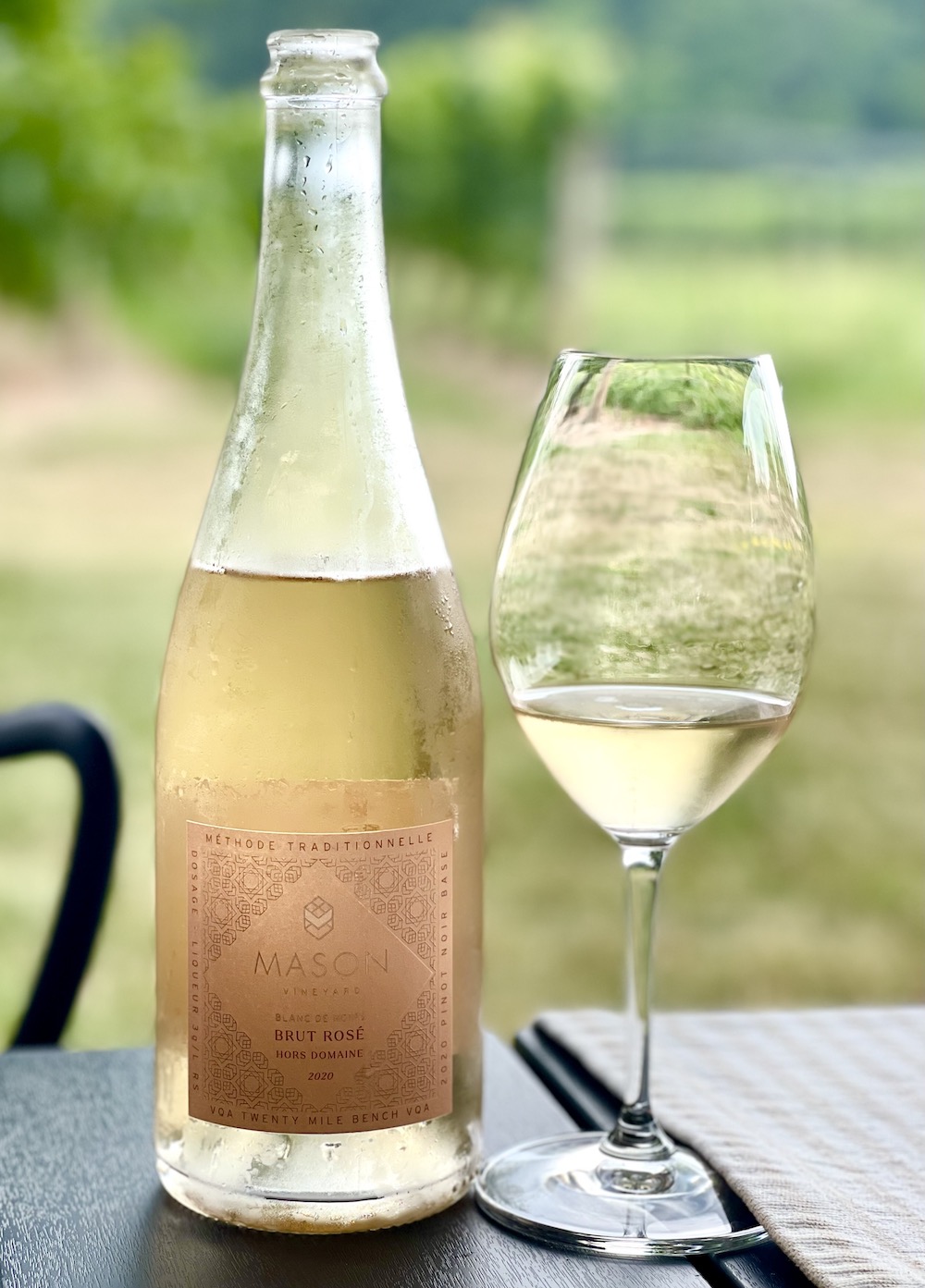
Mason Vineyard Sparkling Blanc de Noirs Rosé Hors Domaine 2020 ($55, 94 points) — This, too, rests on its lees for 48 months. It’s a zero dosage (brut nature) 100% Pinot Noir sparkling wine (topped up with its own still wine) with a light copper colour in the glass. It shows an elegant, persistent bead in the glass with a nose of fresh red berries, red currants, floral notes and lemon in a pure and racy style. The bubbles perk up on the palate with a subtle reductive note that gives way to wild raspberries, citrus zest, cran-cherries, a creamy texture and saline through a lifted, long and echoing finish. Very fine sparkling wine that will gain some fat and a silkier texture with cellaring through 2032.
The Chardonnay

Mason Vineyard L’Avenir Chardonnay 2023 ($48, 95 points) — The estate Chardonnay was planted in 2017-2018 to Clone 76 with the first vintage released in 2021. The wine is wild fermented and aged in mostly neutral French oak barrels for 17 months. “There’s something cool within this block,” Mason says. “Yield and growth are becoming more balanced compared to its more unruly early years. With no changes in the winemaking approach, I can’t help but wonder if the site itself is starting to speak — shaping a style that gently shifts with Mother Nature’s influence yet remains anchored by the consistency of clone and place.” The nose is bright and minerally laden with saline and stones followed by fresh pear, yellow apples, lemon biscuit, white flowers and integrated, elegant spices. It turns more concentrated and creamier on the palate with ripe orchards fruits, flinty/stony notes, lemon zest and just hinting at spice through a long, lingering and lifted finish. A beautifully constructed Chardonnay from young vines that will only get better as the vines age. Can age well through 2031.
The red wines
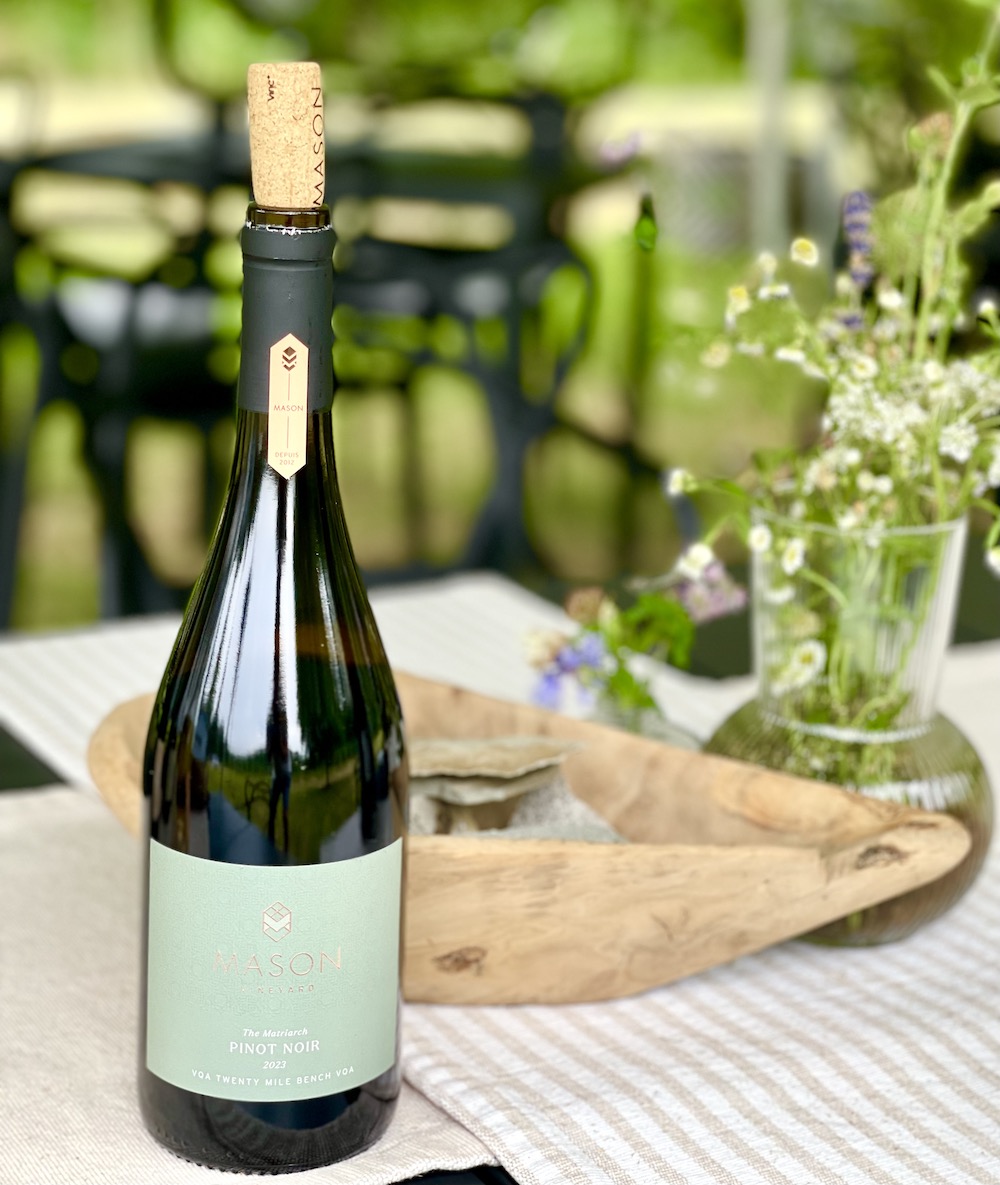
Mason Vineyard The Matriarch Pinot Noir 2023 ($60, 93 points) — The 2023 vintage wasn’t the easiest to deal with, says Mason. “We saw some unforgiving rains in August, so we made a point to open up the canopy as much as possible for better airflow. We thinned the fruit — twice. Then came the dry miracle of September. Without that sun and stretch of minimal precipitation, the entire harvest across all varietals would have looked very different.” The Pinot, from 35-year-old vines, is aged in French oak (no new barrels) for 18 months and is finished unfiltered. Such an expressive nose of ripe dark cherries, black raspberries, a touch of cassis, earthy/savoury notes, lavender and elegant spice accents. It’s pure joy on the palate with concentrated red berries, a velvety texture, anise, and earthy notes that are revealed in layer after layer all leading to a long, finessed finish from the mouth-watering acidity. Lovely personable Pinot Noir that can cellar through 2033.
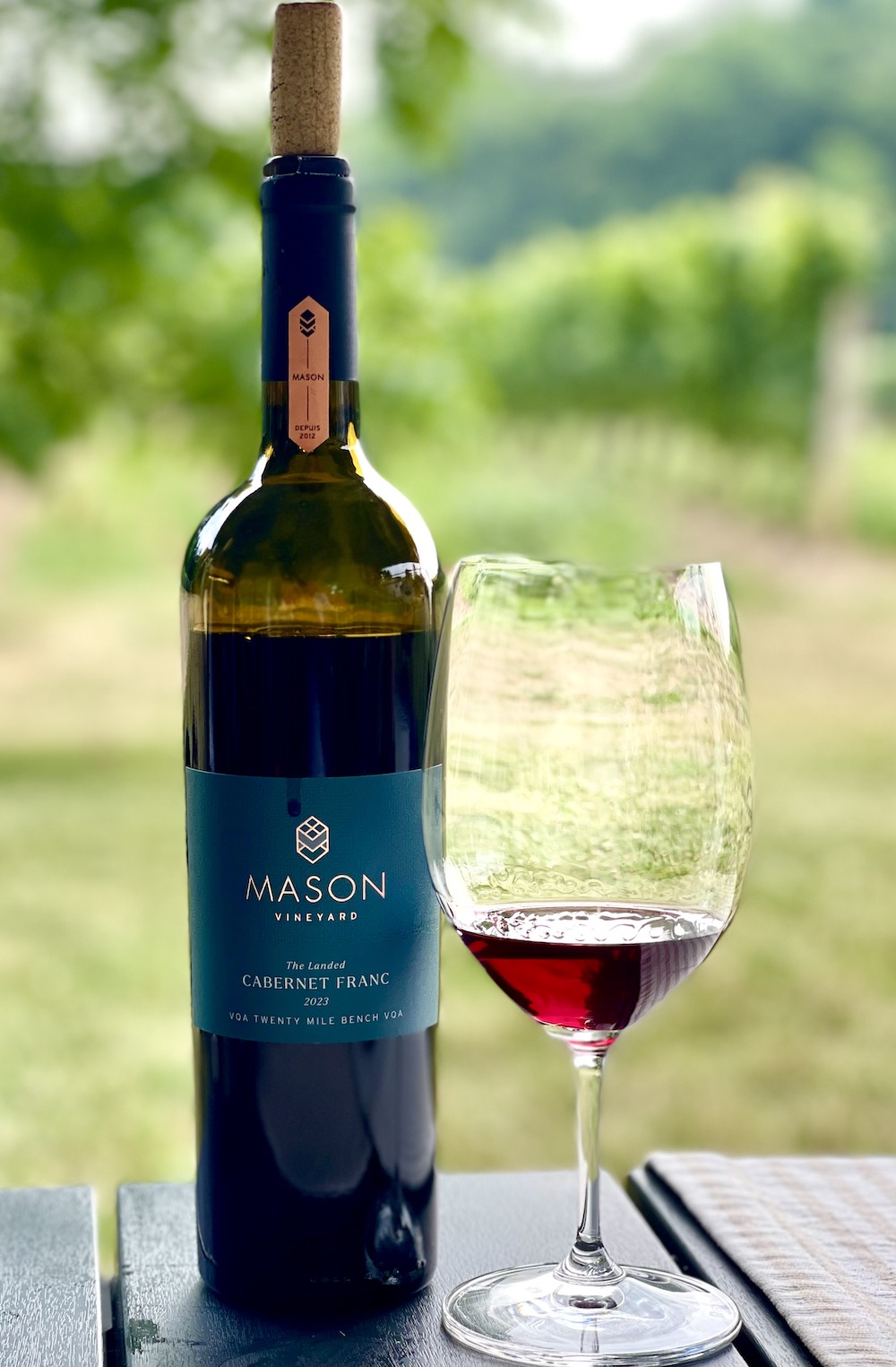
Mason Vineyard The Landed Cabernet Franc 2023 ($60, 93 points) — “My goal is always to produce a pure expression of the Twenty Mile Bench,” says Mason. For this 100% estate Cabernet Franc, Mason chose a “hands off” approach with no new oak used in the 18-month oak aging process and finally bottled unfiltered. The nose is pure and expressive with notes of wild, brambly raspberries, Morello cherries, anise, savoury herbs, leather and integrated spices. The ripe tannins add structure and weight on the palate to go with a melange of red berries, aniseed/pine needles, earthy/savoury notes, chalky minerality, subtle spices and a long finish bolstered by racy acidity. Can cellar through 2034.

Mason Vineyard Mason + Groux Petit Verdot 2023 ($55, 94 points) — Mason chose the finicky Petit Verdot grape, most famous for playing a supporting role that adds colour and tannins to Bordeaux red blends, for the next wine in her Collab Series that features wines made with other Niagara winemakers. For Petit Verdot, Mason turned to JL Groux, Stratus winemaker (semi-retired), to see “if he would mentor me” as she embarked on a single-variety expression of this grape. Stratus is one of the few wineries in Canada that makes a single-variety Petit Verdot, so it was a no brainer to ask for Groux’s help.
Groux is a “true pioneer of Niagara winemaking,” noted Mason. “Early in his remarkable career, the first wine he ever made was a Petit Verdot. While learning at Château Giscours (Bordeaux), the winemaker entrusted him with the responsibility of crafting that very wine. JL, like any eager intern, was thrilled at the thought of working in a beautiful chateau. That excitement quickly shifted when he was led to a stone cellar with two concrete tanks, and the winemaker simply said, ‘This is where you’ll make the Petit Verdot.’ He began learning typical fermentation aromas of the grape and how to work with its structure, acid and tannins. He is known as one of the greats in Niagara and an expert in crafting intricate assemblages of various grapes.”
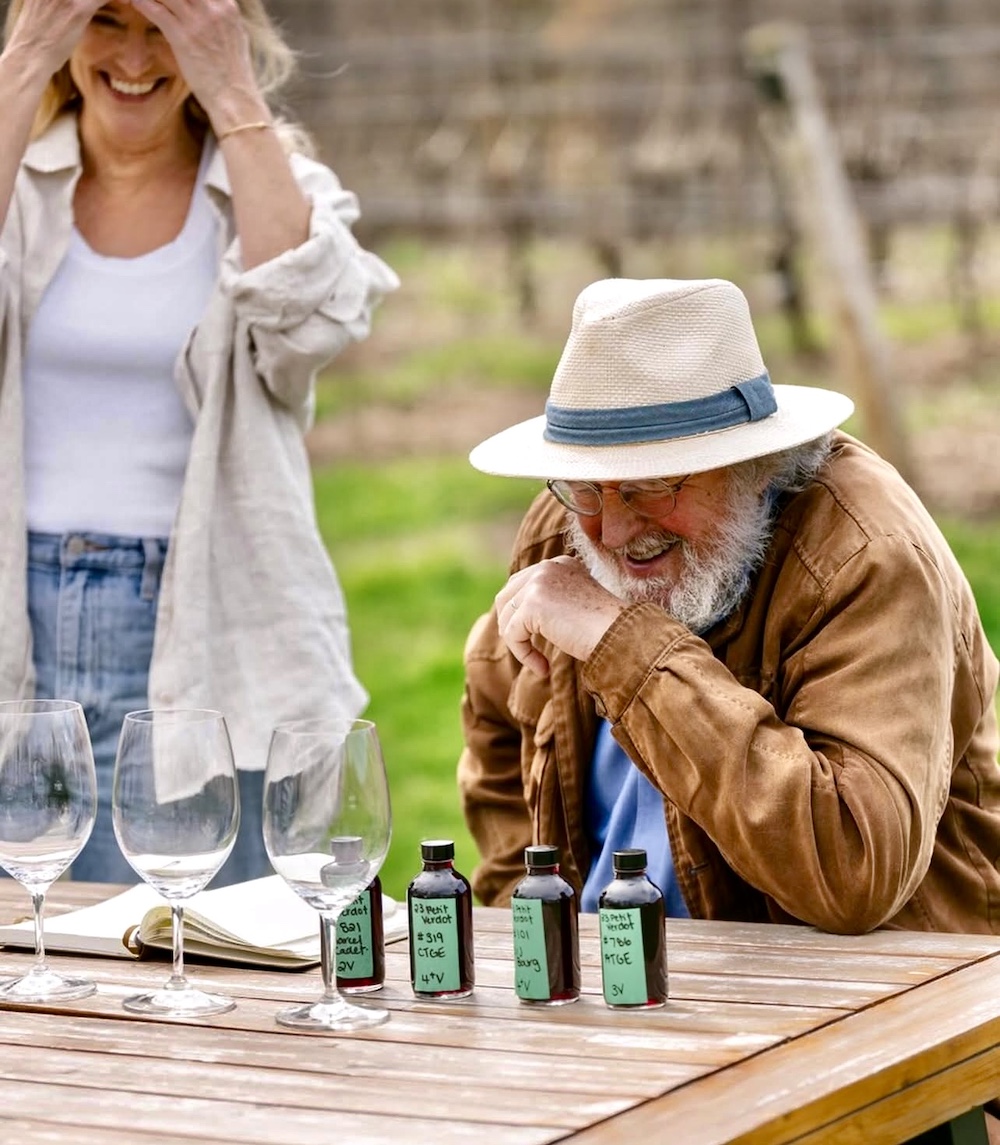
Mason said she was lucky to “have his generosity in mentoring me through my first experience with this variety. It gave me the chance not only to learn from his depth of knowledge, but also to get to know him better. I’m truly touched that he said yes to this collaboration.”
Mason tasted several vintages of the Stratus Petit Verdot and learned from Groux how he approached making the wine before beginning the process of collaborating on the project using grapes sourced from the Edgerock Vineyard (close to Mason Vineyard). Groux was involved in all of the barrel sampling from beginning to end and helped pick out the best barrels for this wine. The wine spent 18 months in French oak, none of it new oak as per Groux’s request. It was wild fermented in stainless steel, destemmed whole berries to tank (no crushing), with full malolactic and on skins for 30 days before it went to barrel.
It’s nearly opaque in the glass, one of the darkest coloured red wines you will find, with a proudly fruity nose of black currant jam, ripe plums, cassis, tar, violets, blueberries and subtle spice notes. The tannins are grippy but not over-whelming with a nice ripeness to the dense, concentrated dark berries, purple plums, floral notes, blueberry pie and toasted spice notes. The finish is long with mouth-watering acidity keeping it lively and lifted. A little time in the cellar will soften the tannins and bring this wine into balance. Can cellar to 2035.

Mason Vineyard The Place and Time Bordeaux Blend 2023 ($48, 92 points) — The blend is 58% Cabernet Franc, 25% Cabernet Sauvignon, and 17% Petit Verdot. Each varietal was wild fermented individually at harvest and remained on skins for more or less 22+ days and was aged in barrel for 18 months and bottled unfiltered. “Naming this wine wasn’t easy. For a while, it was simply called Bordeaux Blend,” says Mason, “because nothing else quite felt right. Then it hit me — these varietals have been growing side by side for years, and the decision of when to bring them together is just as important as where they were grown. “Working with JL on the Petit Verdot was a huge inspiration. He brought the experience and insight I lacked with the grape, and his collaboration opened up new possibilities. It made me wonder: why not blend all three?” Mason gives credit where is due — “Petit Verdot is the quiet hero here. At just 17%, it anchors the blend beautifully. It’s true what they say: a little Petit Verdot goes a long way. You can absolutely feel its impact — bringing focus, depth, and a certain energy that ties everything together. It’s a powerhouse, even in small amounts.”
Mason is absolutely correct, the Petit Verdot dominates the nose and colour of this wine with persistent aromas of black currants, dark cherries, ripe plums, dried tobacco, cassis, subtle mulled herbs and integrated spice notes. It shows more poise and togetherness on the palate with all those juicy dark berries and kirsch melding nicely with the herbaceous notes, florals and herbs on a nicely structured frame, ripe tannins and length through the vibrant finish. This has good aging potential through 2035.
Comment here