
By Rick VanSickle
With 20 years of experience under his belt, the new winemaker at Kacaba Vineyards and Winery, Chris Robinson, is already making his presence felt.
Robinson took the reins at Niagara’s Kacaba in June of 2024 after previous winemaker Vadim Chelekhov left to make wine at Palatine Hills Estate Winery. With his extensive resume, the one winemaking job that eluded Robinson was the head winemaker role.
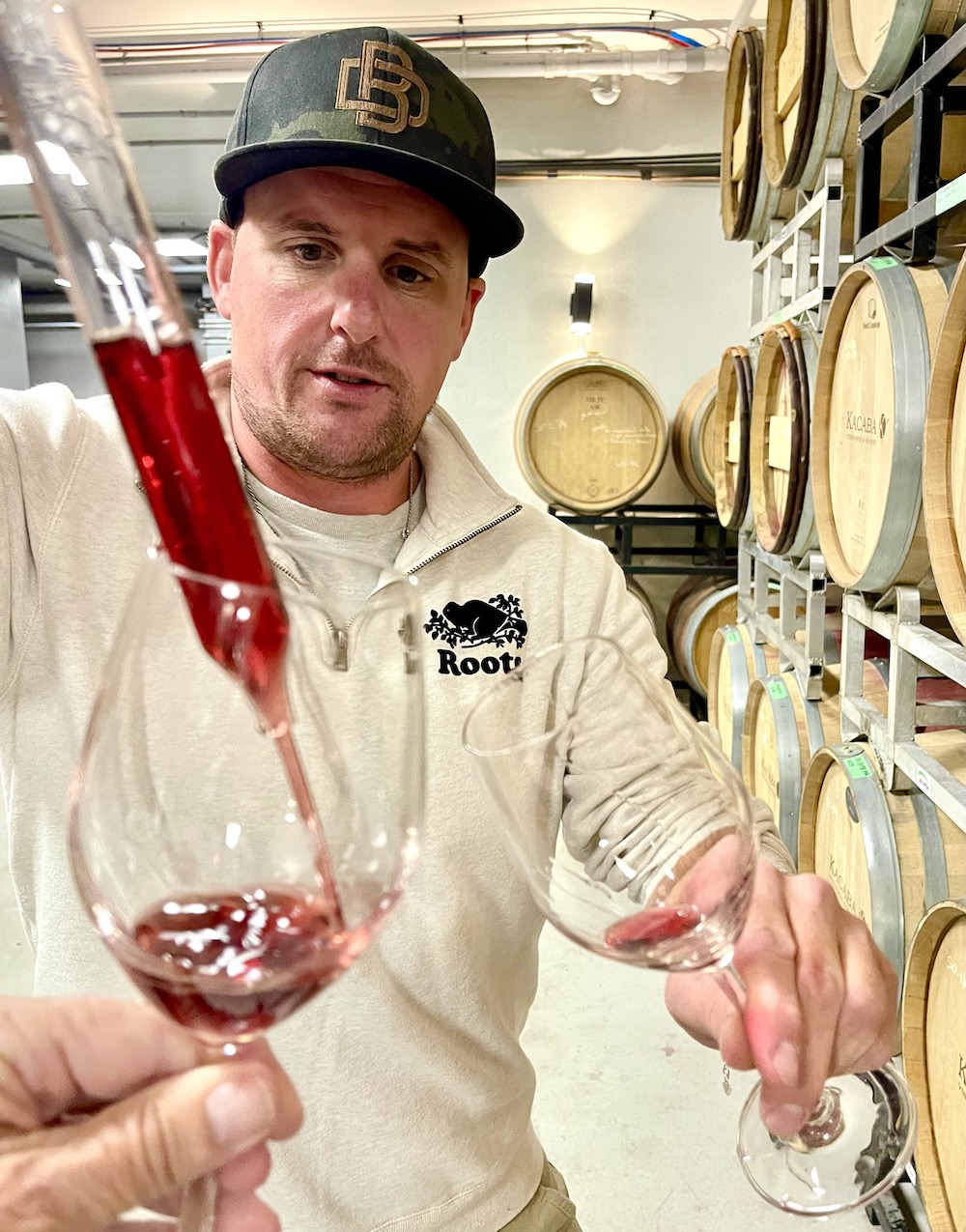
After graduating from the Niagara College wine program, Robinson (above, pouring barrel samples) took winemaking roles at Domaine Le Clos Jordanne, Fraser Gallop (West Australia), Jackson-Triggs, Chateau des Charmes, Lundy Manor Wine Cellars, The Good Earth Wine Co., Colaneri Estate Winery, Burning Kiln, Organized Crime, Foreign Affair and Megalomaniac. He maintains his role as the technical consultant for the oak barrel company Groupe Vicard Tonnelleries.
It didn’t stop there for Robinson, who also honed his knowledge and developed his style in the more established wine regions of Italy, South Africa, France, Italy, Argentina and Portugal. He was able to soak up the information passed on to him and implement new methods for crafting wine from myriad winemakers around the world before coming back to Niagara and applying it to the Ontario wineries he has worked with.
Robinson uses the term “simplexity” to describe his style of winemaking. “Wines that may seem effortless in the glass, but are the product of many nuanced, meticulous, and careful decisions,” he told Wines in Niagara. “That philosophy will carry through into Kacaba’s portfolio, where I aim to highlight the character of each vineyard block, grape variety and clone, elevating the wines’ purity and finesse while layering it with depth and complexity.”

He plans to use to use the information he has gathered from two decades of winemaking experience to enhance, not change, the core of red wines Kacaba is known for, Syrah and Bordeaux reds, “to show even greater refinement and fresh expressions that highlight the strength of our vineyard, as well as the white program.” He also plans to introduce new small-lot batch wines that “we feel (can) stand alone and are uniquely special. He points to the first 100% Viognier (reviewed in this report). The estate Viognier has always been blended into the Syrahs made at Kacaba, but Robinson wanted to see how it does as a single variety. Spoiler alert — it’s awesome!
Robinson inherits an already impressive and deep portfolio of wines at Kacaba, a premium, craft winery nestled on the Twenty Mile Bench and known for crafting a range of Bordeaux-style reds and Syrah, among other white varieties and blends.
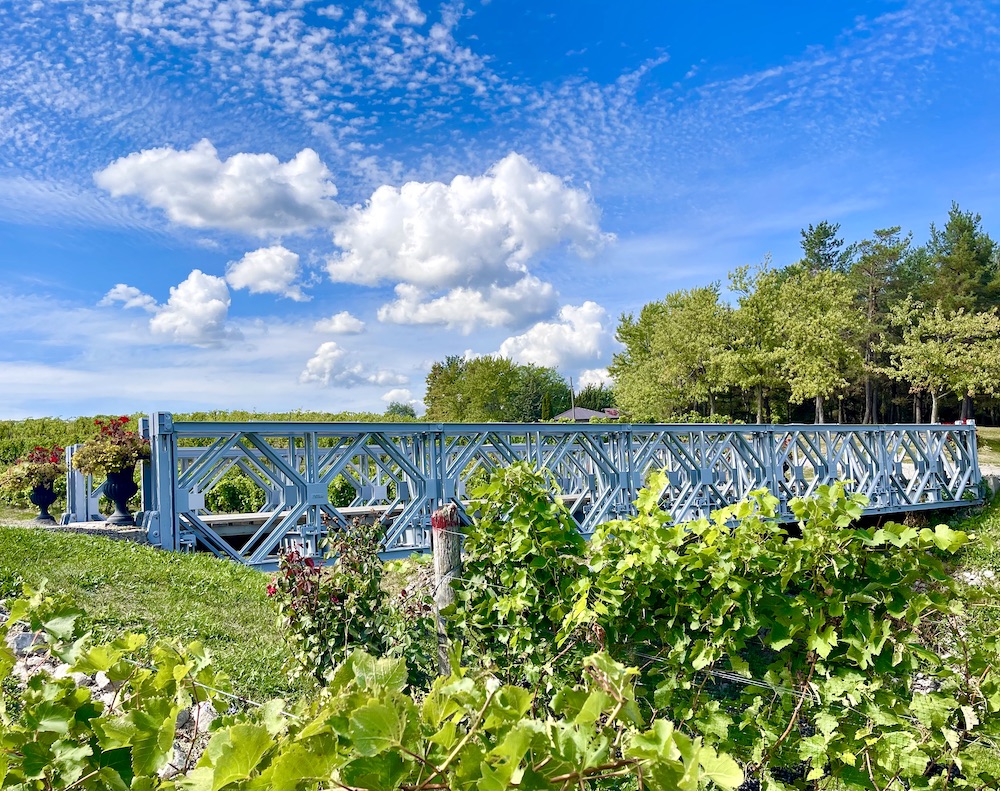
The winery is located in Vineland on King Street. The gate to the winery is flanked by Niagara ledge rock and leads up a curved driveway lined with sugar maples. A silver bridge spans a ravine terraced and planted with one of Ontario’s first major plantings of Syrah. On the other side of the ravine are rows of mainly Bordeaux reds with roses planted at the end of each row. Once there, the skyline of Toronto is visible across Lake Ontario.
The goal at Kacaba is to produce ultra-premium wines along with more moderately priced varieties necessary for the economic well-being of a winery. The wines are meant to be consumed on release for the moderately priced expressions or cellared depending on the variety and vintage.
The property where the vineyard and winery is located was slated for subdivision by the previous owner. Michael Kacaba, a Toronto Bay St. lawyer, of Ukrainian descent and from a Saskatchewan background, was able to purchase the property in 1997. He immediately set to work in planting the present vineyard and established a winery for the first vintage in 1999. The winery has enjoyed success from the get-go, crafting the big red wines it is known for but also affordable offerings, many of which can be found on the shelves of the LCBO.
Four burning questions for Chris Robinson

Wines in Niagara had some questions for the new winemaker after a tasting at the winery recently. Here, in Robinson’s own words, is what he had to say:
Wines In Niagara: You have a worldly view of winemaking through your various stops in the wine world. What has most inspired your style of winemaking from your experiences?
Chris Robinson: I think my travels have shown me that great wines are all deeply connected to place, the people and philosophies behind them. This balance of respecting terroir and tradition while embracing innovation has inspired my style. For example, my time in Margs (Margaret River, Australia) was especially influential — not only visiting, as with my other travels, but making wine firsthand.
I learned precision and restraint while crafting world class Chardonnay and Cabernet. It’s these unique expressions that have challenged how I think about wines today, how different regions treat wine, culturally and creatively. The attention or intention that goes into every great bottle is universal: it all starts in the vineyard despite the methods, and that just reinforced my same philosophy.

WIN: Kacaba has always been focused on Rhone and Bordeaux varieties planted on the site. How do you see that changing under your guidance?
Robinson: Kacaba has a proud history, and (its) strength has always been in Rhône and Bordeaux varieties, that foundation will absolutely remain the heart of the estate’s vision.
What I bring is an opportunity to explore these varietals and highlight this unique expression of our terroir at a deeper level. Focusing on refinement, creating wines that feel both approachable and sophisticated, while staying true to the Kacaba style that our fans know to love. Through attentive vineyard management, and elevated winemaking techniques that bring out purity, texture, and complexity.
Example: This year … I got our certification for sustainability in the vineyard and winery. This ensures our commitment to meet environmental, social, and economic standards.
WIN: How would you describe your approach to winemaking and how it will impact the Kacaba portfolio?
Robinson: My approach to winemaking is very hands-on. I believe that 90% of winemaking is cleaning — maintaining a spotless environment not only keeps the winery running smoothly but also allows the wines to shine without interference. From there, my role is more like a caretaker: guiding and ‘babysitting’ the wines from vineyard to bottle, ensuring they express the best of their site from that growing season. The term ‘simplexity’ comes to mind: wines that may seem effortless in the glass, but are the product of many nuanced, meticulous, and careful decisions. That philosophy will carry through into Kacaba’s portfolio, where I aim to highlight the character of each vineyard block, grape variety and clone, elevating the wines’ purity and finesse while layering it with depth and complexity.

WIN: Lastly, what can we expect in future releases? How do you supplement and implement different expressions from the core grapes you grow and beyond from sourced grapes? This is in reference to the grapes not grown at Kacaba that neighbours almost exclusively grow.
Robinson: Great question. In future releases, expect the core red wines Kacaba is known for (Syrah, Bordeaux reds) to show even greater refinement and fresh expressions that highlight the strength of our vineyard, as well as the white program. I’m incorporating techniques and styles I’ve learned through my travels and from working 20 years in the industry (and) applying them at Kacaba in thoughtful ways. Whether it be whole cluster or co-fermentations, careful cap management or dialing in fermentation kinetics, I aim to elevate each wine.
At the same time introducing small-lot batch wines that we feel stand alone and are uniquely special. For example, the first of many limited small-batches to be released is our 2024 100% Viognier — the first time it’s been made at Kacaba (see below for review).
Each growing year/vintage we determine which wines we will produce. We can be selective in crafting the best of what each vineyard block has to offer and reflective of the region. On our estate, will it be a Reserve year or a Founder’s Club exclusive? What we don’t grow on site we supplement from other neighbouring growers whom we have a trusted relationship with. It allows us to broaden our portfolio from being mainly reds, to exploring other grape varieties/styles like Riesling, Sauvignon Blanc, barrel fermented or aged Chardonnay, rosé, or Pinot Noir for example. This depends on the year of course, and the demand.
I tasted a selection of wines with Robinson, most of which are wines he made from scratch — or finished from the previous winemaker — in the tasting room at Kacaba as well as numerous barrel samples in the winery. All the wines reviewed here are available at the winery, unless otherwise noted:
The white wines

Kacaba Unoaked Chardonnay 2024 ($16, new to the LCBO general list, 88 points) — This has a pure and aromatic nose of ripe pear, nectarine, white peaches and golden apples. It’s clean and juicy on the palate with a melange of orchard fruits, a creamy texture and a touch of citrus on a lifted and vibrant finish. Good value LCBO wine.

Kacaba Susan’s Sauvignon Blanc 2024 ($25, 90 points) — This mostly Niagara-Lakeshore sourced Sauvignon Blanc is fermented and aged (partially on its lees) in stainless steel tanks. It shows kiwi, gooseberries, pear, grapefruit and a touch of stony minerality. It’s fresh and lifted on the palate with all those passionfruit/kiwi fruits, grapefruit and herbs reminiscent of the New Zealand style. The finish is bright, finessed and long.
Kacaba Fumé Blanc 2024 ($50, 93 points) — “This is the one I’m most proud of,” says Robinson of the wines he has made from scratch at his new home. It’s a barrel fermented and aged (five and a half months in 75% French oak barrels and 25% acacia wood, both new and old barrels) Sauvignon Blanc sourced from the Schule Vineyard in the Lincoln-Lakeshore sub-appellation. It has an exotic nose of kiwi, herbs, pink grapefruit, peach, and elegant spice accents. It has lovely texture and richness on the palate with apricots, mango, kiwi, herbaceous notes, lemons and subtle spices through a lifted, long finish. Really nice, elegant style of Savvy. Only 155 cases were made of this wine. Note: no bottle shot.
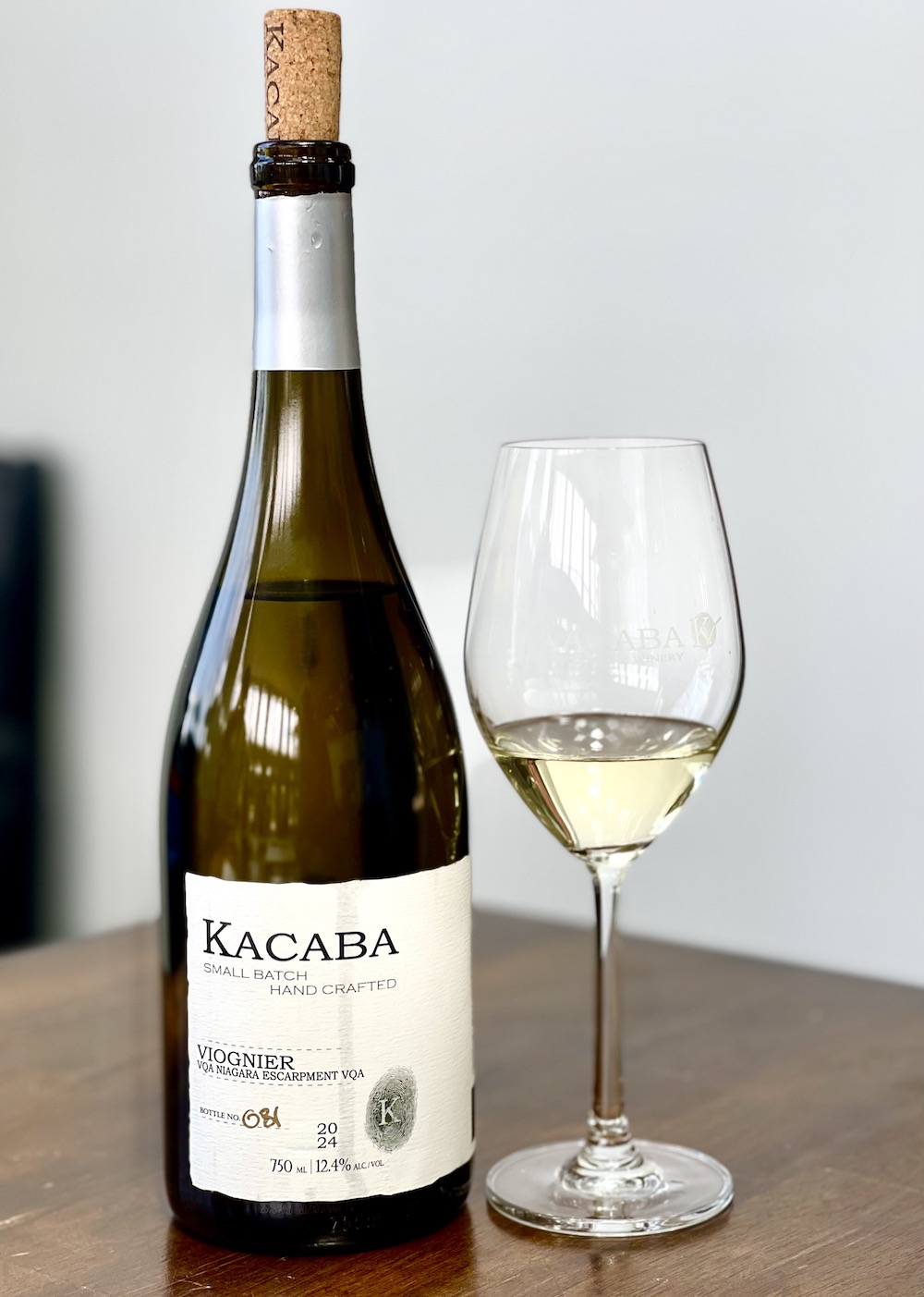

Kacaba Small Batch Viognier 2024 ($60, 94 points) — This wine, the first 100% Viognier made from estate grapes and the first Vio made by Robinson ever, really shows the direction the new winemaker is going to lift the white wine profile at Kacaba. Viognier was planted at the estate in 2007 and makes up 2.5% of the total vines, which until now was all blended into the extensive Syrah production. Only 240 bottles were produced, and each is numbered and signed by Robinson. It was aged in 100% acacia wood, all second fill, for 133 days. It has a gorgeous nose of pure apricot, nectarine, grapefruit, guava, honeysuckle and perfectly integrated wood spice and nutmeg. It has gorgeous texture, creamy pear, apricot tart, mango, wild honey notes, toasted almonds, guava and spice that is revealed in layer after layer, all leading to a long, echoing and luxurious finish. Such a beautiful and full-bodied example of this exotic grape.
The red wines

Kacaba Cabernet 2024 ($16 with a dollar off until Oct. 12 at Vintages and moving to the LCBO general list this Christmas, 89 points) — The nose is saturated in black currants, cassis and anise with a hint of black cherries and integrated spice notes. It’s juicy and bright on the palate with ripe dark berries, a touch of licorice, charred cedar, mocha and light spice notes with a lifted, clean finish. Good value wine.
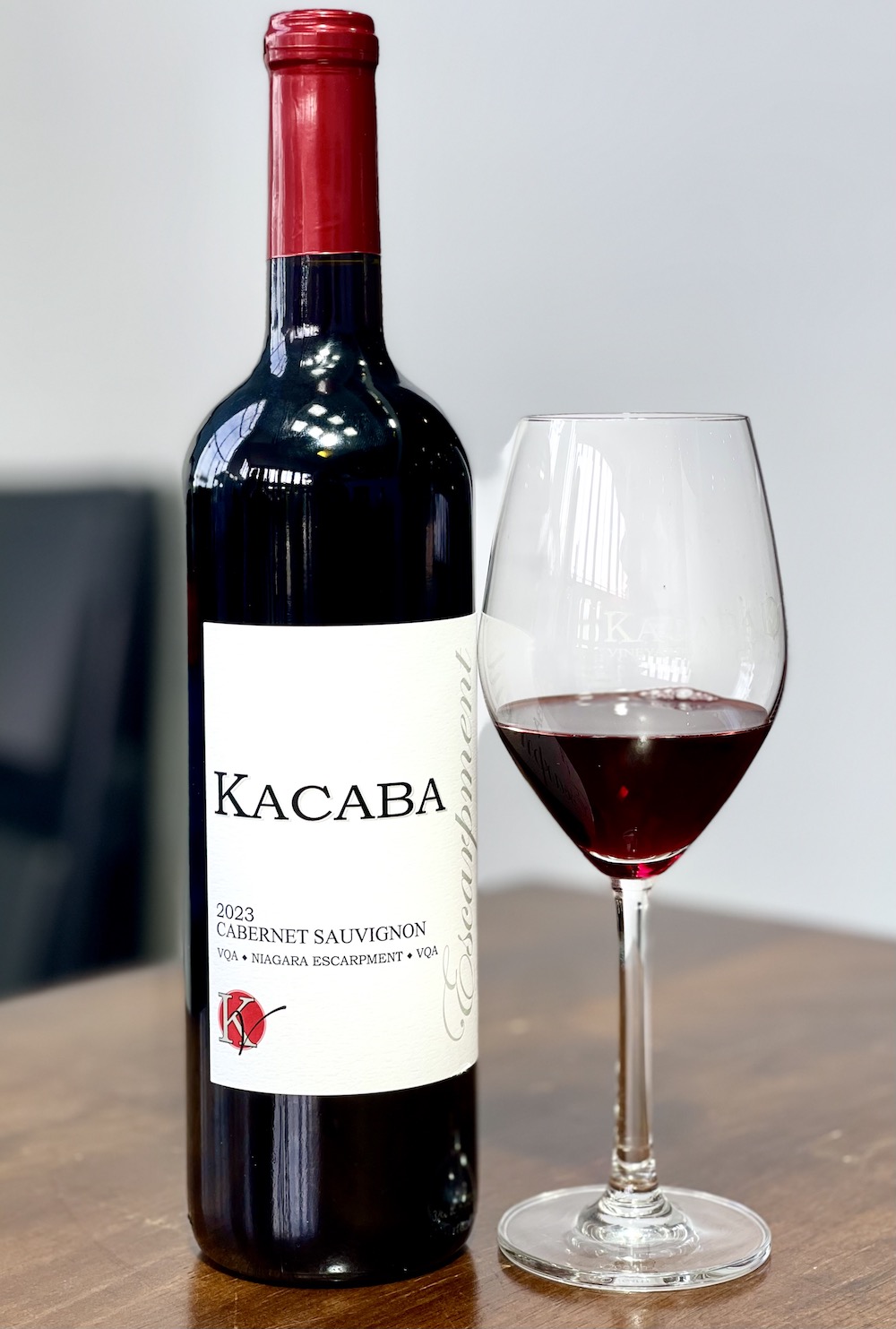
Kacaba Cabernet Sauvignon 2023 ($35, not released for another year, 91 points) — A little peek into the future of Kacaba wines finished by Robinson. The estate Cab Sauv is aged in a combination of French and American oak for 16 months, 30% of which is new. It’s highly aromatic with notes of cassis, black cherries, black currants, woodsy perfume and fine oak spices. The dark berries and ripe cherries take on a more earthy/brambly feel on the palate with added anise, firm tannic backbone, spice and a long, lifted finish. Can cellar through 2035 once released.

Kacaba Cabernet Franc Syrah 2023 ($35, not released for another year, 92 points) — This is a blend of 65% Cabernet Franc, 18% Syrah, 15% of Cabernet Sauvignon and 2% Viognier that’s aged for 17 months in 30% new oak. It has an enticing nose of meaty/smoky notes, purple plums, black currants, cassis, dark cherries and rich spices. It’s bold and sassy on the palate with a melange of dark and red berries, anise, savoury notes, dark chocolate, pepper and lifted freshness and finesse on the finish. Can hold through 2032.
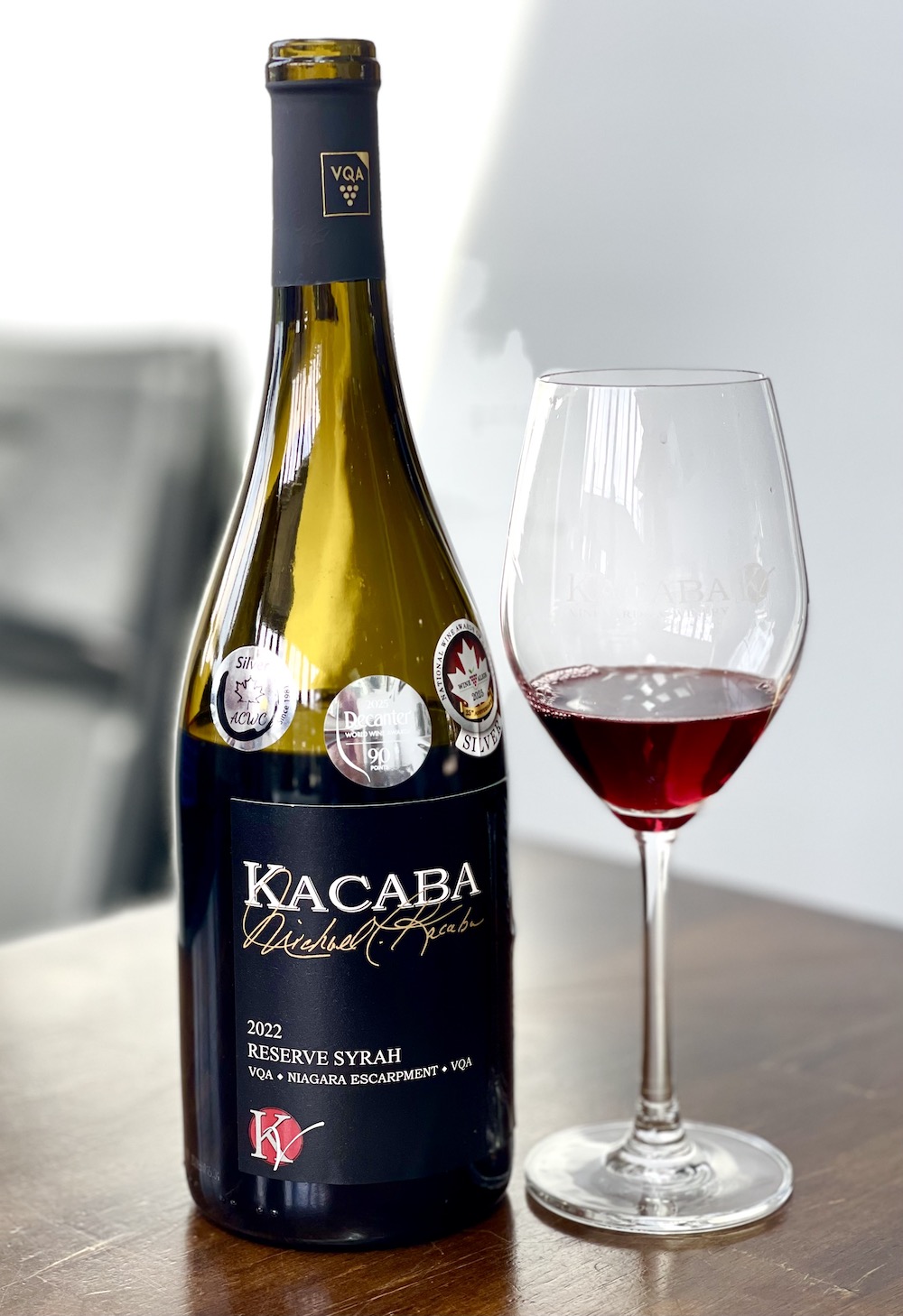
Kacaba Reserve Syrah 2022 ($70, 94 points) — In many ways, Kacaba is known for its Syrah. A third of the plantings at the estate, spread across three blocks, is devoted to that Rhone variety and another 3% to Viognier which is mostly blended into the Syrahs. This Reserve is aged for 17 months in mostly 30% new American oak. 10% of Viognier is co-fermented with the Syrah. The nose is profound with smoky/meaty notes, florals, dark plums, black pepper, dark cherries, brambly raspberries and integrated spice notes. It all comes together on the palate with a robust array of dark berries, plums, ripe red berries, smoke, charred cedar, licorice, some florals and spice with structured tannins and a lifted, long finish. Classic Syrah that will reward even further with cellaring through 2035.
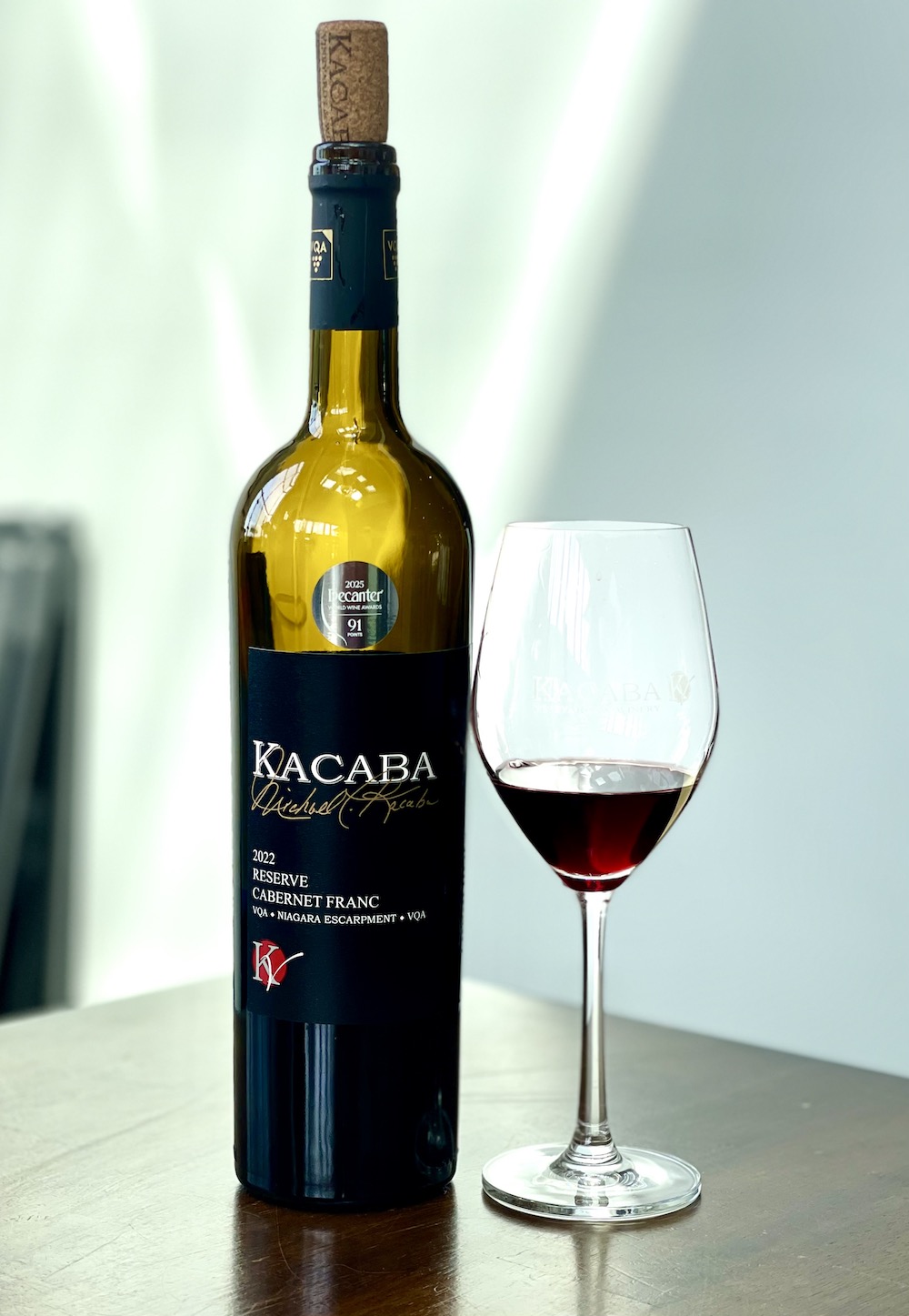
Kacaba Reserve Cabernet Franc 2022 ($70, 93 points) — The Reserve Cabernet Franc is a selection of the best barrels at the estate with aging for 17 months in 30% new American barriques. It has an attractive nose of brambly black raspberries, ripe dark cherries, anise, crushed herbs, dried Cuban tobacco, some floral notes and rich spices. It’s highly structured on the palate with grippy tannins, the full range of dark and red berries, licorice, plums, herbs, enticing spice notes and a finessed and long finish. Can cellar through 2033.
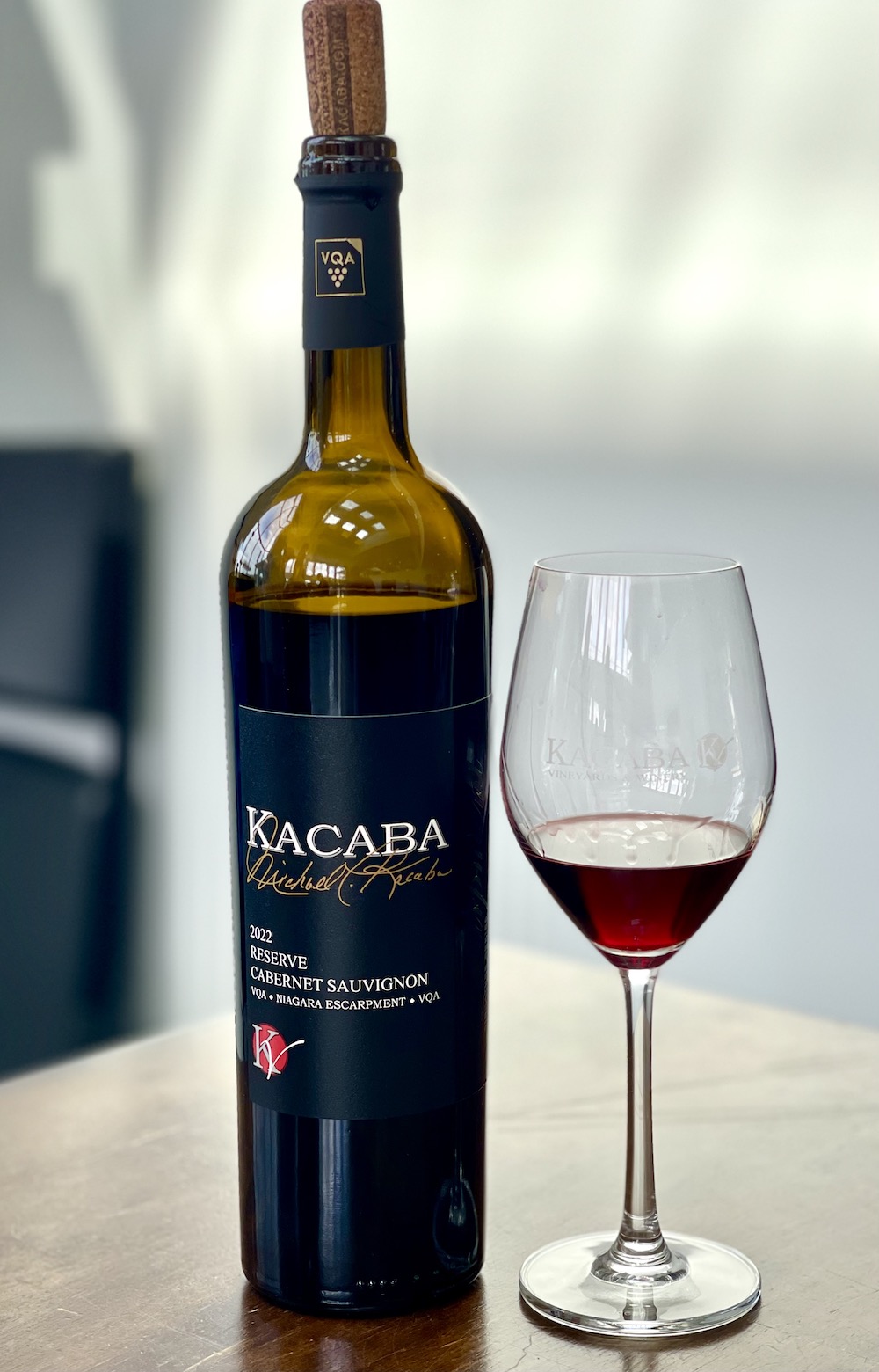
Kacaba Cabernet Sauvignon 2022 ($70, 94 points) — Like all these Reserve reds, the Cab Sauv is aged for 17 months in 30% new American oak barriques. This has an exciting and elegant nose of black currants, black raspberries, cassis, fresh turned soil, mocha, cedar, eucalyptus and fine oak spices. It’s nicely balanced on the palate with the full range of dark and red berries, toasted vanilla bean, evident fine tannins, savoury accents with spice and a long, layered and finessed finish. Can cellar this through 2034.
Comment here