
By Rick VanSickle
That broad smile on Michael Vaughan’s face is one of overwhelming joy after discovering his 50-year-old Niagara Gamay had exceeded his wildest expectations.
It was a spectacle just watching one of Canada’s foremost wine critics and prolific collectors of the world’s finest bottles gingerly remove the ancient cap on the 1975 Château-Gai Gamay Beaujolais.

Vaughan was at the Paul Bosc estate in advance of guests arriving and being offered a taste of the historic wine at the launch of Jill Troyer’s book, The Winemaker’s Gamble, which tells the colourful story of Château des Charmes and its visionary owner Paul Bosc Sr.
As Vaughan fidgeted and gently twisted and tugged on the cork with the patience and skill of surgeon, a rare bottle of Niagara history was liberated after a half century of gracefully aging in his impeccable cellar, kept at an ideal temperature of 6 C and high humidity. It was a special moment and extremely rare to experience a wine that predates VQA, which was established as a voluntary industry program 13 years later in 1988.
Vaughan deeply nosed the wine first before pouring a taste for me, and Stephen Bosc, the son of Paul Bosc Sr. who took over winemaking from his dad at Château de Charmes between 1993 and 2005. Vaughan’s eyes lit up like a child on Christmas morning. He became increasingly elated as the aromas spilled from the ISO glass Vaughan always tastes with. After sniffing and a long, drawn-out sip, Vaughan exclaimed, “this is the miracle of the day.”
Let’s back track for a moment
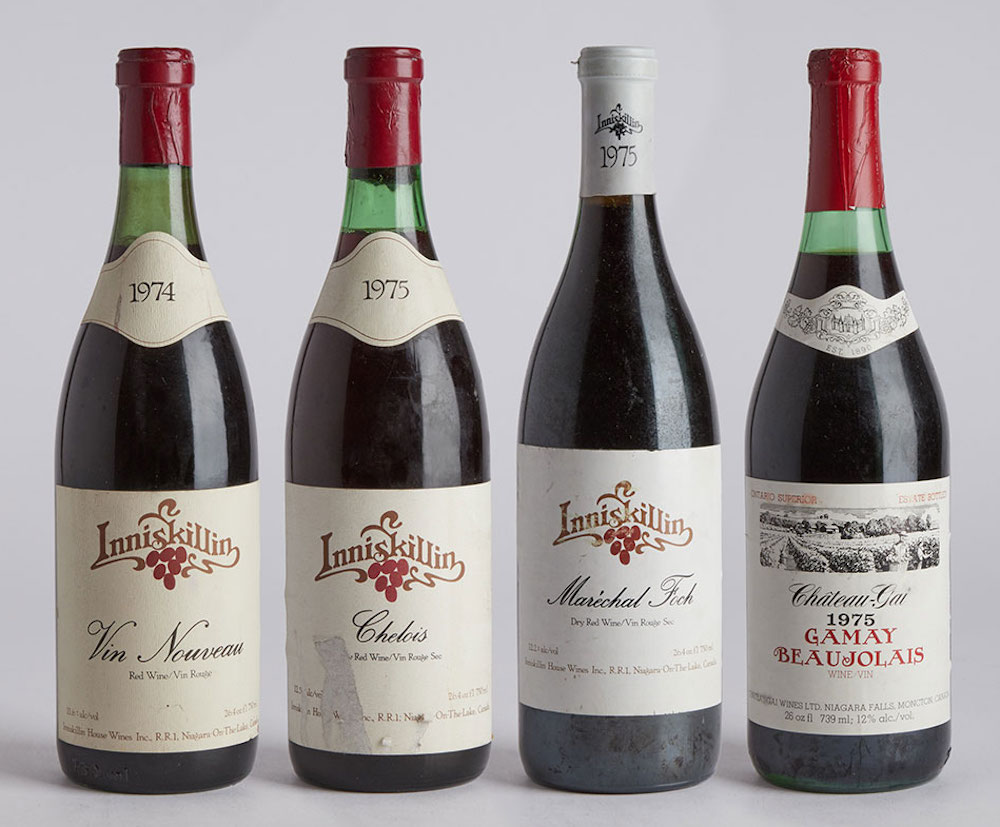
The 1975 bottle of Château-Gai Gamay Beaujolais, as it was called back then, was part of Vaughan’s consignment of four historic wines offered at a recent Waddington’s wine auction that also included three bottles of Inniskillin from his cellar — a 1974 Vin Nouveau, a 1975 Chelois and a 1975 Maréchal Foch.
Each of the wines sold for $1,000 (plus buyer’s premium and taxes for a total of $1,365). This makes them the most ever paid via auction for any Canadian table wine.
Paul-Andre Bosc purchased the Gamay, which was made by his father Paul-Michel Bosc when he was the winemaker at Château-Gai. Paul-Andre Bosc is the previous owner of Château des Charmes, whose father Paul Bosc Sr. launched in 1978 and died at the age of 88 in December of 2023. The historic estate winery was sold to an investor group in 2024.

Paul Bosc Sr. (above) worked at Château-Gai as the winemaker before founding Château des Charmes in 1978, and his son bid on the Gamay as something meaningful and historically linked to his father to serve guests at Troyer’s book launch last week at his estate and vineyard.
Paul Bosc Jr. was aware that Vaughan had consigned the historic wines to the Waddington’s auction and the two met at Vaughan’s home following the auction in Toronto to determine if the wine would be of interest to guests at the book launch as a special treat.
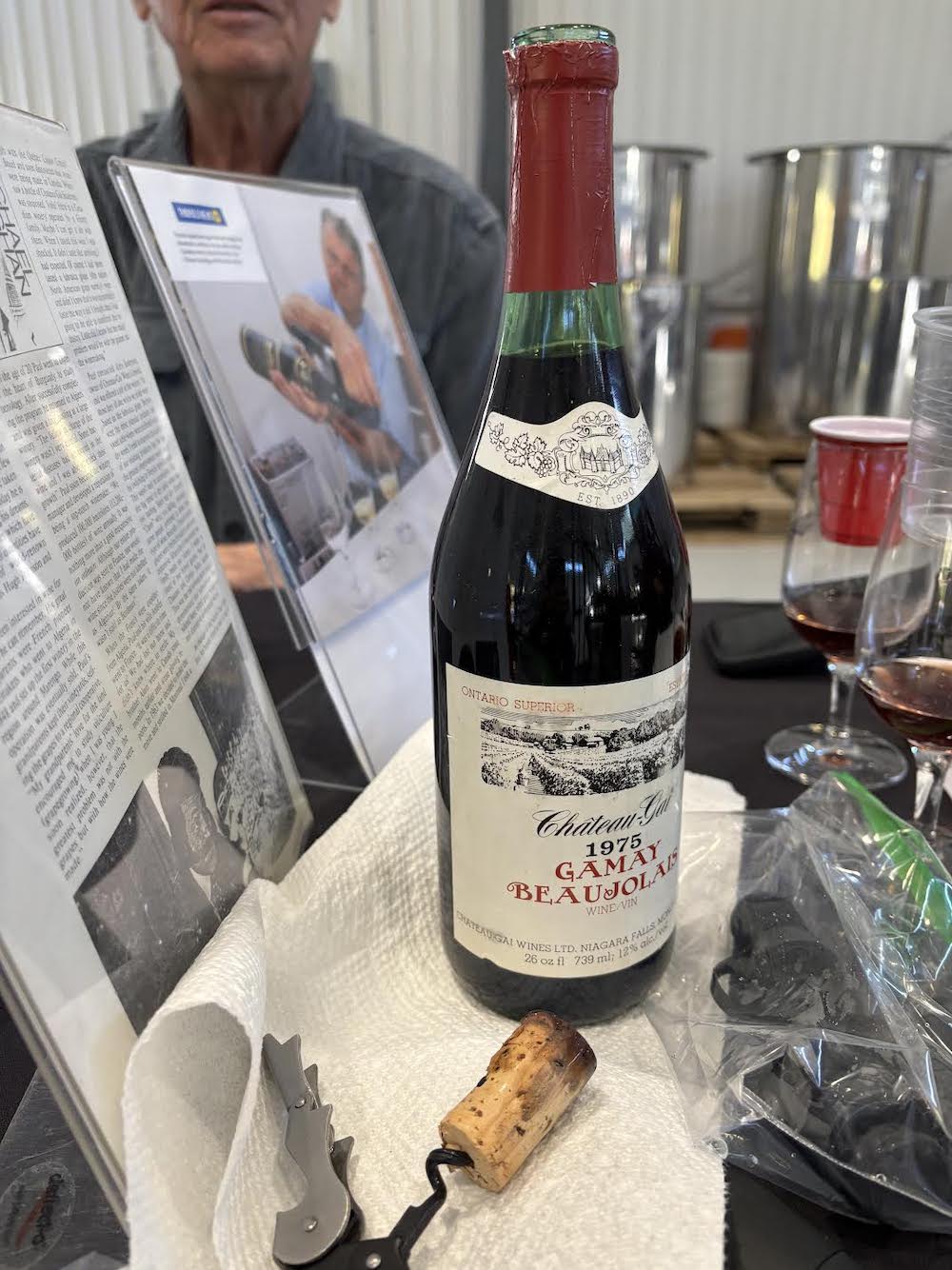
Vaughan, using a Coravin, which enables you to draw wine using a needle of sorts that doesn’t compromise the cork, tasted two other bottles of the 1975 Gamay Beaujolais with lower ullage (the fill in the bottle) and both were amazed that they were still alive and drinkable. Vaughan decided to donate the two ullaged bottles to the event to make sure that there was enough Gamay to allow all guests to have a sufficient pour.
As the curator and consignor of these wines, Vaughan, admitted that “it was a difficult decision to part with these historic bottles after such a long time. Their one-of-a-kind condition makes them among the rarest in my collection. The catalyst was this year’s 50th anniversary of Innsikillin. I was close to both winemakers, Paul Bosc Sr. at Château-Gai in 1973 and Karl Kaiser at Inniskillin in 1975. I was fortunate to be able to visit, travel and taste with them over several decades.”
The magical moment of truth
There were no rules in 1975 for making wine. Only a few winemakers were dabbling in vinifera and fewer were willing to make wine at a premium level. The big companies were making boatloads of plonk — remember Baby Duck? Château-Gai, before being sold to Vincor, was experimenting with noble varieties and veering away from the hybrids of the day.
It was the beginning of making quality wines led by Donald Ziraldo and Karl Kaiser who founded Inniskillin in July 1975 and the first to receive a winery license in Canada since Prohibition. But Paul Bosc was also instrumental in promoting the use of vinifera grapes, beginning at Château-Gai as the winemaker and later at the winery he founded — Château des Charmes.
Gamay, along with Pinot Chardonnay (just called Chardonnay today), Merlot, Pinot Noir, and Villard Noir fetched the highest prices on the open market at $509 per tonne in Ontario in those early days. It was the dawn of the modern wine industry in Canada, and Château-Gay was at the forefront of the revolution.
But still, it was dicey out there. There were no concerns over yields, no minimum or maximum Brix to worry about, no sorting, dubious corks of varying quality, bottle shortages and no regulations to follow. Chaptalization, which is the process of adding sugar to grape juice (must) before or during fermentation to increase the alcohol content of the finished wine, was generously employed.
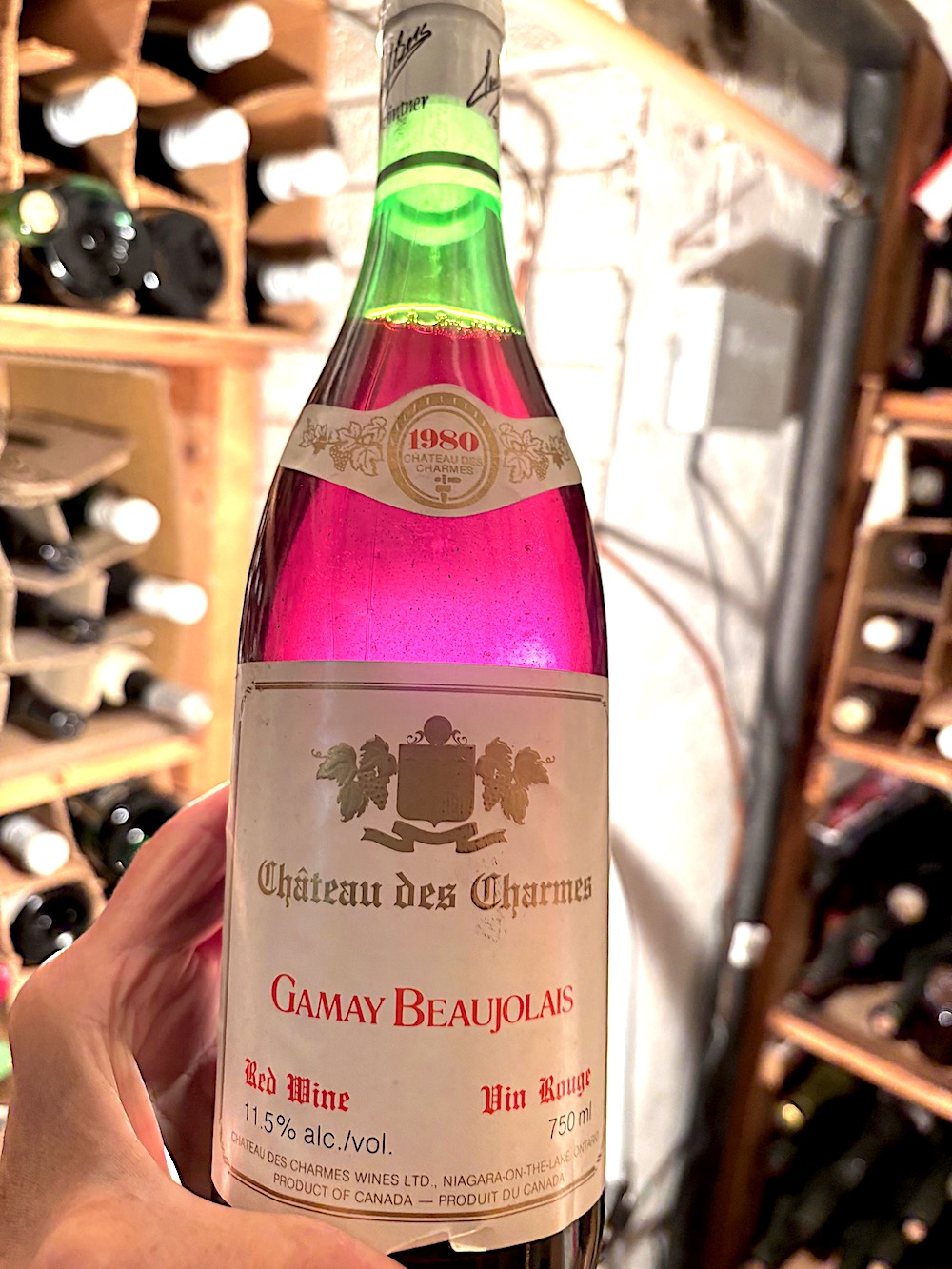
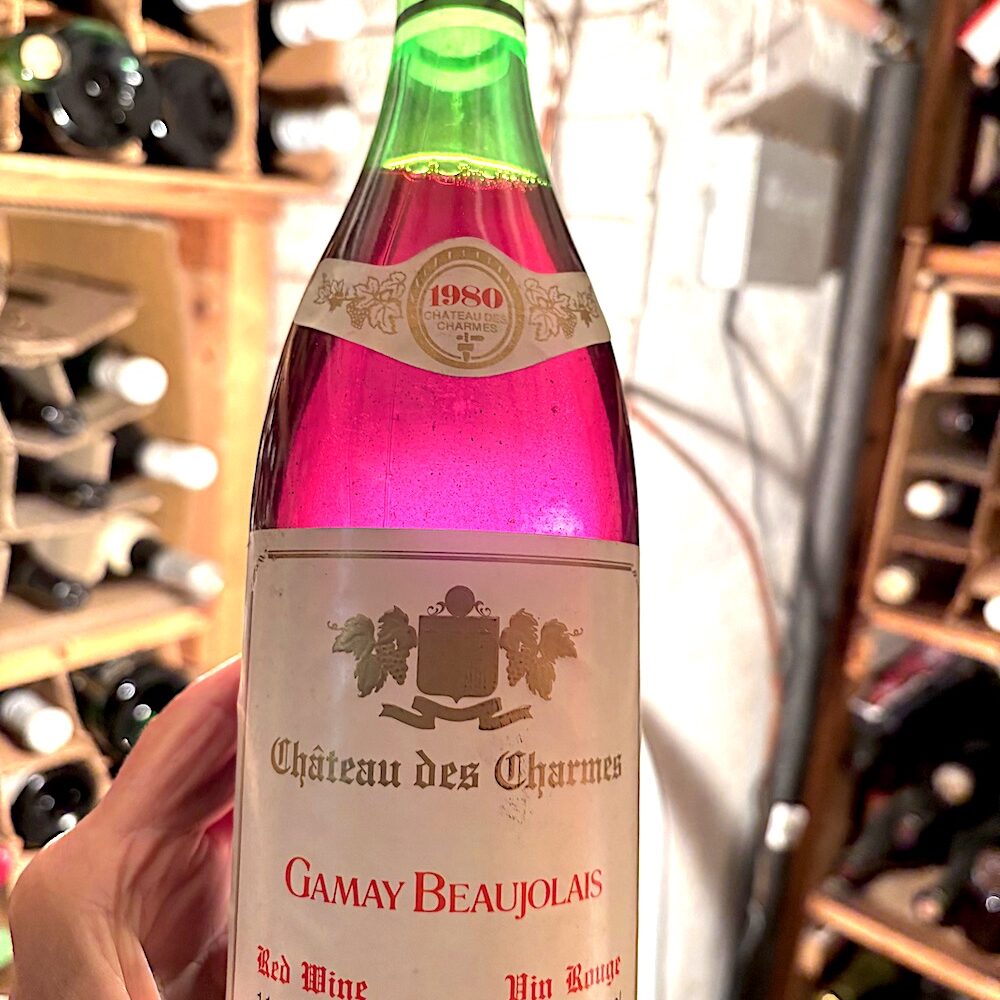
What was especially surprising about the 1975 Gamay, notes Vaughan, was the fine structure, mouthfeel and deep colour. This was in stark contrast to the bottle of 1980 Château des Charmes Beaujolais, also made by Bosc Sr., that Vaughan brought from his 6 C cellar and Coravin-tasted at the event. The 1980 was much lighter in colour and thinner than 1975.
After considerable research, Vaughan believes that the reason for this was attributable to the vintage, the age of vines and, most important, the type of Gamay grapes used. He discovered that 14% of the Gamay in 1975 wine came from the locally grown Gamay Freaux grape which was purchased by Château-Gai. At one time, Freaux was used in Beaujolais (mostly 1960s and 70s) but has now disappeared. Freaux has much higher acidity and tannins plus greater pigmentation, all of which enabled this 1975 to survive.
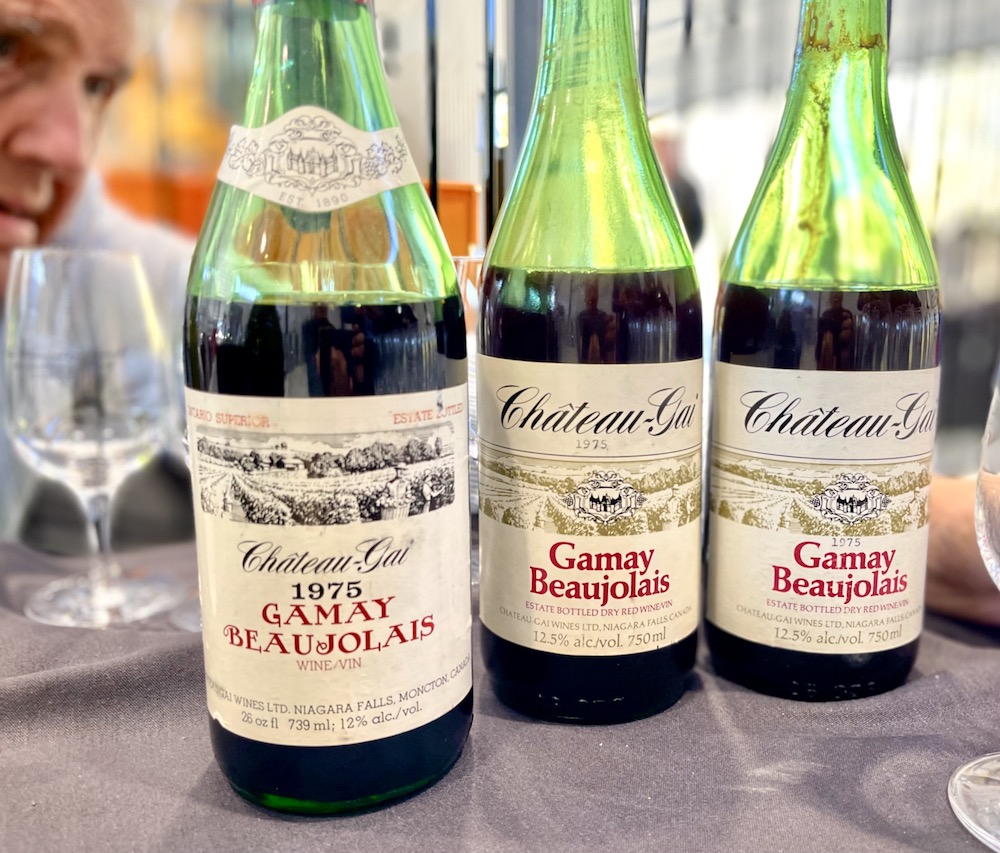
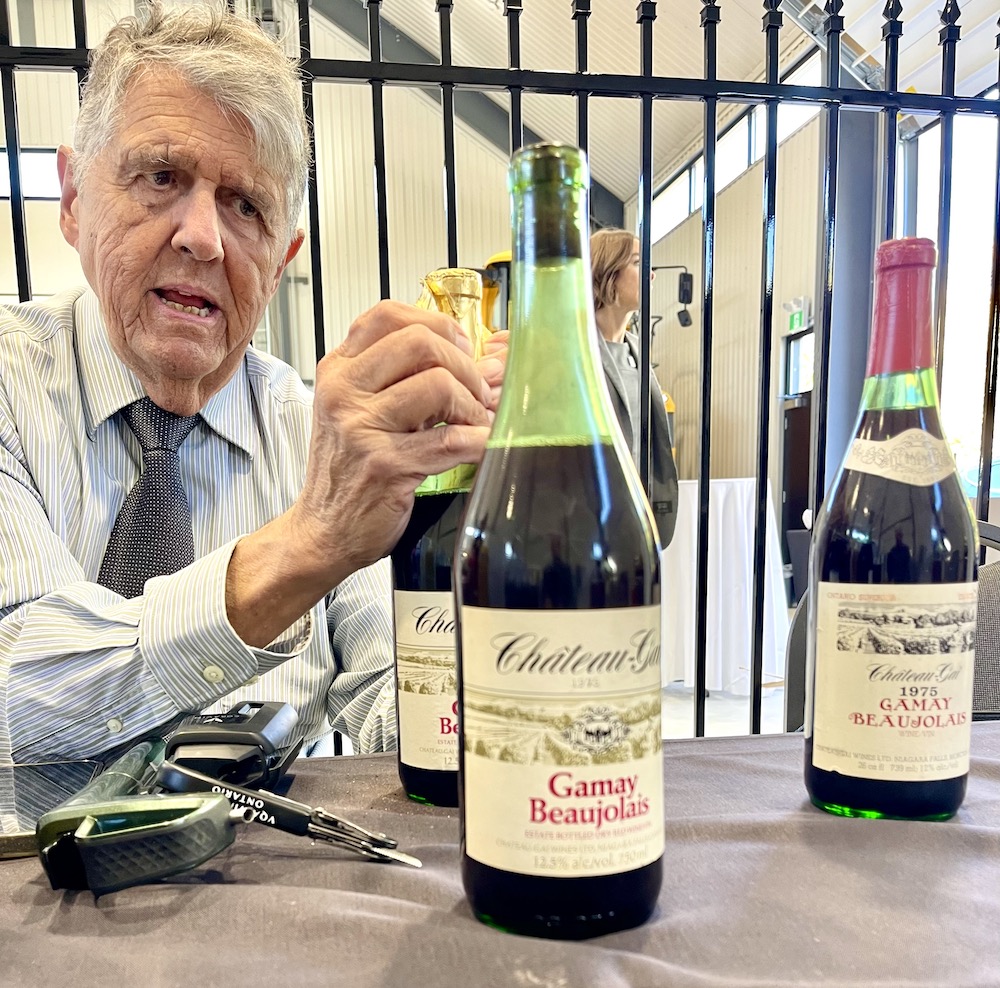
Vaughan brought three bottles of the 1975 Gamay Beaujolais from Château-Gai, with varying degrees of ullage and all in different bottles, capsules, and corks, to the tasting for the three of us to try. Version one had the lowest ullage and a cork that was hand inserted and very short. It showed the most evolved colour in the glass with a rusty/brick hue but a promising nose of damson plums, leather, macerated cherries, but it was slightly oxidized and borderline sherry like. The flavours were mostly dried fruits with diminishing finesse, drying tannins and obvious aged character, to be expected for a wine of this age and in consideration that it’s a variety we now consume within a few years of vintage, rather than cellar for any length of time. Let’s just say that no one in 1975 was making wine to last 50 years.
The second version showed more promise. With a little less ullage and a better cork that was extracted easily and intact, the plums and cherries were more fruited, with floral notes and a sense of some freshness and vigour emerging. It was reminiscent of a mature Pinot Noir/Gamay blend. It was livelier and more finessed than version one and hopes were high for the auction bottle.
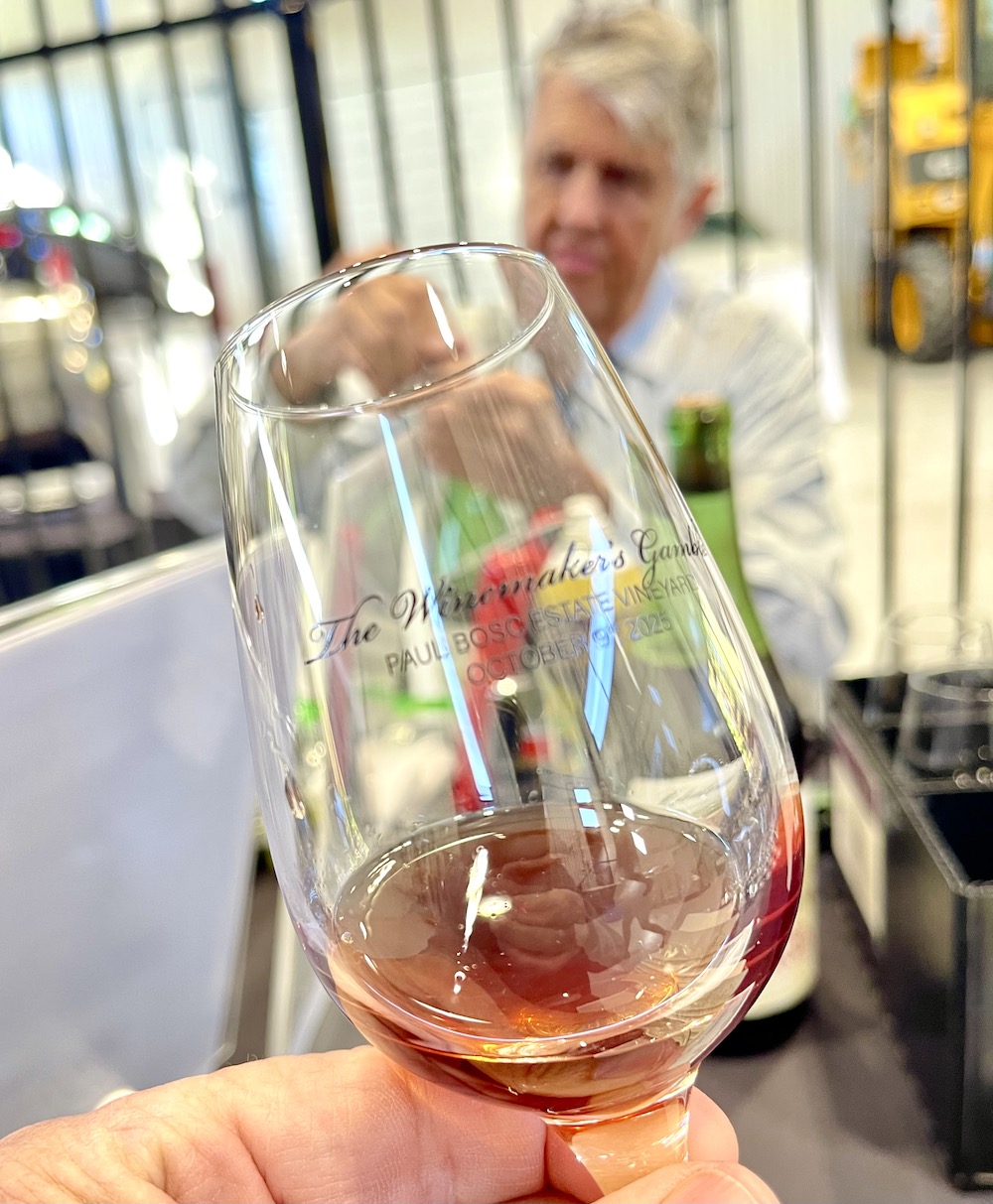
As Vaughan opened and poured the pièce de resistance, he exclaimed: “We are probably the first people to ever to open a 50-year-old Gamay.” It showed less of the rust colour with a brighter tawny tinge in the glass. The cork was in perfect shape and was extracted with a loud pop, a very good sign. The ullage was nearly as it was bottled. Right away the aromas exceeded expectations with pure damson plums, dried cherries, a melange of mature red berries, leather, black raspberries, dried floral notes and such vibrant intensity that was lacking in the other two versions. The fruits on the palate were mature, yes (this was no puppy), but they were evident in spades, totally unexpected for any wine that’s 50 years old. Ripe plums, cherry/kirsch, stewed raspberries, peonies, mushrooms, cassis, some drying notes, but showing vim and vigour with still evident light tannins and length through a finish that was surprisingly fresh and lively. I was gobsmacked at how interesting this wine was, both historically and technically.
This is a wine to be pondered and debated, not one to serve at the dinner table paired with food. It’s an extreme example of what happens to well-made wine when aged perfectly in a cellar undisturbed for decades. It has intellectual value beyond “it’s drinkable;” it is the epitome of the magic of wine and where it can go under optimum conditions. I was honoured to taste it and will never forget the experience.
And one more surprise
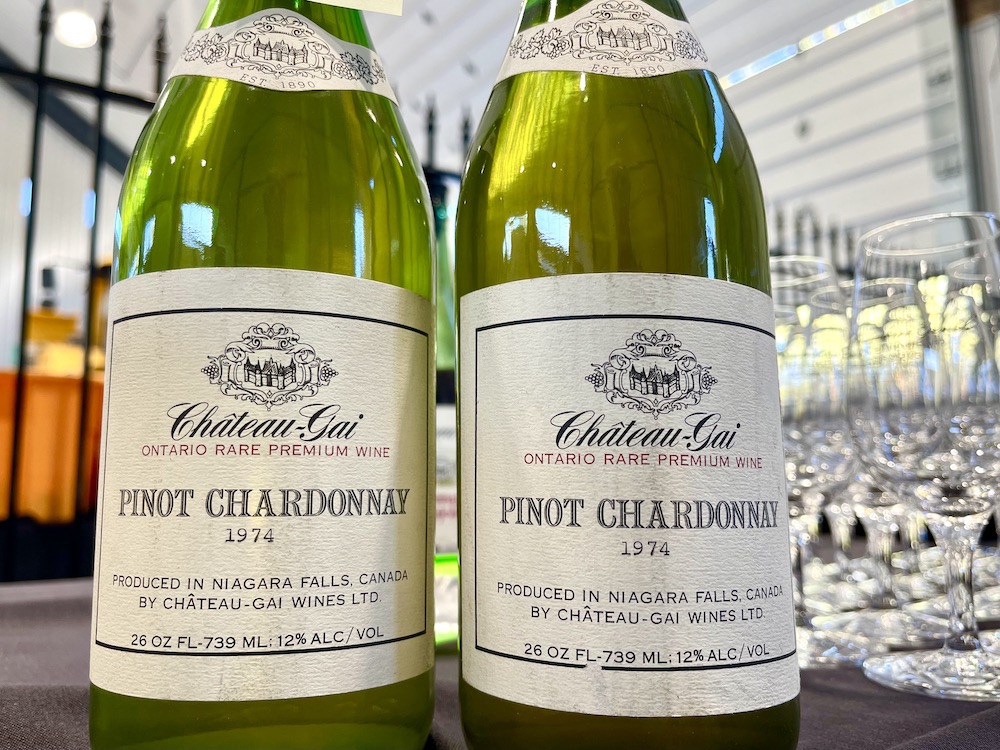
Just for fun, Vaughan brought along some other gems from the 1970s that Paul Bosc Sr. made at Château-Gai. While I did not have time to taste them all as guests began arriving for the book release, we made sure to sample a Château-Gai Pinot Chardonnay 1974, one of the first Chardonnays ever made by Bosc.
We tasted this wine from his Coravin system and Vaughan had a second bottle in backup should one not meet his standards for tasting. He did not have to worry; the bottle was remarkable. It wasn’t as golden, or borderline browning hued, as some of the much younger cellared wines I have tasted recently, and quite bright and glowing in the glass. The aromas immediately showed a melange of grilled pineapple, orange marmalade, lemon meringue, apricot tart, citrus peel, baked apple and quince along with toasty brioche and baking spices. It had intensity on the palate with fruit still hanging on upfront, imparting some emerging sherry notes but lots of primary fruits of apricot tart, baked apple, poached pear and lively citrus rind and zest. The texture was smooth and belied its age while the finish was still somewhat fresh, if not a little short and a smidge bitter. Again, an enthralling look back at history and a testament to aging wines under perfect conditions and winemaking prowess from the early pioneers of the Ontario wine industry.
Everyone at the book launch was privileged to taste the three Gamays in a specially inscribed ISO glass that read: The Winemaker’s Gamble, Paul Bosc Estate Vineyard, Oct. 9, 2025.
Just who is Michael Vaughan

Dr. Michael Bryan Vaughan is a consumer advocate and internationally accredited wine and spirits authority who has dedicated his not-for-profit Vintage Assessments website here to share with readers his reviews and scores for bi-weekly LCBO wine and spirits releases.
He is one of Canada’s leading critics and for nine years an award-winning weekly columnist at the National Post. Prior to that he was the weekly wine columnist at the Globe and Mail and the Financial Times of Canada along with Toronto Life Magazine. He is also a former professor of Economics at Ryerson University he has (PhD) in International Economics from University of Toronto.
In 2021, Vaughan selected Brock University’s Cool Climate Oenology and Viticulture Institute (CCOVI) as the new home of a good portion of his impeccably preserved collection of award-winning Canadian wines.
The Michael Vaughan Wine Collection contains 2,500 bottles of historical wines from across the country, including many extremely rare bottles that date back decades. The collection has been personally curated and preserved by Vaughan and contains some of the last remaining bottles of their kind that are still in mint condition and drinkable.
As an educator himself, Vaughan said he felt CCOVI’s state-of-the-art facilities and reputation for research and educational excellence made it an ideal partner for both housing and utilizing his unique collection.
I have tasted with Vaughan at many events across the country and judged with him at competitions. He is the real deal, a gifted taster, a technical genius who can pick out the slightest fault in any wine and isn’t afraid to point them out. I say that with fondness as the man carries with him a box of ISO glasses with him wherever he goes and wherever he tastes, saying it’s only fair that every wine he tastes comes from the same style of glass. And if travelling with Vaughan, you can rest assured that he will be the last person on the bus, inevitably making us late to the next destination.
The Winemaker’s Gamble

Another veteran and legendary wine critic in the Canadian wine industry, Tony Aspler, calls Troyer’s new book, The Winemaker’s Gamble, “A beautifully written biography of an unsung hero.”
It is a story about how one man, Paul Bosc Sr., and a handful of rebels turned wine into a global industry. It’s a story on how Bosc bet on Niagara’s vineyards and changed Canadian wine forever.
The Ontario wine industry is having a moment. Sales are surging on a wave of consumer sentiment to buy Canadian but today’s growing success rests on a foundation laid decades ago.
The Winemaker’s Gamble tells the story of Bosc and a few bold visionaries who defied the odds and reshaped Ontario wine forever.
The story focuses on Bosc, who fled a brutal civil war in Algeria, was unwelcome in France, and arrived in Canada with a young family, little money, and relentless determination. Combining audacity with expert winemaking skills, he rose to prominence at Château-Gai.
At 43, he left to open Château des Charmes, planting vinifera grapes like Chardonnay and Pinot Noir — grapes no one else thought could thrive in Ontario. A handful of like-minded rebels followed, proving the skeptics wrong and establishing the foundation for an internationally respected wine industry.
That early shift to vinifera grapes marked a turning point. Today, more than 194 wineries flourish in the Niagara region, drawing 2.6 million wine tourists annually and contributing $5.49 billion to the economy. Niagara wines consistently win international awards, a lasting legacy of Bosc and his fellow rebels.
The book is in pre-order now and can be purchased here.
About the author Jill Troyer

Jill Troyer is an award-winning journalist and wine writer. She has more than 50 awards for her broadcast and print journalism. She holds WSET3 certification, an internationally recognized advanced level of education in winemaking and viticulture. Troyer writes about the Niagara Wine industry for The Lake Report and The St. Cathari
Comment here