

By Rick VanSickle
Inside a hidden room at Brock’s Cool Climate Oenology and Viticulture Institute it is eerily silent but for the odd slurp, swish, gurgle and splash of spent wine hitting the spit bucket.
It is here, on another chilly winter’s day in Niagara, that a newly formed tasting group is assessing the first batch of Canadian wines to potentially be included in the revamped Canadian Wine Library.


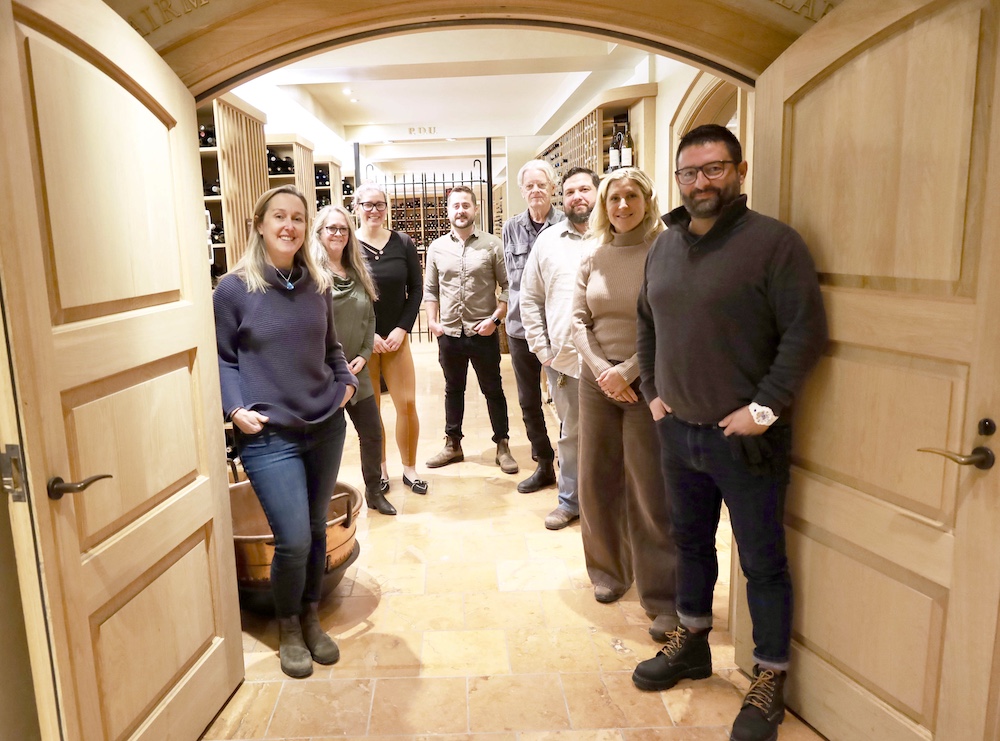
The six tasters, all culled from the recently appointed board of directors for the Canadian Wine Library, on this day last week, are looking for the best examples of age-worthy wines made anywhere in Canada from 100% Canadian grapes.
The ambitious project is being developed to offer special interest groups, scholars and media to access and review the nation’s age-worthy top vintages.
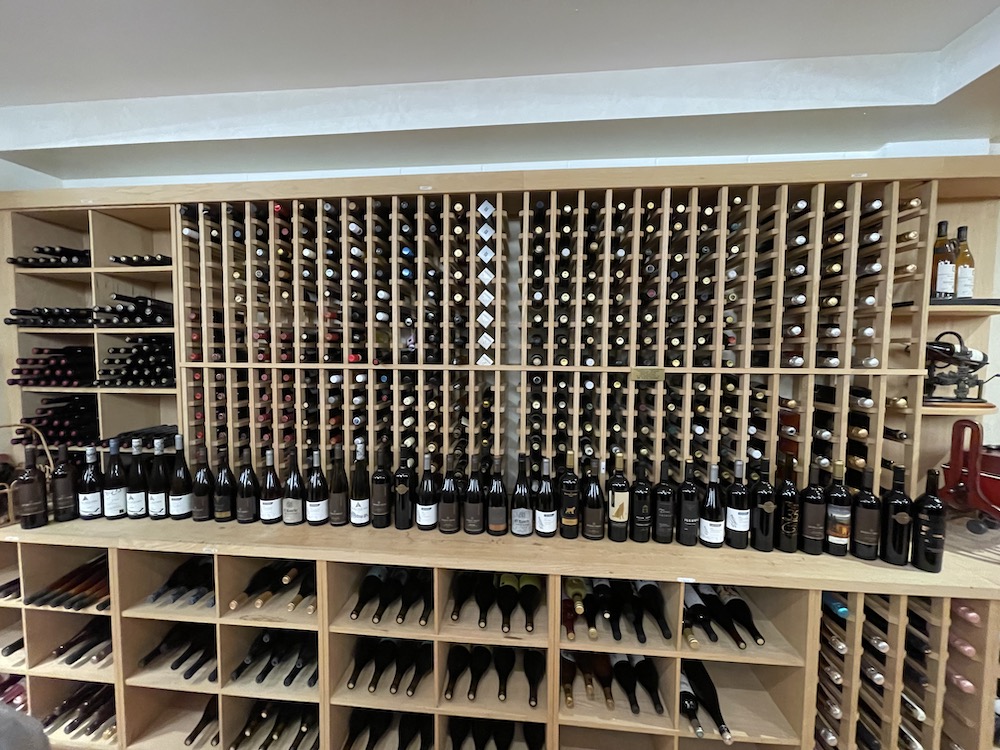
The Canadian Wine Library (CWL) is housed within CCOVI’s 44,000-bottle cellar at Brock University. Along with offering access for broader tastings for groups, the library provides a window into how Canadian wines age to impart producers with feedback based on results from scheduled tastings.
“Canadian wines improve very well with age,” says Barb Tatarnic, manager of professional studies and outreach at CCOVI as well as a board member. “We believe this message is not as clear as it should be and so, accordingly, the vision of the CWL is to demonstrate the potential of cellaring premium Canadian wines.”


The CWL is a non-profit, revolving collection of the finest VQA, and domestic wines grown and made in Canada. It evolved out of the Ontario Wine Library (OWL) via an agreement signed with Brock in 1998. The name was formally changed to the CWL in 2007.
Tatarnic says tasting groups, producers, educators and researchers can gain access to the library’s wines by completing and submitting an application form here on CCOVI’s website.
“We want to help inform the consumer on what they can expect from Canada’s wines within the collection in regard to ageability and to serve as a resource for ongoing research in such areas as sensory evaluation, vintage variations and stylistic changes over time,” says Tatarnic.
The group for the first tasting of over 50 wines submitted for possible inclusion into the revamped wine library included Canadian Wine Library board members Emma Garner (director of winemaking, Ontario, for Andrew Peller Ltd. and chair of the board), Nick Gizuk (Inniskillin winemaker), Sean Palmer (Peninsula Ridge winemaker), Rick VanSickle (yes, that’s me, publisher of Wines in Niagara), Jennifer Kelly (senior scientist, oenology, CCOVI), and Marie Cundari (senior director, new world and Ontario wines, LCBO). Also in attendance was Tatarnic (manager of outreach and CWL ex-officio) and Taylor MaGee (CCOVI operations co-ordinator and wine cellar manager).

The other CWL board members include Faik Turkmen (owner of Lailey Winery) and Sébastien Hotte, (winemaker, Lightning Rock Winery in British Columbia).
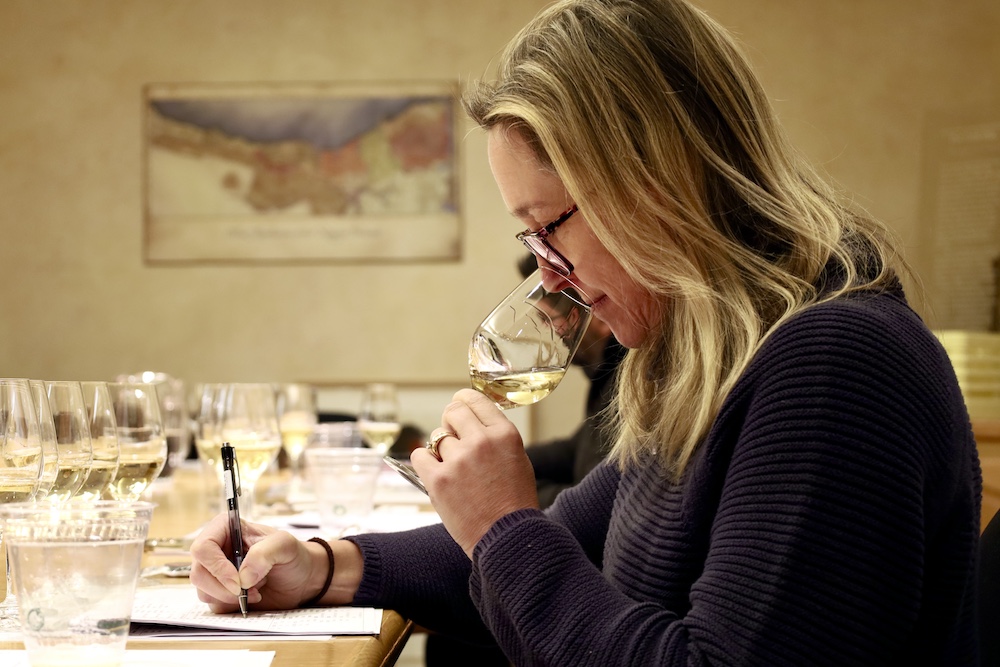
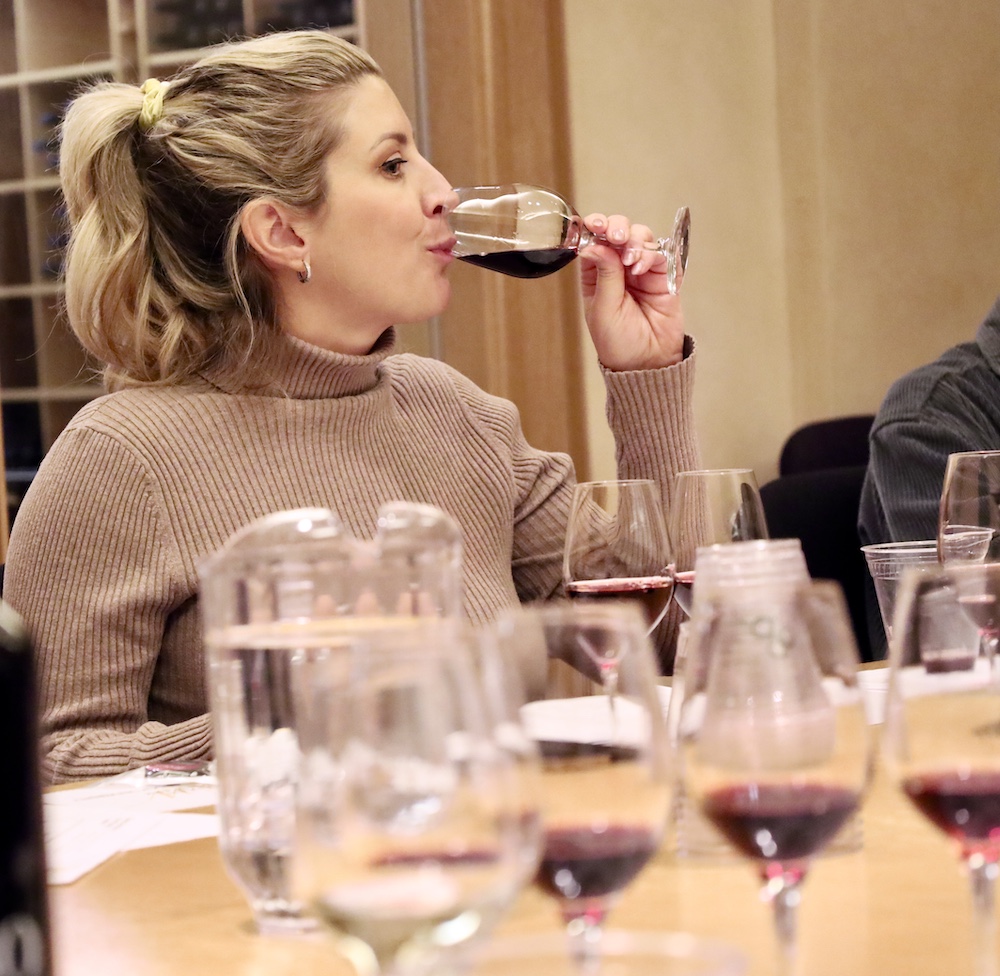
The tasters had to view and assess the submitted wines through a different lens than what is normal for critical review. Not all wines are built for aging or benefit from time in the cellar. The wines chosen for the CWL had to show the potential for Canadian wines to improve with age. All wines were tasted blind and only the wines that were chosen for the library were revealed following the tasting.
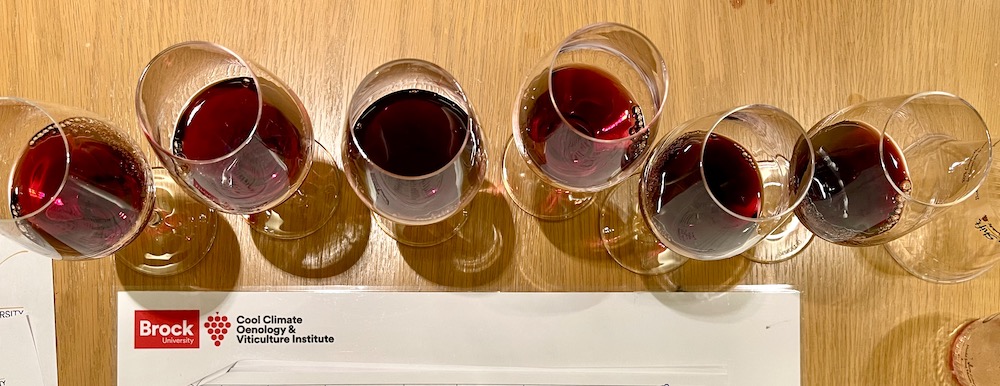
As the chair, Garner decided that the group would taste six wines per flight, discuss and pass or reject each wine before moving on to the next wines.

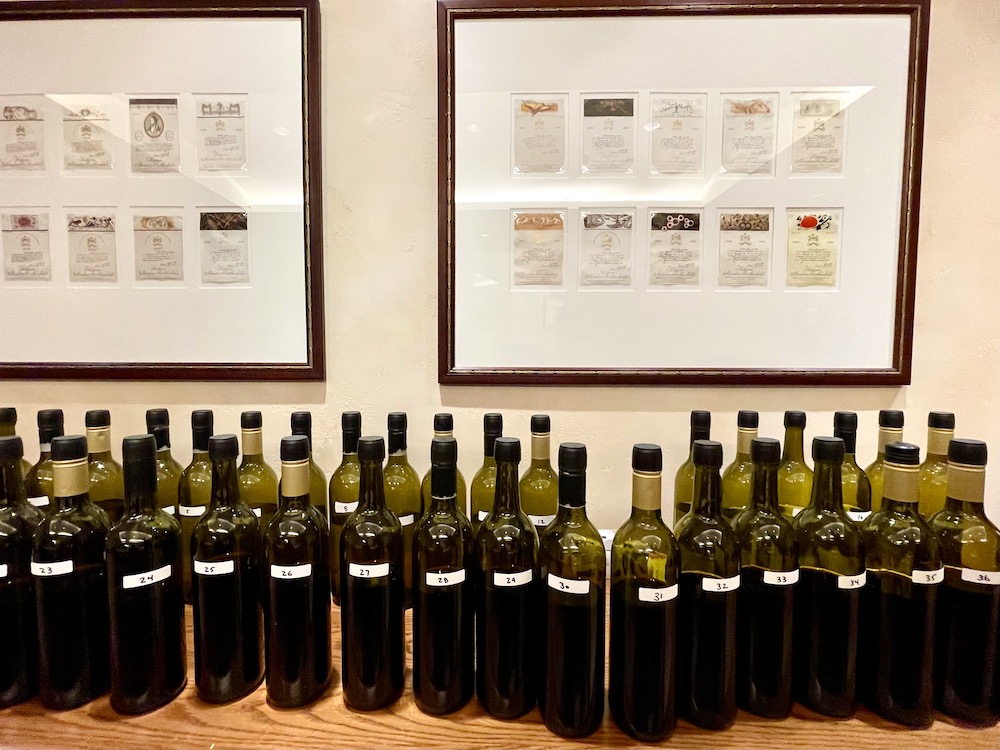
The categories for the tasters to assess were appearance, nose, intensity, aromatic evolution, palate, acidity, tannins, alcohol, body, overall impression (does the wine show signs of being complex, length, interest, vibrancy, pronounced character), state of maturity (still evolving), drink now (not suitable for further aging), or at its peak (not suitable). Each judge either approves the wine or rejects it based on ageability potential.
It then goes to a show of hands for each wine, either yes or no for inclusion into the library. A 3-3 tie from the judges or even a 4-2 vote moves to a lively debate with the ayes and nays either fighting for their position or switching votes until the wine is either approved or rejected.

Most of the wines (46 in total) were voted into the Canadian Wine Library on this day (the list is below) out of a potential 54 bottles or so. Which isn’t surprising considering that most of the submissions are what winemakers believe are some of their top wines.
Tony Aspler was an original member of the OWL’s board of directors and one of the most respected wine writers in Canada, with more than 50 years of experience covering the industry. He says there are many benefits to this repository and, thanks to the selection of wines already in the collection, the CWL’s inventory is off to a great start.

To have a permanent library of back vintages of Canadian wines is not only a treasured archive but an invaluable educational tool for winemakers, historians and enthusiasts alike,” he says.
“This collection — which grows annually with each vintage — represents the finest efforts of the Canadian wine industry and is curated under ideal conditions at Brock University.”
Inniskillin winemaker Gizuk agrees the CWL is an invaluable resource for the industry. “To have a place for wines to be properly stored and made available for private and public tastings and educational purposes is so important to our industry,” he says. “Sometimes a great vintage will accidentally get sold out or they might get lost in a warehouse, but if they are put aside and kept separate in this library, it makes for unique opportunities down the road.”
On a personal note
I am extremely honoured to be named to this esteemed and talented board of directors for the Canadian Wine Library. As a strong advocate for the ability of Canadian wines to age gracefully, I have witnessed first-hand through multiple tastings of older wines back to the 1970s, just how well our national wines can and do evolve over time.
This project is an opportunity for wineries from coast to coast in Canada to help build something special for tasting groups, educators and media to experience. I urge anyone reading this to submit their best examples to the library to build a meaningful depository to be enjoyed for many years to come.
Lightning Rock winemaker and board member Sébastien Hotte is working on setting up a tasting panel in B.C. to make it easier for west-coast wineries to submit wines and we are working on encouraging wineries in Nova Scotia and Quebec to be a part of this worthy initiative.
We also need help with getting the word out through stories, podcasts, content providers, industry association newsletters and anywhere else that brings awareness to the Canadian Wine Library. You can reach out to me or anyone on the board for information on how you can help.
The first 46 wines chosen for the
revamped Canadian Wine Library
• Jackson Triggs 2024 Sauvignon Blanc Grand Reserve, Niagara Peninsula, 13%
• Jackson Triggs 2024 White Meritage Grand Reserve, Niagara Peninsula, 13%
• O’Rouke’s Peak Cellars 2022 Gruner Veltliner, Okanagan Valley, Lake Country, 13.8%
• Thirty Bench 2024 Small Lot Riesling Wood Post Vineyard, Beamsville Bench, 10.5%
• O’Rouke’s Peak Cellars 2022 Riesling, Okanagan Valley, Lake Country, 12.0%
• O’Rouke’s Peak Cellars 2022 Terraces Dry Riesling, Okanagan Valley, Lake Country, 12.6%
• Cave Spring Vineyard 2019 Riesling CSV Estate Grown, Beamsville Bench, 12.5%
• Jackson Triggs 2023 Chardonnay Grand Reserve, Niagara Peninsula, 13%
• Inniskillin 2023 Single Vineyard Chardonnay Montague Vineyard, Four Mile Creek, 13.5%
• Jackson Triggs 2022 Chardonnay Grand Reserve, Niagara Peninsula, 13.5%
• Cave Spring Vineyard 2022 Chardonnay CSV Estate Grown, Beamsville Bench, 13.0%
• O’Rourke Family Estate 2020 Chardonnay, Okanagan Valley, 13.5%
• Cave Spring Vineyard 2020 Chardonnay CSV Estate Grown, Beamsville Bench, 13.5%
• Jackson Triggs 2024 Gewurztraminer Grand Reserve, Niagara Peninsula, 12.8%
• O’Rouke’s Peak Cellars 2023 Broken Granite Gewurztraminer, Okanagan Valley, Lake Country, 14.3%
• Jackson Triggs 2022 Merlot Grand Reserve, Niagara Peninsula, 13.5%
• Poplar Grove 2015 Merlot 10 Year Release, British Columbia, 14.5%
• Cave Spring Vineyard 2020 Gamay Estate, Beamsville Bench, 13.5%
• Jackson Triggs 2023 Pinot Noir Grand Reserve, Niagara Peninsula, 13%
• Jackson Triggs 2022 Pinot Noir Grand Reserve, Niagara Peninsula, 13%
• Inniskillin 2022 Pinot Noir Montague Vineyard, Four Mile Creek, 13.5%
• O’Rourke Family Estate 2020 Pinot Noir Okanagan Valley, 13.1%
• Cave Spring Vineyard 2019 Pinot Noir Estate Grown, Beamsville Bench, 13.5%
• The Foreign Affair Winery 2023 Petit Verdot Vinemount Ridge, 13.5%
• Jackson Triggs 2022 Shiraz Grand Reserve, Niagara Peninsula, 13.5%
• The Foreign Affair Winery 2023 Pike Creek Cabernet Sauvignon Whisky Barrled, Vinemount Ridge, 14.9%
• Peller Estates 2023 Signature Series Cabernet Franc, Four Mile Creek, 13.7%
• Trius 2023 Showcase Red Shale Cabernet Franc, Four Mile Creek, 13.1%
• Inniskillin 2022 Illuvia Cabernet Franc, Four Mile Creek, 13.5%
• Cave Spring Vineyard 2022 Cabernet Franc CSV Estate Grown, Beamsville Bench, 14.0%
• Cave Spring Vineyard 2020 Cabernet Franc Estate Beamsville Bench, 14.5%
• Poplar Grove 2015 Cabernet Franc 10 Year Release, British Columbia, 14.9%
• Trius 2024 The Icon Red, Niagara Peninsula, 13.2%
• Jackson Triggs 2023 Red Meritage Grand Reserve, Niagara Peninsula, 13.5%
• The Foreign Affair Winery 2023 Temptress Red Blend, Merlot, CF, CS, Petit Verdot, Vinemount Ridge, 14%
• Jackson Triggs 2022 Red Meritage Grand Reserve, Niagara Peninsula, 13.5%
• Poplar Grove 2015 The Legacy Red Blend 10 Year Release, British Columbia, 14.9%
• BOTL NV Generations Red Blend, Niagara on the Lake, 15.5%
Comment here