


By Rick VanSickle
It was June 21 of 2024 when Wines in Niagara broke the stunning news that the historic Château des Charmes was sold.
It sent shockwaves through the Ontario wine industry. A pioneering winery that helped shaped the modern wine industry in Canada, led by founder Paul Bosc Sr. in 1978 and continued by his son Paul-André Bosc after his father died in 2023, was now changing ownership.


It was the end of the line for the Bosc family legacy and the birth of new one under different owners and management.

“We are very excited to embark on this new chapter for Château des Charmes and look forward to continuing the tradition of producing premium wines that showcase the unique character of our vineyards,” Marco Piccoli said at the time of the sale. “Our team is dedicated to preserving the legacy of this unique winery while also bringing a fresh perspective and innovation to this fantastic brand.”
The new owners, a group of investors from Kitchener, Waterloo, and Guelph, have not yet revealed their names and instead hired “a new generation of leadership that blends respect for tradition with a forward-looking vision” to be the new faces at Château des Charmes.


The leadership team is led by industry leaders with deep roots in the wine world as the winery embarks on its transformative journey to “elevate its position as a premier wine destination in Canada,” according to the website. The joint CEO roles include Anne Givens as president who is overseeing sales, marketing and hospitality, while Piccoli has stepped into the chief operating position. “This dynamic leadership duo brings complementary strengths, strategic clarity, and shared passion for the brand,” The winery said. “Together, they are redefining what it means to experience Château des Charmes.”

To this day, the new owners have remained a mystery. At the time of the sale, Piccoli told Wines in Niagara that the group is dedicated to ensuring there is a seamless transition with very little disruption to the current CdC team. Piccoli noted that the investors are not involved in either the wine or hospitality business and prefer to take a backseat to running a business they are not familiar with. “They see a lot of potential in the Niagara wine industry,” said Piccoli. “I’m very excited by this, otherwise I wouldn’t have done it.”
Why there is the need to keep ownership private is, well, a little odd, maybe even unprecedented for an Ontario winery, but they are not obligated to reveal their names if they don’t want to. It’s as simple as that.
There have been subtle changes at the chateau since the new owners took over, mostly on the marketing/branding side of the venerable winery. The revisions include adding a modern flare to the portfolio, expanding the range of wines, and a re-organization of the portfolio’s various tiers.

One thing that hasn’t changed is the talented winemaker, Amelie Boury, who learned from the best (Paul Bosc Sr.) and continues to craft terroir-specific estate wines from a vineyard first planted in 1978.
Boury joined Château des Charmes in 2011 as the director of oenology. By 2013, Paul Bosc Sr. recognized her talent and entrusted Boury with full winemaking leadership. She was named vice president of winemaking and operations in 2016 and took stewardship of both the vineyards and the winery in 2020. Under Boury’s stewardship, Château des Charmes has achieved full sustainable certification — a milestone reflecting her commitment to environmentally responsible production.
Boury presides over a portfolio of wines spread over four tiers, including the Cellar Series, Estate Series, Superior Series and the Elan Series. With the new categories, comes a new label redesign.

Chateau des Charmes is in the midst of a rebrand — an evolution designed to honour its legacy while positioning the winery for the future, brand director Svetlana Sidorenko says. “The transformation touches every part of the brand, from guest experience to visual identity. We’re evolving Chateau des Charmes with intention. Our focus is on staying relevant for the next generation while remaining true to our estate roots and winemaking legacy.”

The brand refresh is being led by CX&E Brand Solutions, with the Estate Series labels marking the next visible step in the rollout. The redesign reinforces what sets Chateau des Charmes apart, says Sidorenko, with exceptional wines grown on its estate vineyards on the prestigious St. David’s Bench, underscored by the latitude and longitude printed directly on each bottle. “The Estate labels are a modern reset,” adds Tina Truszyk, Brand Strategist and Founder of CX&E Brand Solutions. “We streamlined the design and made provenance unmistakable. It’s one piece of a broader brand engineering strategy, aligning every touchpoint around a clear, experience-driven brand.” More elements of the brand refresh are set to follow, signalling the beginning of a new chapter for Chatêau des Charmes.
Wines in Niagara recently tasted a selection of CdC wines mostly from the Estate Series. The wines in this tier are described as “a true expression of the care and expertise of our winemaking team. These wines showcase the distinct character of the St. David’s Bench sub-appellation, one of Niagara’s most prestigious growing regions. With its unique microclimate and rich soil, St. David’s Bench delivers grapes of exceptional quality, resulting in wines that are refined, elegant, and distinctly Château des Charmes.”
Here’s what I liked:
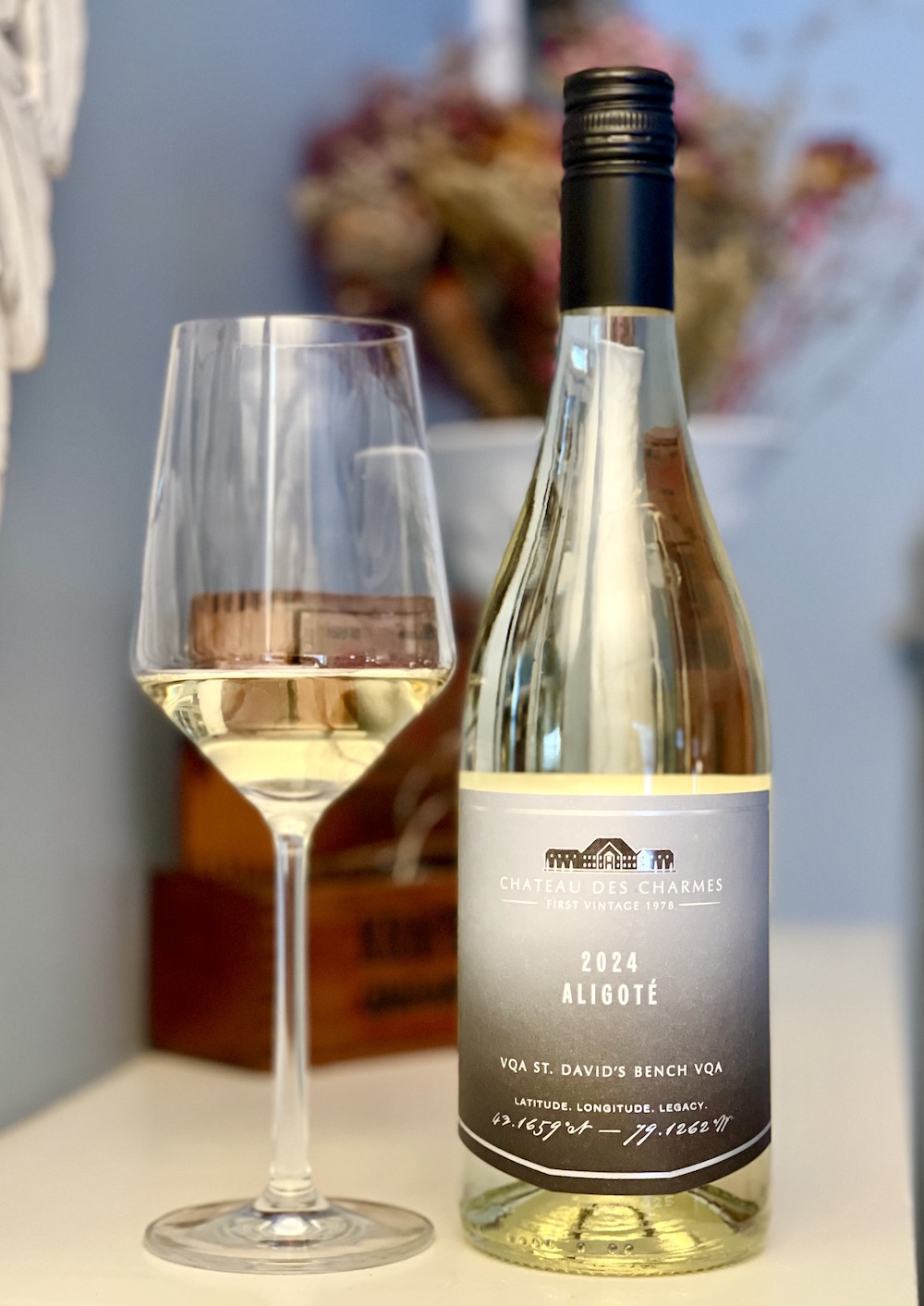
Château des Charmes Aligoté 2024 ($25, released Feb. 24, 90 points) — Aligoté is a vinifera variety rarely planted outside its native home of Burgundy, France. Château des Charmes first planted this grape in 1978 and has enjoyed success with it ever since. The 2024 vintage of Aligoté has a nose that slowly draws you in with lovely florals, fresh pear, white peach, lemon, crushed stones and a hint of jasmine. It’s fresh and lively on the palate with notes of melon, beeswax, quince, lemon zest/pith, gentle stony minerality and mouth-watering acidity through the lifted finish.

Château des Charmes Fumé Blanc 2023 ($30, now released. 10, 91 points) — In this interesting side-by-side of two upcoming vintages of fumé blanc, which is aged on its lees in French oak barrels (one-third new oak) for 11 months, comes from estate grapes planted in 1983. The term Fumé Blanc just means an oak-aged style of Sauvignon Blanc wine, originally coined by Robert Mondavi in the 1960s to denote a more complex, smoky, and full-bodied alternative to grassy, stainless steel-fermented Sauvignon Blancs. The 2023 vintage is finished under cork in a tinted bottle while the 2024 vintage changes over to screwcap and a clear bottle. The nose shows grapefruit, fresh cut grass, minty herbs, some tropical notes, white peach, kiwi and spice. It’s nicely balanced between the tropical fruit, dried sage, grapefruit/citrus, savoury notes, and subtle spice and lifted by the mouth-watering acidity on the finish.
Château des Charmes Fumé Blanc 2024 ($30, released sometime after the 2023 version, 92 points) — The winemaking in this vintage is exactly as above, but the profile is slightly different with a fresher nose, more tropical notes of guava, passion fruit, and mango plus lime, grapefruit, white flowers, pear and integrated spice. It has lovely texture, integrated tropical fruits, citrus zest, pear skin, quince, light herbs and spice with a lifted and bright finish.
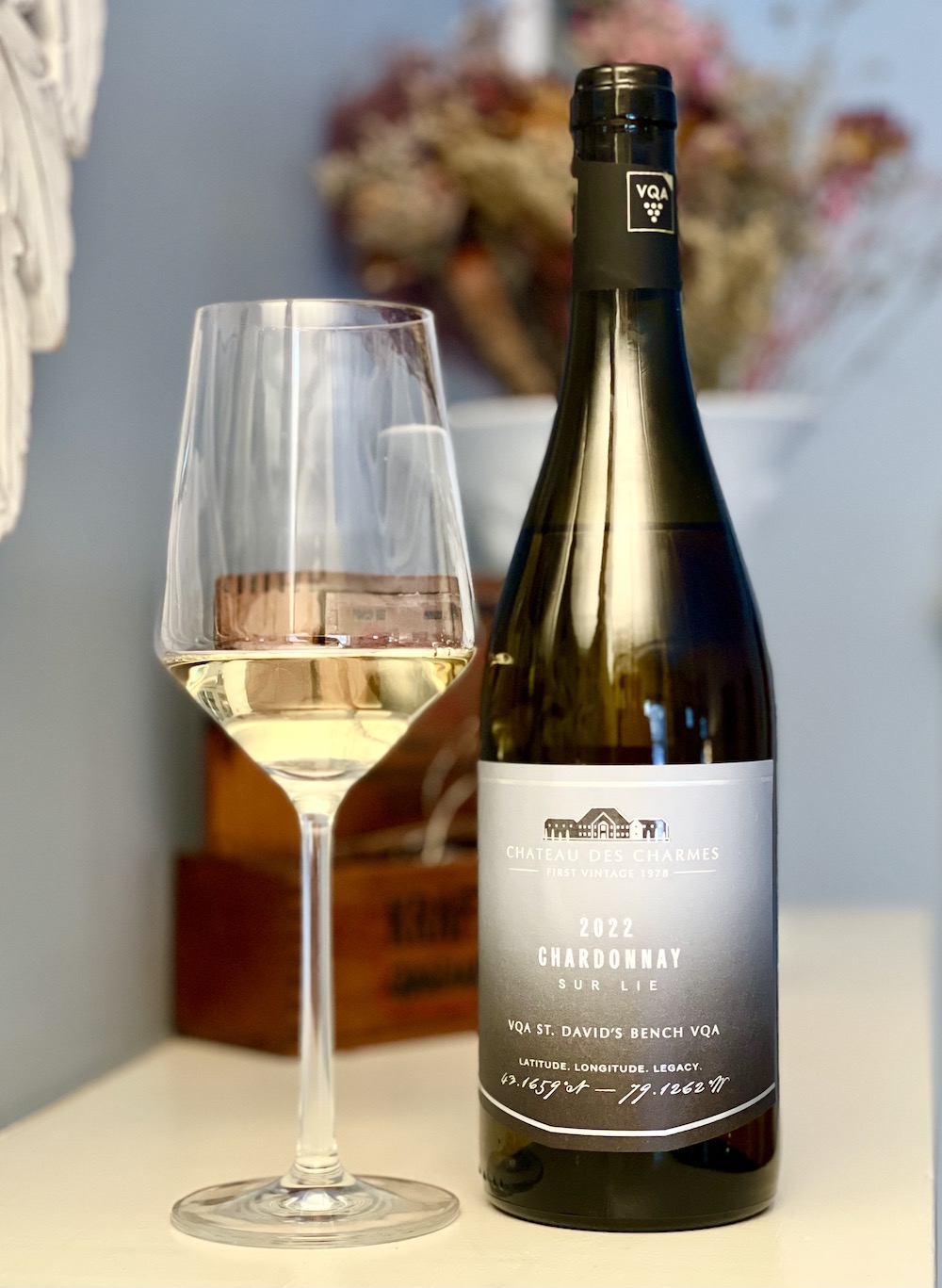
Château des Charmes Chardonnay Sur Lie 2022 ($29, just released, 92 points) — The estate Chardonnay grapes are barrel fermented and aged sur lie (a French winemaking term meaning on the lees) for 12 months in French oak barriques. As would be expected, the nose is rich, concentrated and full-bodied with plump tropical notes, white peach, yellow apples, subtle stony minerality, toasted almonds, vanilla bean and spice. It has a luxurious texture on the palate with ripe orchard fruits, guava, grilled pineapple, melted butter, vanilla-tinged spice notes and a rounded, long finish. For fans of those more substantive Chardonnays.
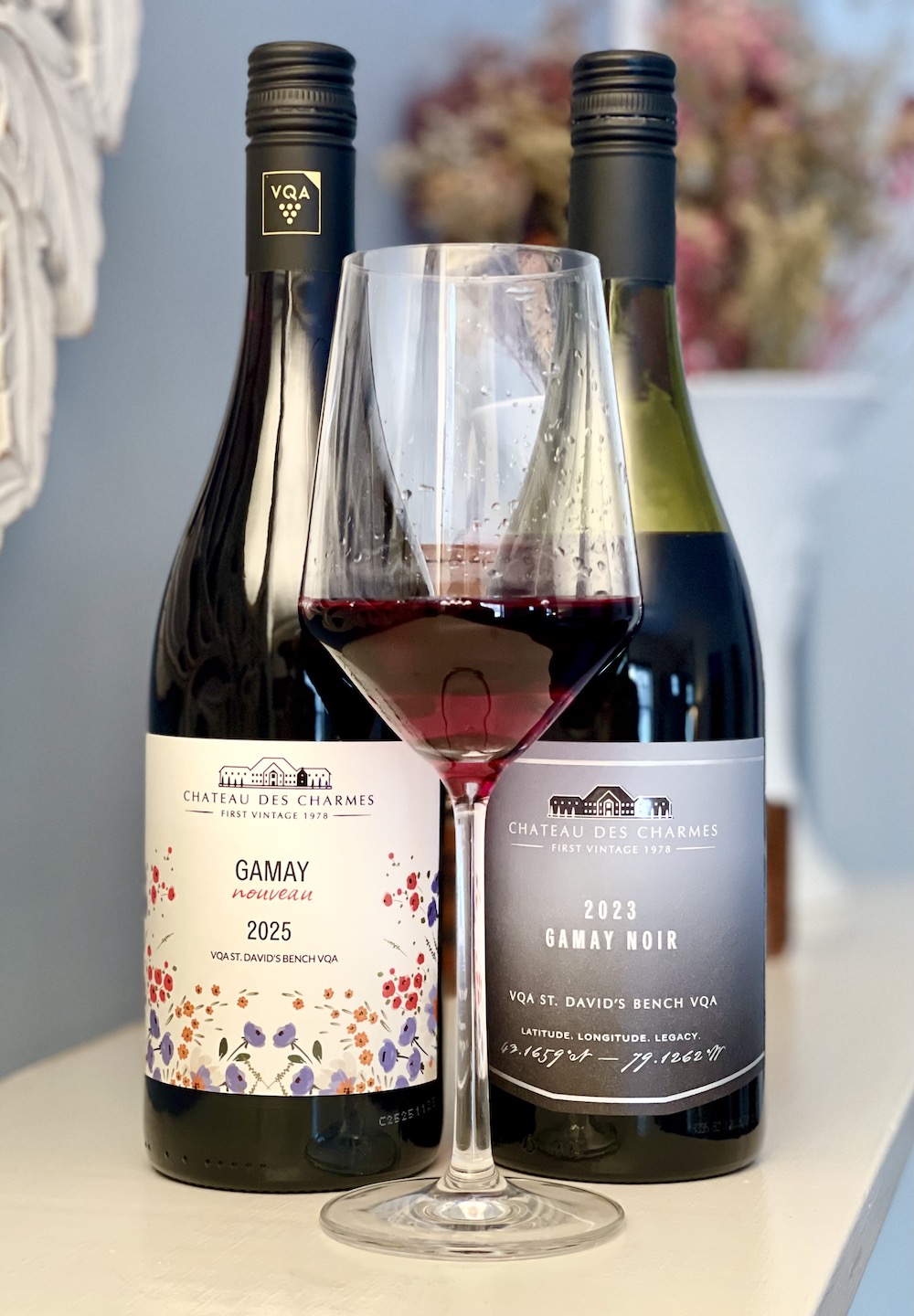
Château des Charmes Gamay Nouveau 2025 ($20, just released, 88 points) — This is a fun Gamay made in the traditional Beaujolais style using carbonic maceration (whole berry) fermentation. While it’s labelled “nouveau,” it has a bit more oomph than the traditional style that used to be shipped around the world only a month or two after the grapes were harvested. The CdC version shows ripe red berries, plums, and just a hint of fresh-turned soil. The melange of cherries, raspberries and strawberry tart are a little sweet on the palate (compared to the Gamay below) with savoury/earthy notes and bright finish. A simple, yet delicious wine for everyday quaffing.
Château des Charmes Gamay Noir 2023 ($26, released in March, 90 points) — No tricks here with 100% carbonic maceration and aging in casks. It has a pure and juicy nose of plums, dark cherries, brambly raspberries, anise, and savoury accents. It shows a touch of complexity from the light tannins on the palate but otherwise the fruit steals the show with plump and juicy red berries, anise, red currants, stewed herbs and a fresh, tangy finish.

Château des Charmes Pinot Noir 2024 ($25, released in March, 91 points) — It shows a lighter shade of red in the glass with a lifted nose of black cherries, wild raspberries, anise, violets, truffles and integrated spice notes. It’s silky smooth on the palate with a medley of fresh red berries, a touch of black licorice, savoury notes and subtle spice with a finessed and long finish. Really good value for a Pinot Noir at this level.
Comment here