

By Rick VanSickle
In the early days of appassimento-style Niagara wines, only a few brave souls attempted to make these big, high alcohol expressions from red grapes.
Also in this Niagara Wine Report: Our picks of the Niagara wines being released Saturday at LCBO Vintages stores, including, a Riesling from Thirty Bench, Wending Home Pinot Noir and a red blend from Two Sisters.



One of the first commercial attempts was from Andrzej (Andre) Lipinski, now the owner of Big Head Wines, using a fast-drying technique with abandoned tobacco kilns, at wineries such as Burning Kiln, Colaneri and, of course, Big Head.
The winemaker enjoyed early success, and wineries found a following with the style of wines they were making from re-purposed tobacco kilns. It certainly laid the groundwork for others to follow using a slower, more controlled drying process used by top Amarone wineries.
When dried correctly, appassimento wines can age beautifully for decades, often exhibiting vibrant freshness even after 15+ years, with high alcohol (15-16% abv) and glycerol providing structural support.

The new wave of a purer style of appassimento wines was led by Foreign Affair (where Lipinski was also the winemaker for a while). Owners Len Crispino and his wife Marisa decided from the beginning to make their entire portfolio from dried grapes with the legendary (and late) Giuseppe Quintarelli as their inspiration. Len Crispino told Wines In Niagara at the time, that everything he did in the vineyard and in the winery was geared toward appassimento wines using a slow process of drying the grapes in proper drying racks under optimum conditions. Under new owners, Foreign Affair now crafts dried-grape wines that they feel are best suited to the style.


Others joined Foreign Affairs in making the traditional style of appassimento wines from Niagara grapes, including Rennie Estates, which owns 50 acres of grapes on the Beamsville Bench. Owner Graham Rennie, who also owns with his partners the Niagara Custom Crush Studio, saves a small portion of his grapes for his own label, with the rest of the grapes contracted to Arterra.
Rennie likes big wines — from his Chardonnays and Pinot Noirs to his full lineup of appassimento wines — and has found a following from like-minded consumers. All his red wines from the estate’s Bordeaux grapes are made using dried grapes (or the ripasso style.

The appassimento process concentrates sugars, acids, and polyphenols, creating highly structured, full-bodied, and intense wines that are ideally suited for long-term cellaring. The thing is, with a relatively new winemaking region (when compared to the Old World) such as Niagara, we don’t really know how long in the cellar these New World expressions will continue to improve and evolve. Top examples from Amarone age gracefully for 10 years or more, with top examples lasting for decades. Will that be the case with Niagara expressions?
We got some insight, at least into Rennie’s appassimento style wines, at a tasting recently at the Niagara Custom Crush Studio. At the first of a series called “Winemakers in Residence,” Rennie presented a library tasting for guests with six older vintage wines poured alongside Rennie’s first appassimento from 2011. The lineup offered a look back at early Rennie Estate wines and how they have evolved through time.
A little background

The Rennies purchased their vineyard in 1997, one of the oldest on the bench that was producing grapes in the early 1960s but was not growing fruit at the time of purchase.
The vineyard is surrounded to the east by woodlands and ponds, to the north by Lake Ontario, and to the south by the protective shield of the Niagara escarpment. After levelling, grading, and under-draining the property in 1998, the couple planted five varietals in 1999 — Chardonnay, Pinot Noir, Cabernet Sauvignon, Cabernet Franc, and Merlot.
Rennie makes small amounts of Pinot Noir, Chardonnay, a range of “super Niagara” appassimento style wines and a ripasso style wine called Scarpata. All the wines are now made by the winemaking team at the Niagara Custom Crush Studio and the wines are sold through the retail store there.
The vintage wines we tasted
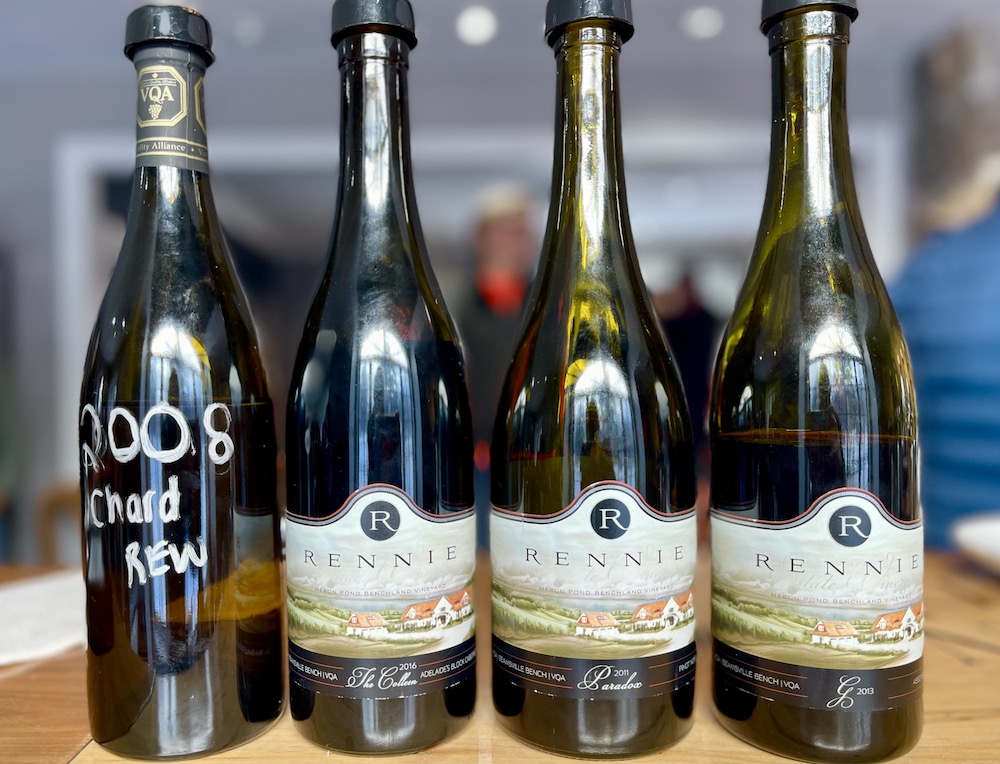
Rennie, as noted above, likes his wines a bit bolder than most Niagara wineries. He likes to push the ripeness, pick later, and utilize judicious use of oak in all his wines, including the Burgundy varieties of Chardonnay and Pinot Noir. The first wines tasted were the unreleased debut Chardonnay made by Rennie in 2008 and the 2011 Pinot Noir. Neither were built for the long haul and are showing signs of age, but interesting nonetheless to taste the evolution. The bigger styles of both Chardonnay and Pinot Noir, according to Wines in Niagara’s Vintage Chart, have a sweet spot from 5-10 years after the wines were bottled.
The two appassimento wines I tasted, the 2013 G and the 2016 Colleen, were spectacular with the G in a very good spot and the Colleen still evolving and showing no signs of easing up. A fascinating tasting, to be sure. Here’s what I liked:
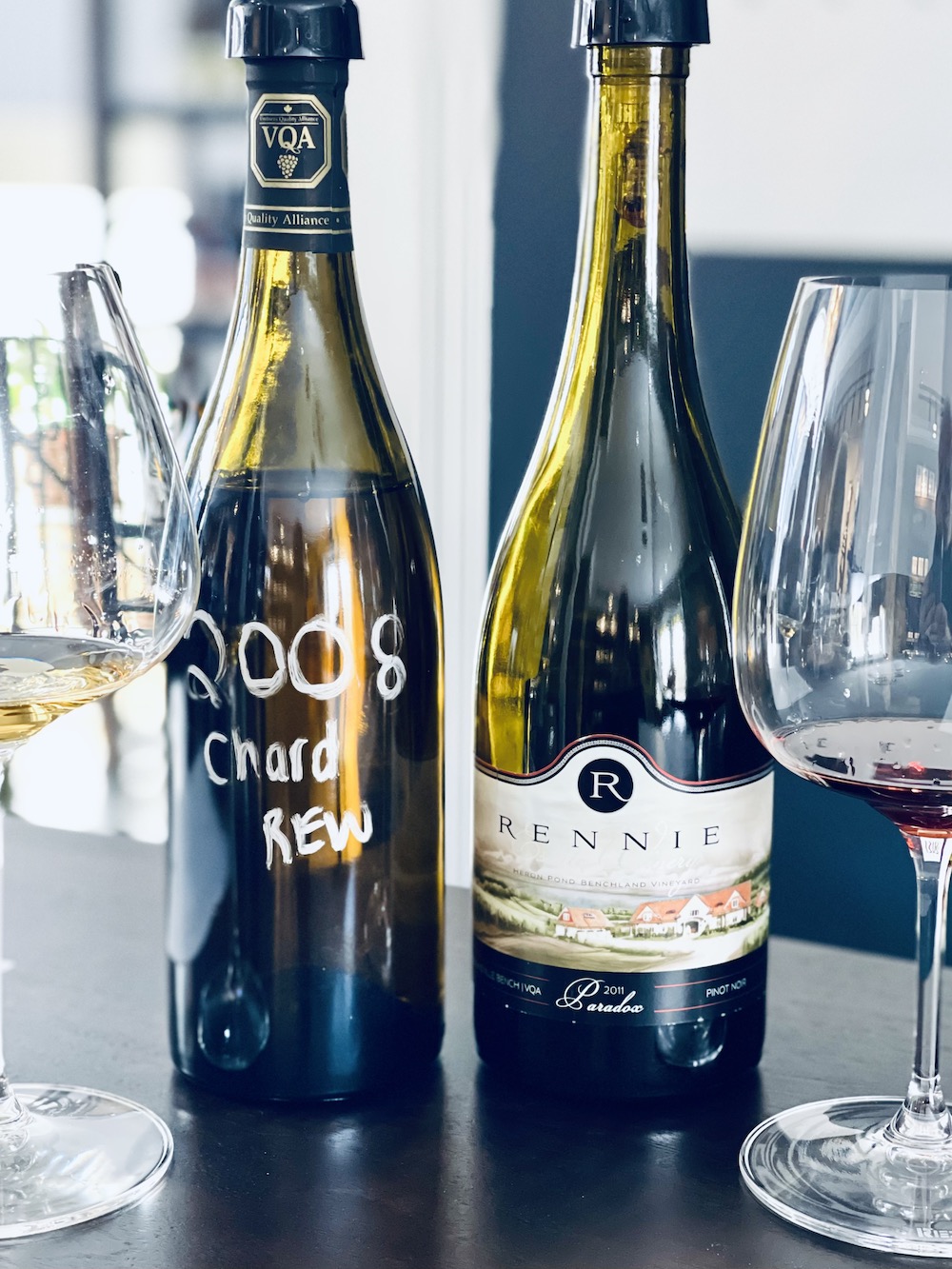
Rennie Estate Chardonnay 2008 (cost of current vintage $45) — The 2008 Chardonnay from Rennie predates the first commercial release for what is now called the Christine Chardonnay. This was made for friends and family to enjoy and bottled without a label and set the tone for later vintages of the estate Chardonnay. It has a rich, golden colour at this point and signs of the bigger, bolder, Cali-reminiscent Chardonnays with judicious use of oak, likely American oak (but I don’t know for sure). It’s of interest to see where the Christine began with the nose showing poached pear, golden apples, lemon tart, savoury notes and caramel. There is still some vibrance on the palate but it’s the super-ripe, compoted orchard fruits that shine on the palate with woodsy/spicy notes on the finish. A bit past prime time, but interesting to taste the roots of this wine.
Rennie Estate Paradox Pinot Noir 2011 (cost of current vintage $50, originally awarded 90 points) — In the glass there is some bricking around the edges suggesting signs of breaking down (which is understandable … most New Pinots aren’t usually meant to age for 15 years). The nose shows macerated cherries, kirsch, cranberries, crushed violets and woodsy spices. There was a lovely, perfumed note when first tasted on release that has faded with full integration setting in. The palate is fading a bit with a mature medley of red berries, plums, anise and savoury spice notes with still a bit of vitality on the finish. Best to drink up if you have some in your cellar.

Rennie Estate G 2013 (cost of current vintage $65, originally award 93 points) — This is an appassimento-style blend of Merlot, Cabernet Sauvignon and Cabernet Franc that’s dried for up to 106 days. The grapes were picked early to ensure “clean” fruit at 22 Brix and then sent to the drying chamber where 30% of the fruit is lost to dehydration. The winemaker at the time, Shiraz Mottiar, was looking for higher Brix of 28 or so without fruit breakdown and then the fruit is aged for 20 months in 40% new French oak barrels. The alcohol is about 16% abv. “This wine is more about fruit, balance and power,” Mottiar said at the time. It is powerful in every way. It is my opinion, after tasting most of the wines Rennie has produced, that the various Bordeaux-variety appassimento wines are the superstars in the portfolio. White the Burgundian Chardonnays and Pinot Noirs certainly have interest, especially for those who prefer more full-bodied examples, there is something special about the dried grape style of wines made from grapes grown at the Beamsville Bench estate. This is 13 years old and still going strong with a beautiful, enticing nose of crushed black currants, compoted cherries, graphite, purple plums, dried herbs, and toasted vanilla-tinged spice notes. So rich, full-bodied and fruit laden on the palate with notes of ripe dark and dried berries, figs, dark chocolate, kirsch, vanilla, nutmeg, and caramel spices that, when originally tasted, was a bit disjointed. I suggested waiting a decade for this wine to be at its peak, and that’s turning out to be quite accurate. To anyone lucky enough to have this in their cellar, go get them! But leave one or two for a few more years to soften those tannins even more.

Rennie Estate The Colleen 2016 (cost of current 2020 vintage $125, the same as the 2016, 94 points) — There is a special block of Cabernet Franc in the Heron Pond Vineyard that Rennie and Mottiar identified as being perfect for the appassimento style and they decided to replicate the first wine they made with dried Cabernet Franc grapes from the hot 2016 vintage. “It was a phenomenal year,” said Mottiar. “And the Cabernet Franc looked so good on its own. The fruit was amazing, and it felt like the perfect time to focus on Cabernet Franc.” I said at the time of the original review that The Colleen Adelaide Block Cabernet Franc 2016 (named after the daughter of the Rennies, in photo above with Graham Rennie) is the best wine that had been made at Rennie Estate Vineyards. Everything is right about this wine, if you are a fan of highly concentrated, higher alcohol, complex and spicy reds from one of Niagara’s super star grapes. This is how far you can take appassimento in Niagara without going overboard, yet it still needs time in the cellar to be fully realized.
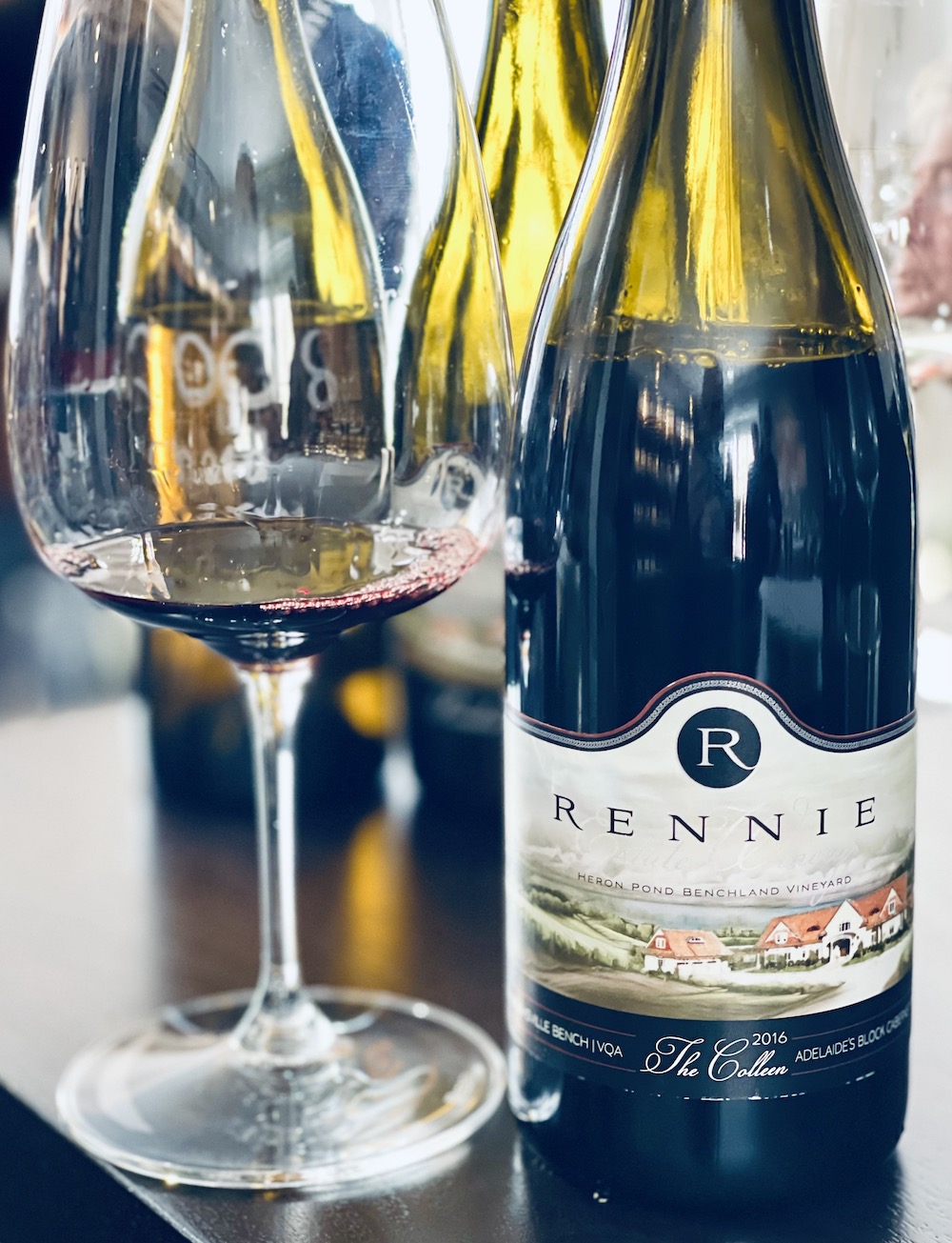
It’s the first 100% Cabernet Franc appassimento wine since the debut “Gaia” that was not released commercially from the 2009 vintage. 100% of the Cab Franc was dried for 68 days to 29 Brix and 16.5% abv. It was aged for 24 months in French oak barrels, half of which were new barrels. A decade after the vintage, this blockbuster wine has only improved and is destined to evolve for another decade or more. It was the star of this retrospective presented by Rennie at the Crush. The nose is still fresh with profound and super-charged primary fruits of compoted and brambly black raspberries, kirsch, forest berries, black currant jam, campfire smoke, underlying herbaceous and eucalypt notes, with rich and toasty vanilla-tinged spice notes. The fruits on the palate are more weighted to dark berries like cassis and blackberries, with underlying compoted black cherries, black licorice, mulled herbs, woodsy/earthy, rousing oak spices and a finish that goes and on and on. This is still a youthful wine that can be cellared another 10 years. My original review noted an aging window of 10-15 years, but after retasting, I believe it will continue to evolve for another decade. If you don’t have any in your cellar, go get the 2020 version if you want a bottle or two of top-notch Niagara-style appassimento to enjoy well into the future. Bravo!
Our picks from the Vintages
release at LCBO stores Saturday
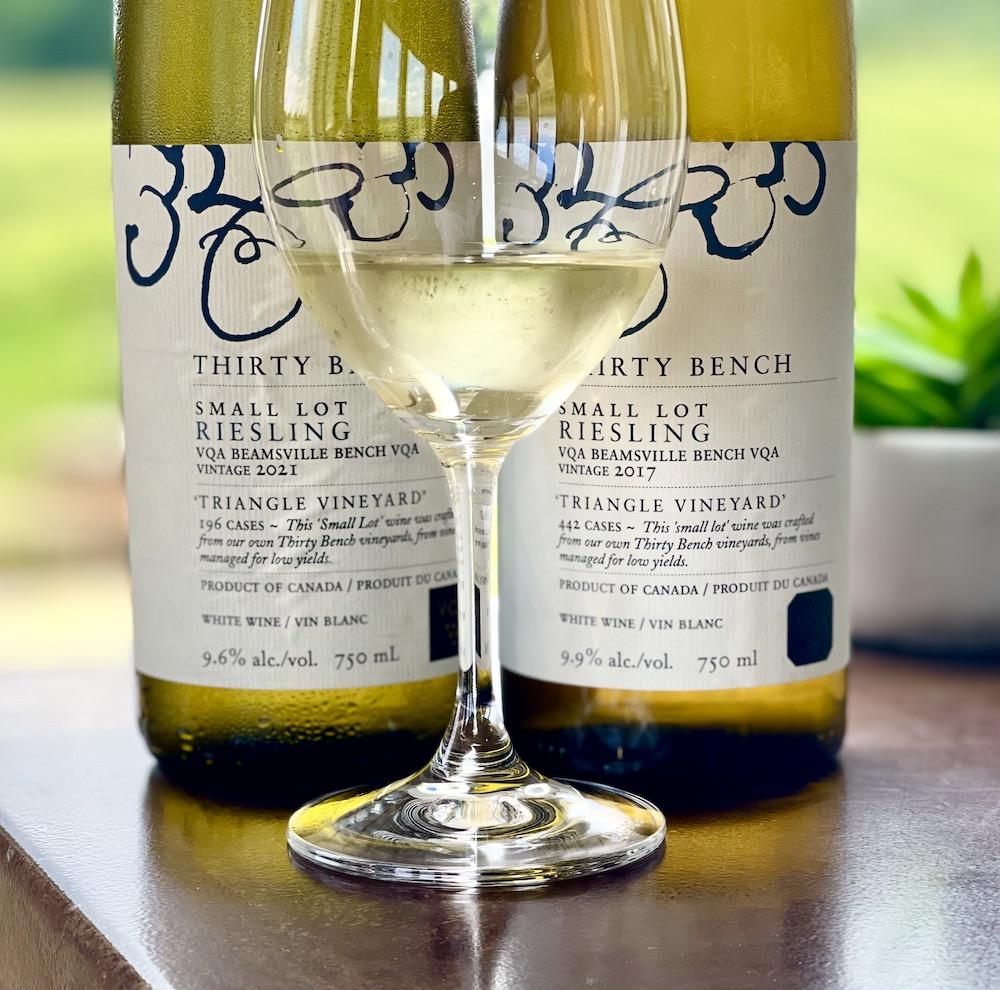
Thirty Bench Triangle Riesling 2021 ($29, 94 points) — I would call the Triangle Vineyard Riesling a classic Niagara “cru” among a handful in all of Niagara. It comes from grapes planted in 1981 to the 21b clone, dazzles from vintage to vintage and has the stuffing to cellar well for a decade or more. The nose is gorgeous with pure wet stone and seashells followed by lime, floral notes, crisp apple, peach and lemon tart. It’s quite concentrated and juicy on the palate with notes of white peach, zesty lime, bergamot, ripe apple, nectarine, waves of fresh minerality, honeycomb, a touch of ginger and a long, lifted and finessed finish. Just gorgeous Riesling here that will improve through 2035.
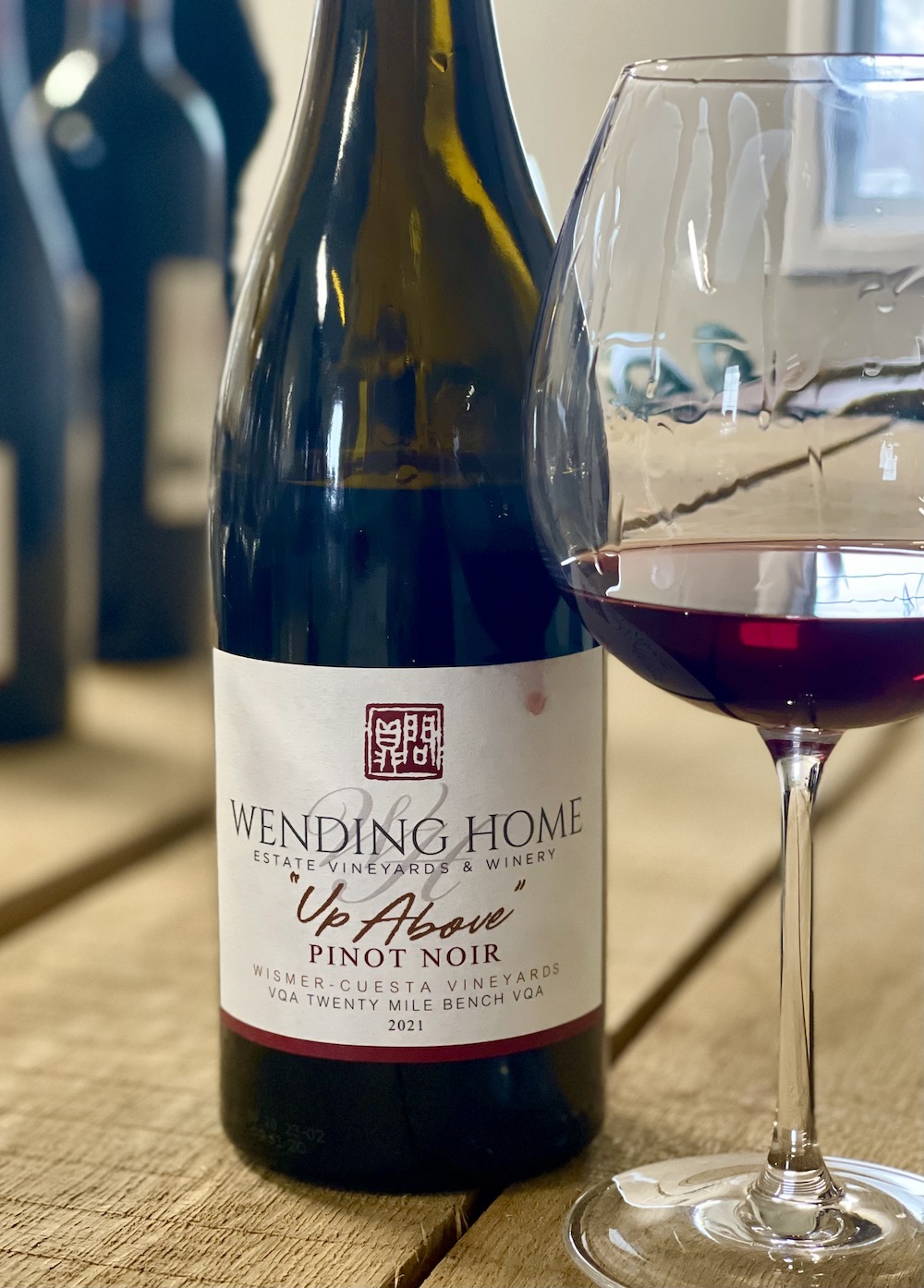
Wending Home Estate Vineyard Up Above Wismer Cuesta Pinot Noir 2021 ($43, 92 points) — There is no Pinot Noir grown at Wending Home, so proprietor/winemaker Giesbrecht chose a vineyard that was just “up above” his childhood home. The grapes are sourced from the Wismer-Cuesta Vineyard, located on the south side of Old Highway 8 between Vineland and Jordan on the Twenty Mile Bench, with aging half in puncheon and half in barrique (16% new oak) for 8-9 months and it was partially wild fermented. The vineyard was planted in the mid-1990s to Clone 777. It has an attractive, perfumed nose with earthy dark cherries, brambly black raspberries, violets, some anise, darker berries, spice and what Giesbrecht calls “iron/bloody” minerality. It has lovely texture, smooth tannins, and energy on the palate with ripe red berries, underlying earthy/savoury notes, crunchy pomegranate, anise, and razor-sharp acidity through a long, lifted finish. Good structure here for short-term, say four to five years, cellaring.

Two Sisters Eleventh Post 2020 ($48, 92 points) — The fruit, a blend of estate-grown Cabernet Franc (50%), Cabernet Sauvignon (30%) and Merlot (20%), is aged separately in French, and in some cases, a little bit of American oak (in varying sized barrels) for 30+ months before blending. For my tasting with winemaker Adam Pearce, this was decanted to help open it up. Like previous vintages of this blend, there is a certain elegance and purity of fruit on the nose and in the warm 2020 vintage that is amplified. There is a range of fruit including black currants, kirsch, cassis, plums, subtle herbs and perfumed, ethereal spice notes. It’s highly structured on the palate, with evident, but plush, tannins in support of an array of ripe dark berries, cherry/kirsch, earthy/savoury notes, cocoa, and sweet herbs on an echoing, long and vibrant finish. You can cellar this through 2035. If drinking now or within the next couple years, decanting for six hours before drinking is advised.
Also released, but not reviewed by Wines in Niagara:
• Le Clos Jordanne Grand Clos Chardonnay 2022 ($55)
• Lundy Manor Lundy Rosé Sparkling NV ($24)
• Domaine Queylus Tradition Chardonnay 2022 ($34)
• Kew Marsanne/Viognier 2023 ($23)
• Organized Crime Limestone Block Chardonnay 2023 ($25)
• Organized Crime The Mischief 2022 ($20)
• Rosewood Sauvignon Blanc 2021 ($35)
• Tawse Grower’s Blend Riesling 2023 ($22)
• Jackson-Triggs Grand Reserve Red Meritage 2022 ($30)
• Organized Crime Cabernet Franc 2022 ($25)
Comment here