

By Rick VanSickle
The venerable Inniskillin Estate Winery, with roots reaching back to the War of 1812, is celebrating its 50th anniversary in Niagara this year.
Note, also in this Niagara Wine Report: New wines from the Maenad Wine Company, and Lailey Winery.


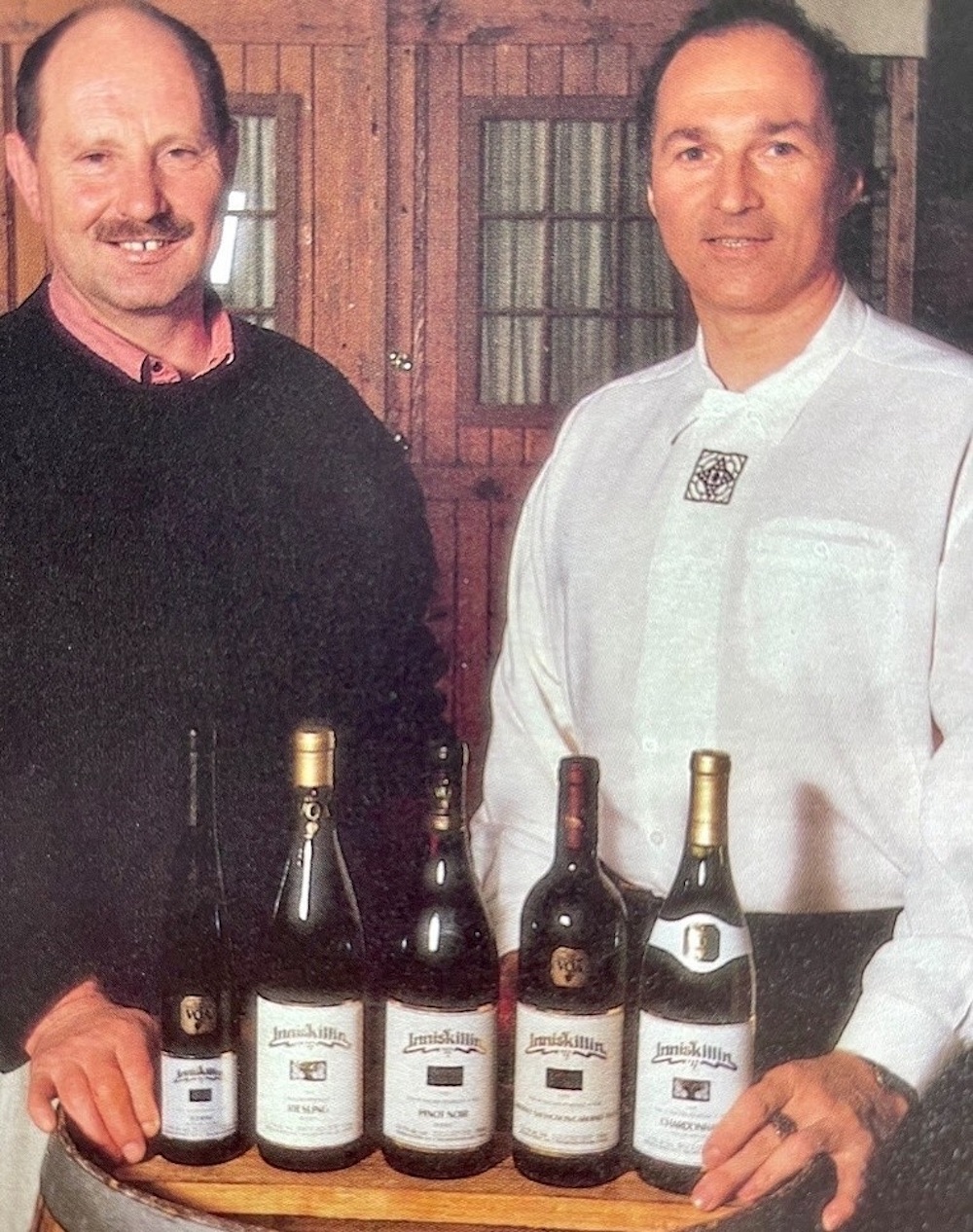
In 1975, Inniskillin was granted the first winery license since prohibition, making it Canada’s first estate winery. The winery is named for the Inniskilling Fusiliers of Ireland who travelled overseas to help protect the Canadian land the estate sits on from American troops in the War of 1812.
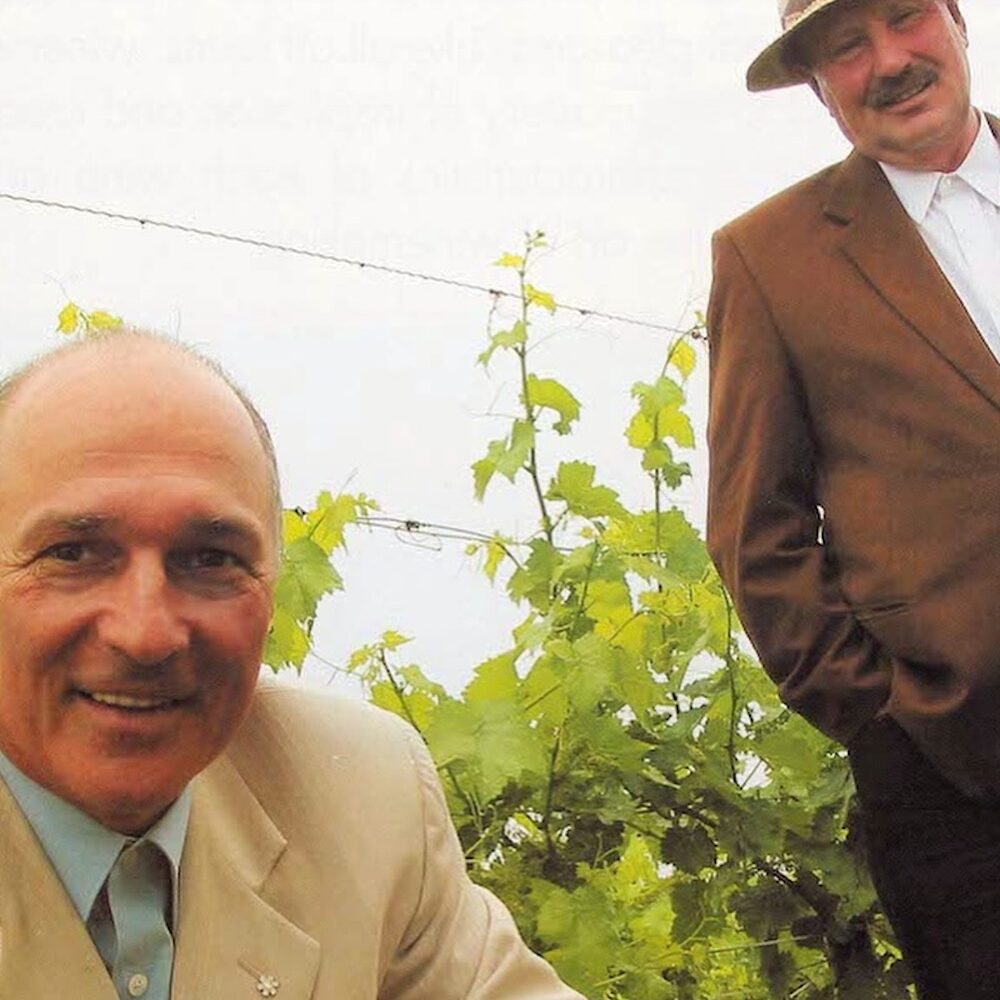
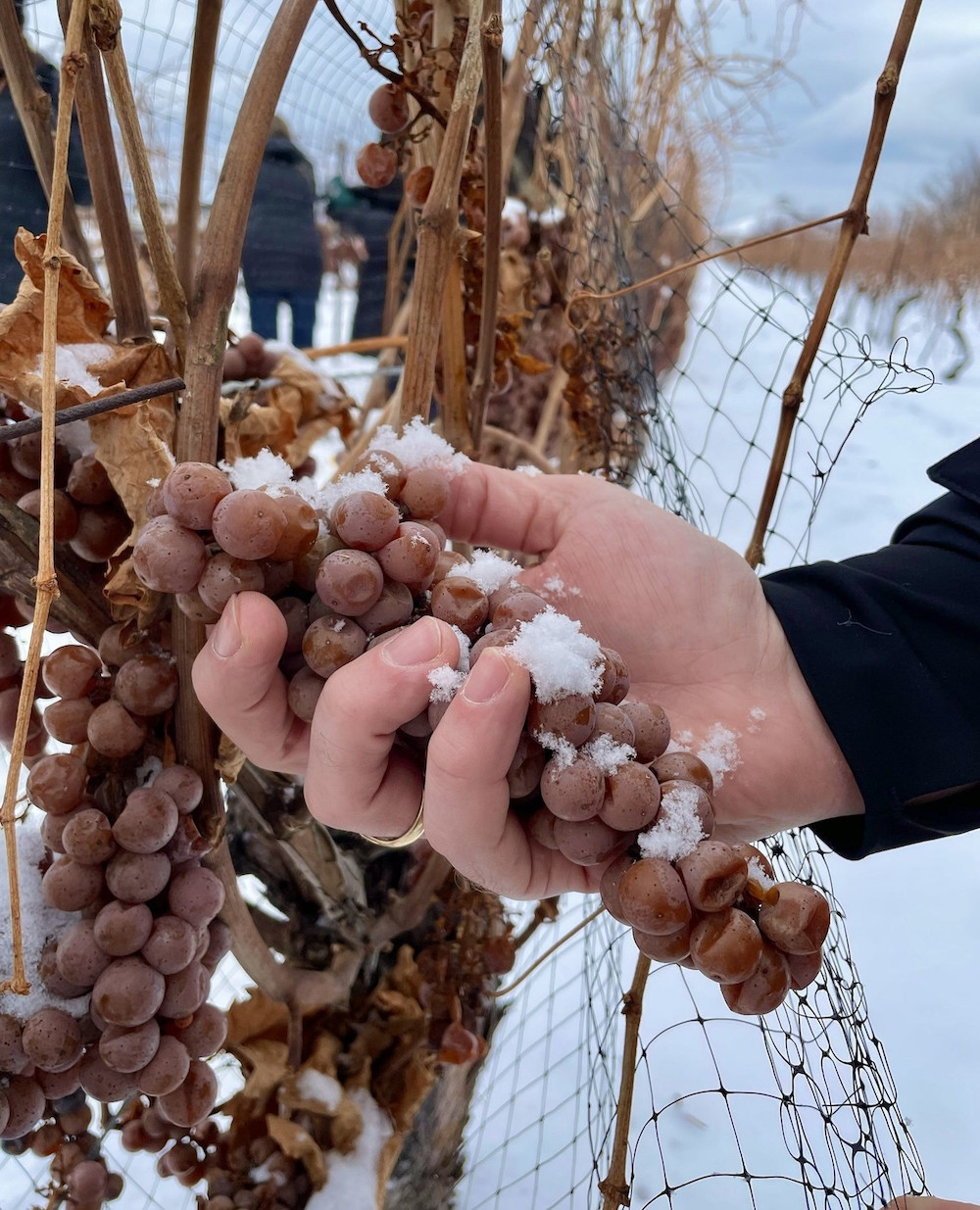
Founders Donald Ziraldo and Karl Kaiser (above) became instant pioneers, taking big risks and earning many firsts in Canadian winemaking, planting Canada’s original Chardonnay, Cabernet Sauvignon and Riesling grapes. Their greatest innovation of all? Harvesting Vidal grapes to serve as the foundation for Canada’s first Icewine, which shocked the world by winning the Grand Prix d’Honneur at Vin Expo France in 1991.
“If you asked anyone in France in the 1980s if they knew Canadians made wine, they would have said ‘no,’ ” said Nicholas Gizuk, Inniskillin’s winemaker. “Donald and Karl were six years into building the estate, with no idea of what would happen. It was a huge risk that helped set the stage for the Canadian wine industry to compete with vineyards around the globe,” he said.



“I’m part of a new generation of winemakers, standing on the shoulders of Donald and Karl,” said Gizuk (above). “We’re using the success of the last 50 years as the foundation for what’s next — and we believe the next chapter will be even more exciting. With a renewed focus on single vineyard expressions, we’re showcasing the incredible diversity of Canadian terroir through wines that are unmistakably Inniskillin.”
While its legacy is impressive, Inniskillin, now part of the Arterra family of wines, is just getting started, the winery says. “With over 100 awards in 2024 alone and the title of the world’s most awarded icewines, the winery is doubling down on quality, innovation and identity.”
As Inniskillin is ready to redefine what premium Canadian wine can be once again with “innovative techniques and over 50 years of experience that focuses on every aspect of our terroir winemaking to deliver quality wines that can only be made in Canada, delivering a remarkable taste with every bottle.”
On July 31, Inniskillin celebrated 50 years of Canadian winemaking with a new premium lineup. Highlights included Illuvia — a bolder style of Cabernet Franc — and a limited-edition single-vineyard icewine crafted to mark the milestone.
Wines in Niagara tasted both wines and this is what we liked. Note: both these bottles can be purchased at the winery and the 50th harvest icewine is also available through the September Cellar Collection at Vintages online here:
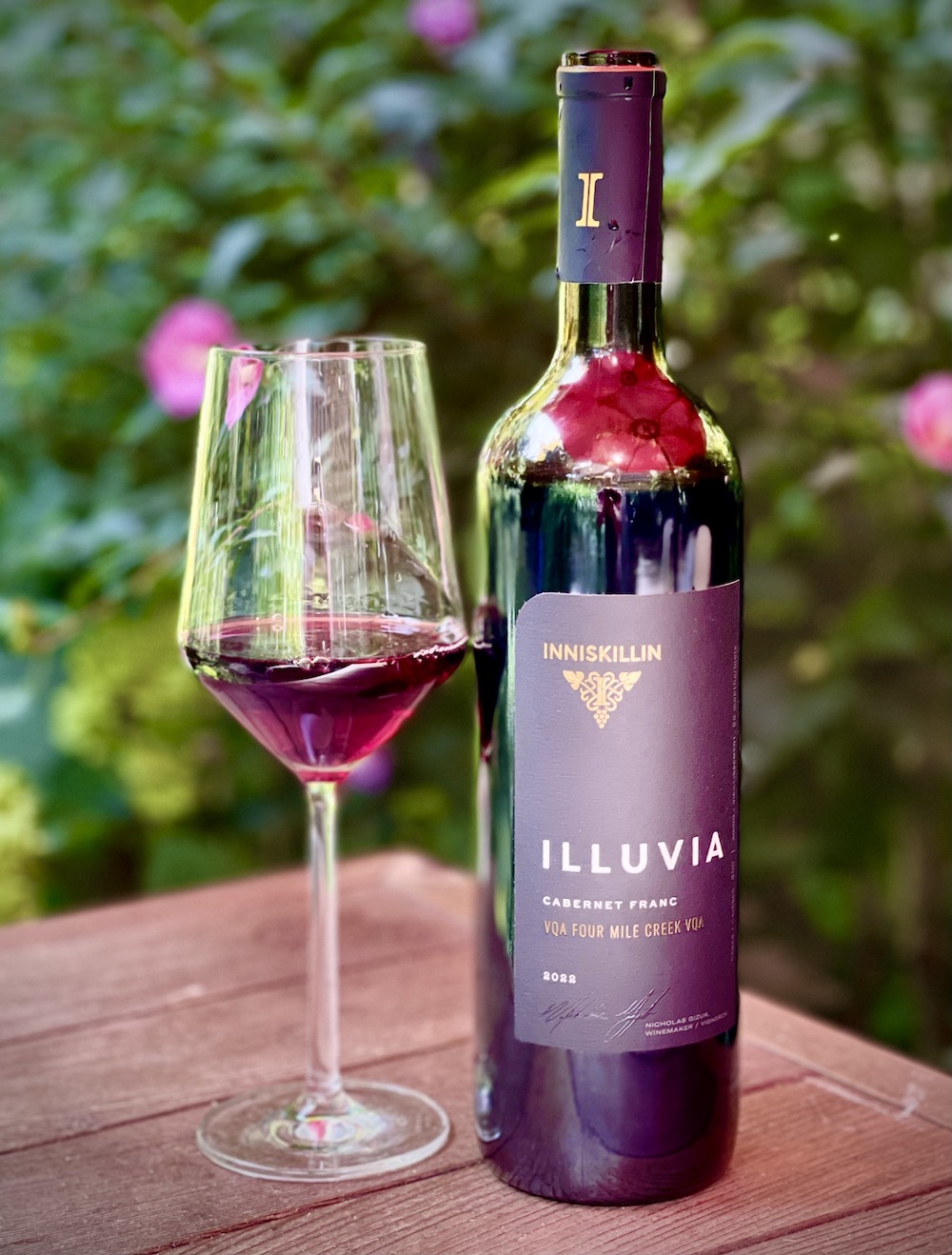
Inniskillin Illuvia Cabernet Franc 2022 ($49, 92 points) — The grapes for the Illuvia are sourced from the Seeger Farms Vineyard from 30-year-old vines in the Four Mile Creek sub-appellation. The wine had a two-day cold soak to build colour and tannin structure. It was aged for 22 months in French oak barrels. Only 300 cases were produced. There’s lovely woodsy perfume on the nose with brambly raspberries, anise, black currants, wild herbs, charred cedar, floral notes and rich spices. It’s textbook Niagara CF on the palate with savoury red berries, black licorice, mulled herbs and currants with ripe tannins, structure and integrated spice on a long, lifted finish. Will age nicely through 2034.

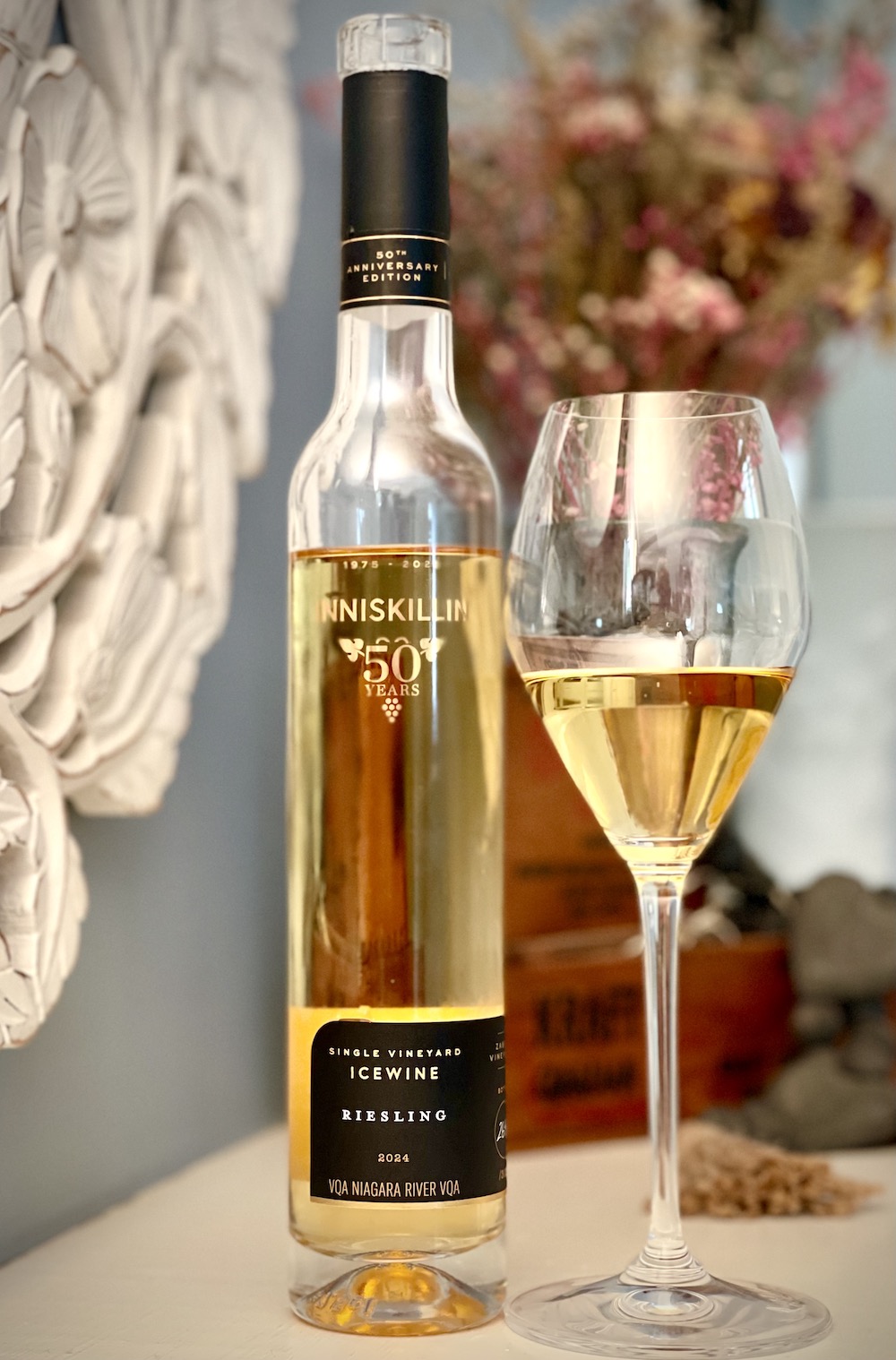
Inniskillin 50th Anniversary Zabek Vineyard Riesling Icewine 2024 ($200 for a 375 mL bottle, 95 points) — What a glorious toast to 50 years at Inniskillin. This winery is synonymous with icewine and this rich, layered icewine from the Zabek Vineyard in Niagara-on-the-Lake elevates Inniskillin’s expertise with frozen grape wine. Each bottle of this limited-edition wine is numbered one through 3,000. The icewine grapes remained on the vines until early in the new year, where they were picked under textbook conditions. Nature was kind in 2024, with minimal losses due to dehydration, wind, or birds, which can often be a challenge. The grapes were harvested at a frigld-10 C and, after pressing a small amount of concentrated juice, it was settled, racked and inoculated. Fermentation was done at a cool 15 C for 21 days until a balance of sugar, alcohol and acidity remained. It shows a light golden colour in the glass followed by an intense nose of peach preserves, citrus-lime marmalade, nectarine, honeycomb, apricots, orange peel and ripe mango. It’s thick, unctuous and has a luxurious texture on the palate with a rich broth of compoted orchard fruits, tropical mango and guava, gushing lime, apricot tart and orange peel with brown honey notes and racy acidity that promises a long and evolving life ahead. It’s attractive now but I would recommend putting down a bottle or two for a decade or more for extra complexity and tertiary nuances. A blockbuster icewine from the masters of icewine.
Two new Maenad Wine Co. wines
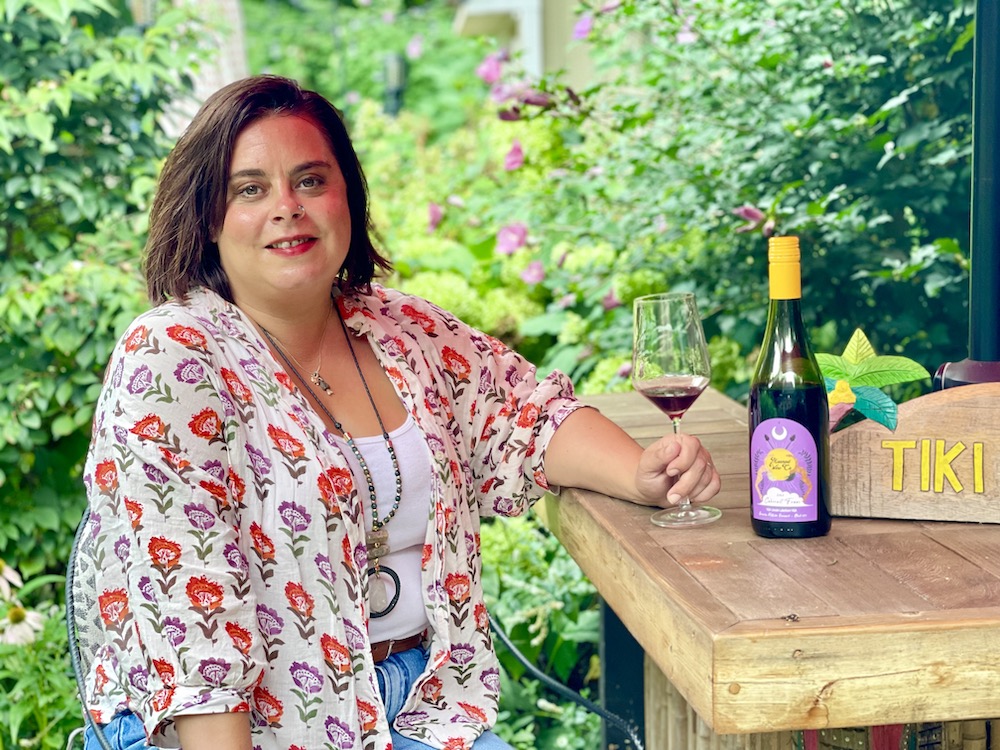
The Maenad Wine Company is the brainchild of Yvonne Irvine (above), a dancing queen, a rebel, the assistant winemaker at Creekside, and the owner (along with her husband Rob) of the quirky Maenad Wine Co.
It’s at Maenad that Irvine let’s her freak flag fly with the kind of wines she likes to make and drink, where there are no boundaries or pretentions, just low intervention wines expertly sourced and made in a style that both appeals for the more adventurous wine lover and those looking for classic expressions.
Her philosophy is “less is more” when crafting the wines she chooses to make in any given vintage. Irvine doesn’t call her approach “natural” winemaking, she says, as we sip two new wines on my back porch recently. While the wines, for the most part, are wild fermented, minimal sulphur added and unfined and unfiltered, Irvine isn’t afraid to inoculate if the wines don’t ferment naturally. If that happens “I’m going to intervene” rather than lose the batch.
The two wines we tasted were more on the traditional side, wild fermented and no filtering, yes, but still made in a low intervention style from organic grapes sourced from the coveted Grimsby-Hillside Vineyard. The results are these two beautiful wines available through Collab Wine and Beverage here. Here’s what I liked:
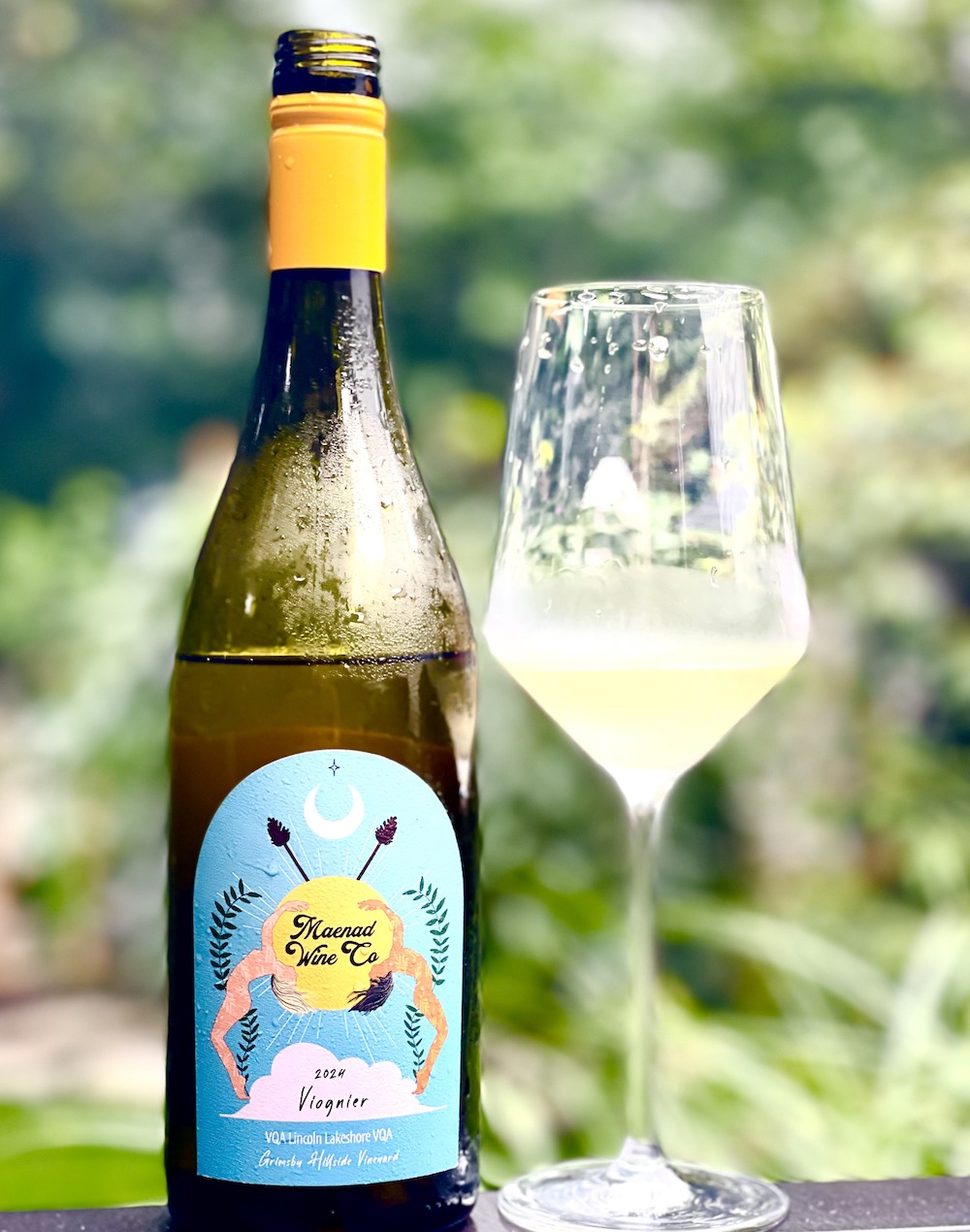
Meanad Viognier 2024 ($33, 92 points) — The Viognier grapes were hand-picked from the Grimsby Hillside vineyard when they “reached peak ripeness to get the ethereal texture and luxurious fruit character that is the promise of this grape.” The grapes were whole bunch pressed, fermented with wild ambient yeasts and aged in an acacia wood puncheons for seven months. A small amount of sulphites were added before bottling and it was bottled unfiltered and unfined. As Irvine says, “I’ve made a lot of Viognier in my time, the trick is picking for acidity and numbers, looking for that textural magic. I’m looking for soft and sexy.” It has a gorgeous nose of white flowers, apricot, white peach, honey suckle, jasmine and just a hint of spice. The mouthfeel is creamy and soft with ripe apricot, peach pie, honey, nectarine, mango and spice with a luxurious and lifted finish. No need to age this for long, it’s drinking very nice right now.

Meanad Cabernet Franc 2023 ($37, 93 points) — The Cabernet Franc grapes were hand-picked from block 275 in the Grimsby Hillside vineyard. A small amount of whole bunches were added to the tank of crushed grapes and fermented with wild, ambient yeast, regular punch downs and “good vibes” before ageing in French oak barrels (25% new oak) for 18 months. A small amount of sulphur was added before bottling unfiltered and unfined. Such an attractive nose of dark cherries, black raspberries, a touch of herbs, cassis, anise and integrated spice notes. The palate reveals subtle smoky notes to go with a melange of ripe red berries, darker notes of anise/licorice, and herbs on a structured frame and a lifted, long finish. Can age this through 2035 for further integration and softening.
A duo of new wines from Lailey
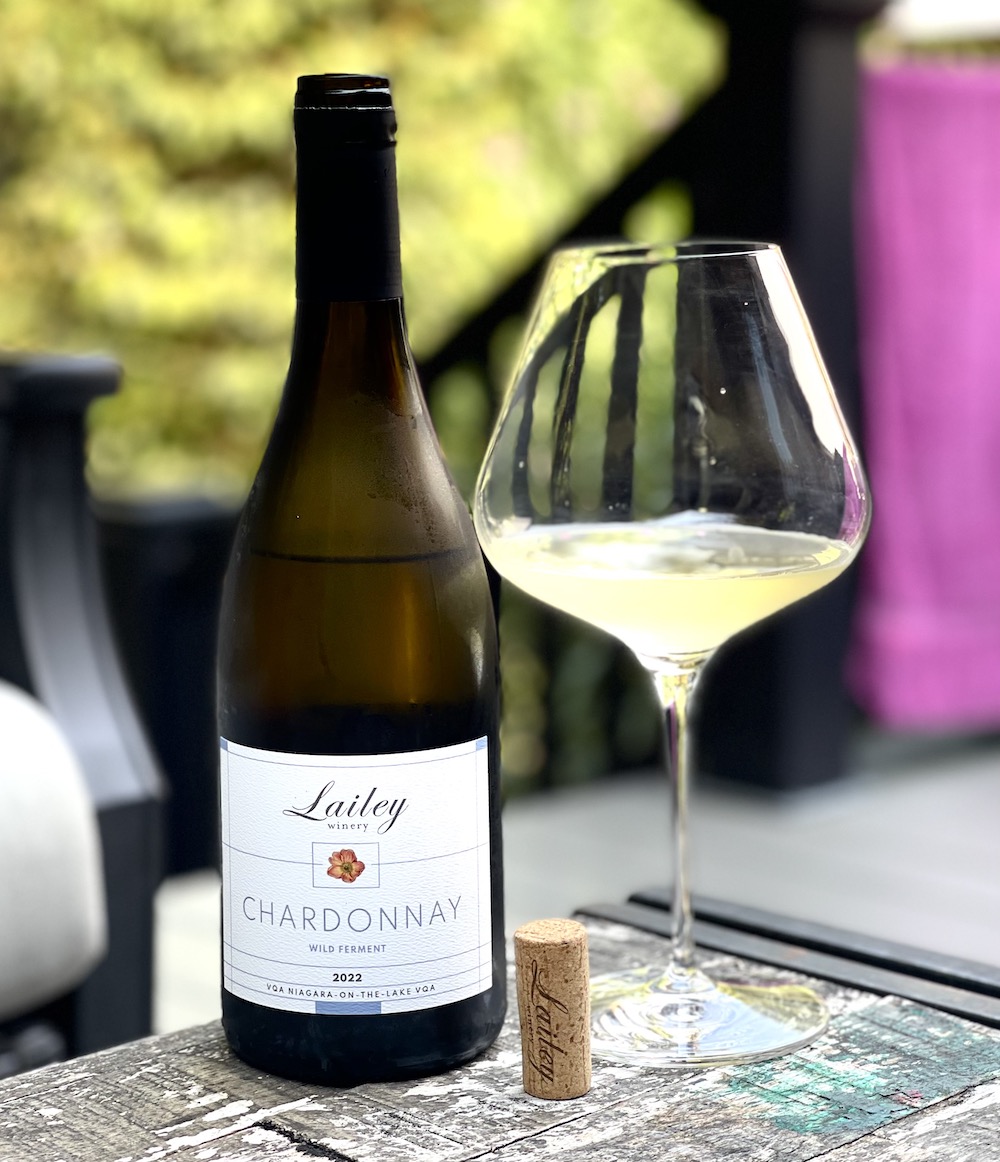
Lailey Wild Ferment Chardonnay 2022 ($38, 93 points) — This wild fermented Chardonnay spends 23 months in French oak, 20% of which is new oak. It has an enticing nose of white peach, golden apples, nectarine, racy saline, Meyer lemon and just a hint of spice. It has a silky texture and layers of orchard fruits, zesty citrus, lemon peel, subtle savoury notes, and stony minerality on a lifted, fresh finish. Lovely Chardonnay here. Can cellar through 2032.
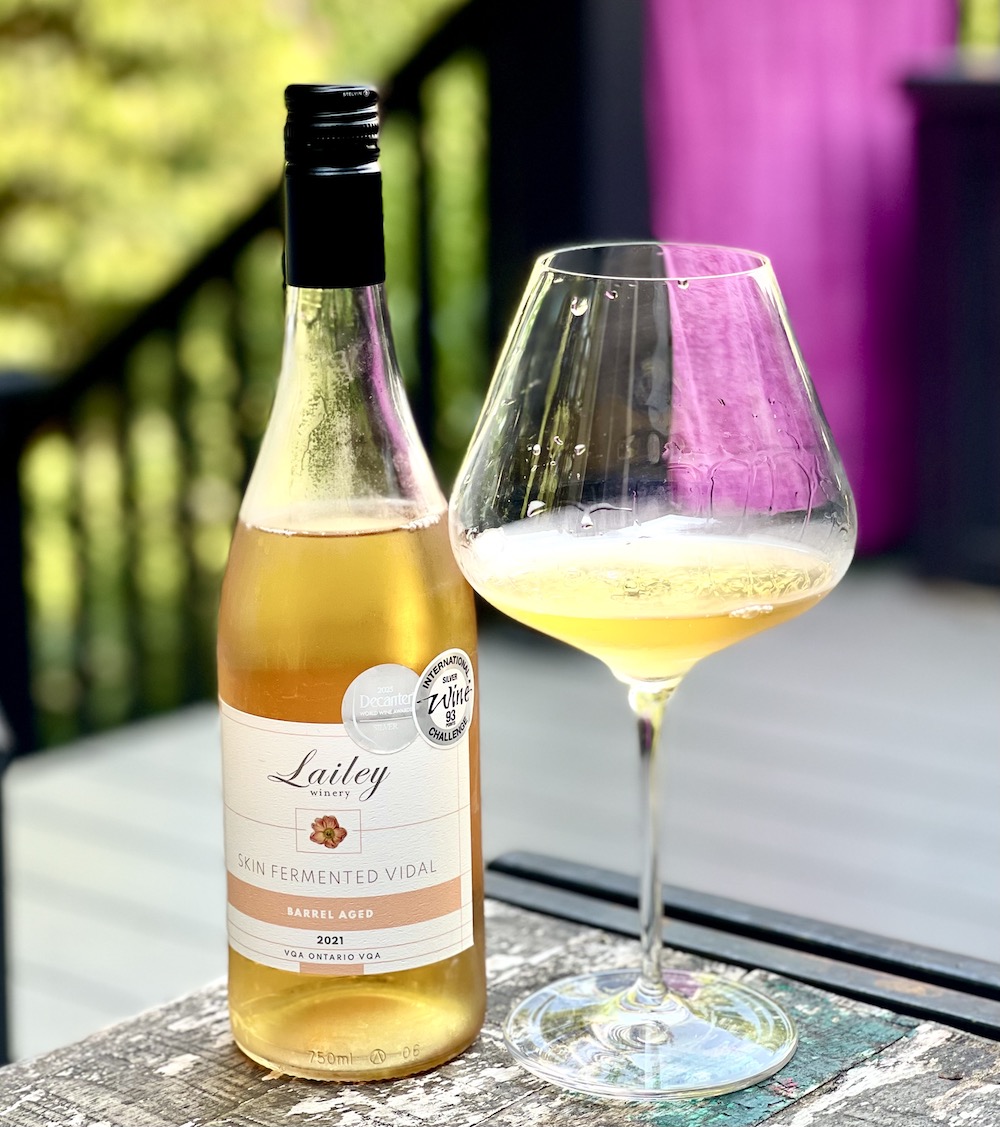
Lailey Skin Fermented Vidal 2021 ($35, 89 points) — This 100% Vidal orange wine is hand-harvested and fermented in micro cuvées for 10 days of skin contact before being pressed gently. After pressing, it was barrelled down into neutral French oak on its lees and aged for 24 months before bottling. It shows a light orange colour in the glass with an intriguing nose of tangerine, peach, bruised apple, kiwi and savoury/earthy notes. It has lovely texture to go with notes of peach pie, nectarine, citrus zest and just enough savoury/reductive notes to remind you this is a stripped-down orange wine that’s made with little intervention. The finish is fresh and lifted.
Comment here