
By Rick VanSickle
A new day is dawning for Niagara’s Ravine Vineyard Estate Winery — a fresh vision, team and the sixth generation of family knocking on the door.
Ravine has always been a beacon of goodness, the complete package for wine, chef-curated food, and baked goods, nestled in the heart of St. Davids with a history that dates to 1867, when it was then known as the Upper Lowrey Farm. But recent changes to key positions at the destination winery are about to transform the future path in promising ways.
First a little history …
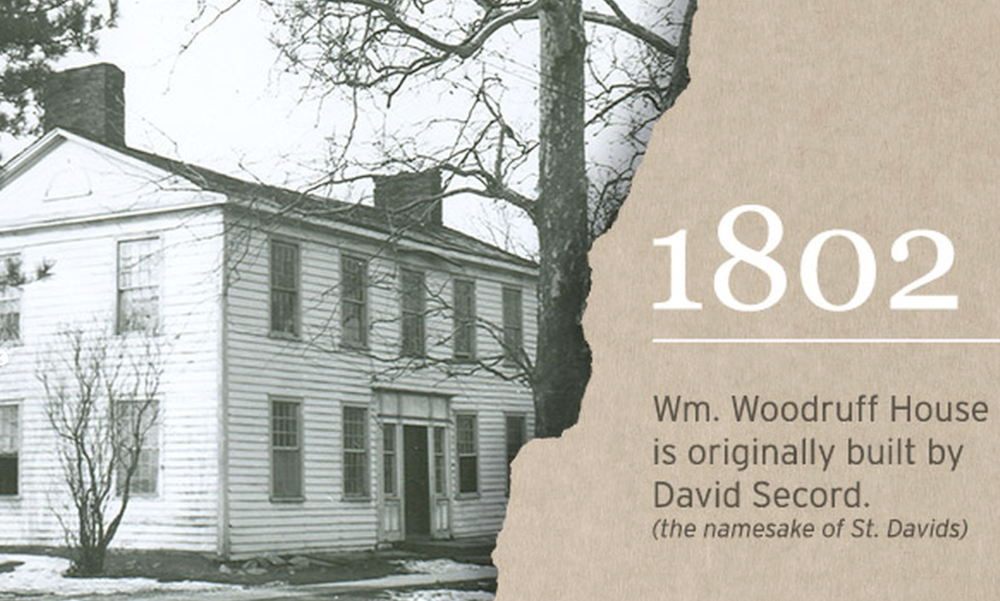
In 1867, David Jackson Lowrey purchased the farm that is now the Ravine Vineyard Estate Winery. His family moved from Vanessa, Ont. to St. Davids and subsequently planted 500 vines on the Upper Lowrey Farm in 1869 — making the family the first commercial vineyard owners in the area.
In the early 1900s, Edwin David Lowrey took over the farm and began to grow tender fruit such as peaches, cherries, pears, plums and apples. The family owned and operated many of the shops in the village such as the General Store, Post Office, the Queenston Quarry as well as the Ravine Sand and Gravel Quarry, from which the winery and wine label were named. The family also owned a canning business, named Lowrey Bros. Canning Factory. Norma Jane’s father, Howard Borden Lowrey, operated the family farm from the early 1950s to 2001. Throughout the years, vineyards have replaced the fruit orchards.
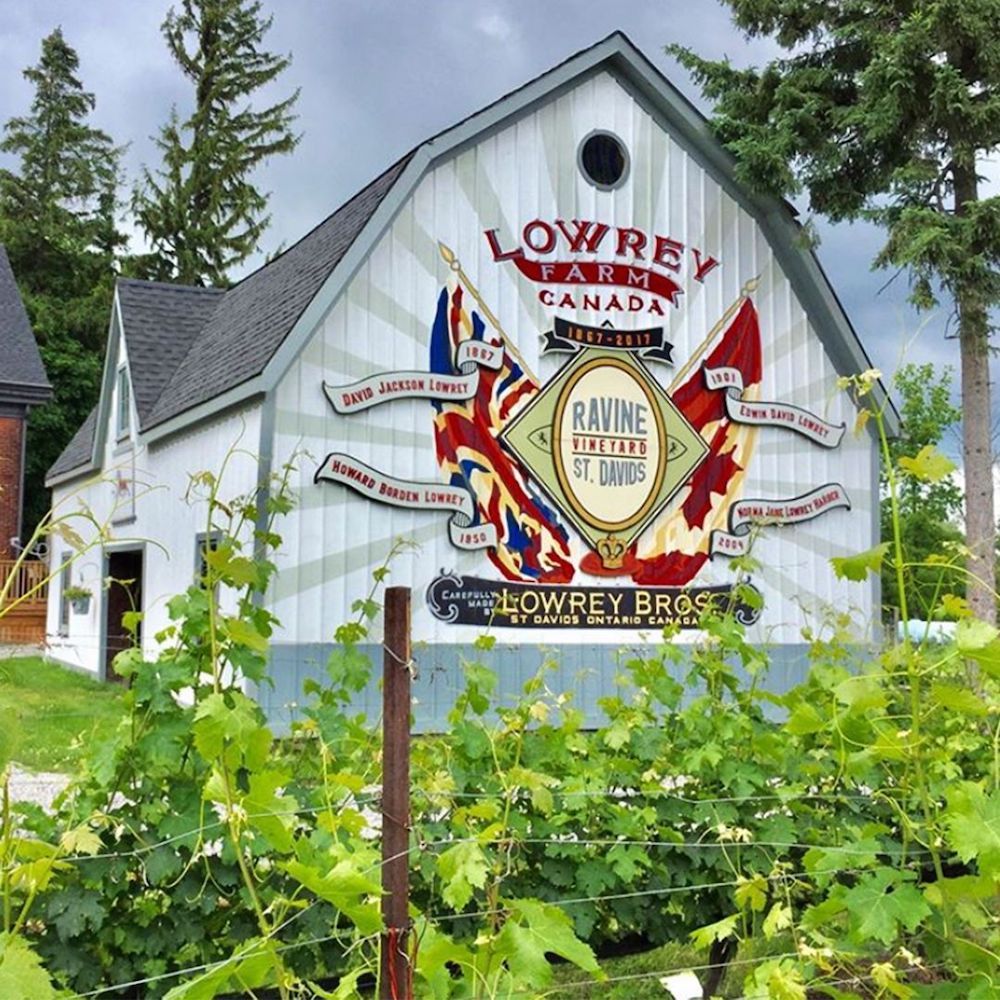
The 34-acre farm was passed on to Norma Jane, who purchased the land from her four siblings and mother in 2004. Having grown up on the farm, she has always been sensitive to the subtleties of its terrain. Norma Jane and husband Blair Harber immediately began re-planting their new vineyards, which include the three Bordeaux reds; Merlot, Cabernet Sauvignon and Cabernet Franc, as well as Chardonnay and Riesling plus purchased a vineyard in the Four Mile Creek sub-appellation that brought more estate grapes into the fold, including Gamay and Sauvignon Gris.
The family has continued to improve the property while embracing their past and supporting the community that helped build it.
Ravine today …

Ravine is still owned by Blair and Norma Jane Harber with their three sons in key positions at the winery. Paul Harber is the “visionary,” Alex Harber, who returned to the fold two years ago after working in the drinks business for 12 years in Toronto, has moved to the tasting room to elevate the wine experience, and Andrew Harber is the executive advisor. Recently, the first family members from the sixth generation of the Harber/Lowrey family to work at Ravine, Alex’s nephew Aiden and niece Emma Harber, began working as junior servers.
Long time executive chef John Vetere has taken on a larger role as director of operations and works with closely with executive sous chef Nicholas Antunes.
New Ravine team members …

The newest hires have been Matt Dixon (right in this photo) as director of sales and marketing, and winemaker Jay Johnston (beside Dixon and across from Harber), who joined the team only this month.
“I don’t think I’ve ever witnessed such a strong team across the property,” Harber tells me. “From our culinary team to our retail staff, to the events department, and now with Jay at the helm of winemaking … it looks like a very exciting time for Ravine. Really damn exciting.”
Harber, a sommelier with a diverse work history in Toronto in various roles, is excited by the chance to “elevate the tasting experience alongside Dixon and Mike Dick, the retail manager, in a way that provides knowledgeable experiences in a comfortable format.”
Harber says that “sommeliers still can get a bad rap for being pretentious, snobby, etc. We just want to create a setting and culture that encourages asking questions. As basic or as complex as you’d like. It still has to feel like a family setting.”

What drew Harber back to the winery over two years ago was family. “Working in hospitality, I missed so many holidays. Mother’s days, Father’s days, birthdays, anniversaries, and so many milestones,” he told Wines in Niagara. “I’d typically only have a day off for Christmas. With the age of my parents, I started to do the terrible arithmetic of how many more moments and memories I’d have with them. So yeah, decided to come back and dive back into Ravine.”
One of the first projects Harber took on was re-imagining a private tasting room (where the bakery was located and since moved to the restaurant) to offer interesting back vintage experiences. It’s a tasting for those who want to deepen their knowledge of the winemaking process and taste older vintages and limited editions. It includes a selection of four wines from Ravine’s reserve, and cellared ranges hosted by Harber. I got a preview of the experience and tasted four fabulous older vintage wines for this report. My tasting notes are toward the end of this post.
Newly installed sales and marketing manager Matt Dixon has set his sights on increasing wines sales beyond the cellar door. “We haven’t been in the LCBO in a while and our plan is to build our LCBO business.” One of the first wines to get listed in recent years at the LCBO arrived in stores on Jan. 24, the Ravine Charmat Sparkling.
Dixon has also found early success at Costco with three premium wines coming to stores in Ontario soon — a Meritage, a Cabernet Sauvignon and a Reserve Cabernet Sauvignon, all premium wines priced from $35 to $45.
The new winemaker …
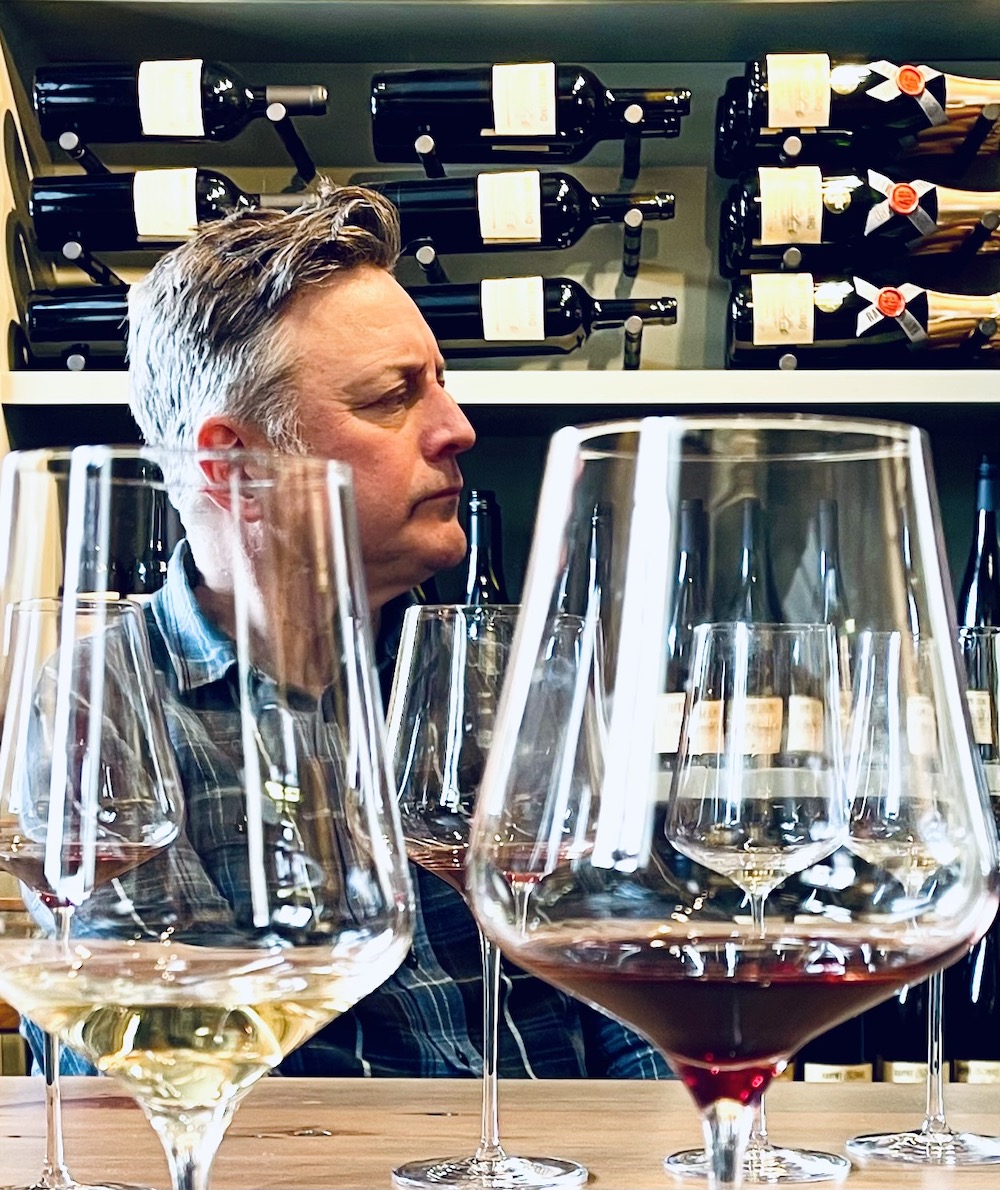
As for the wines going forward, the most recent hire is Jay Johnston as the head winemaker. He should be a familiar name for most consumers who follow Ontario wines. His resume includes stops at the new Skye Chase Estate Winery in St. Thomas, Stratus, Tawse, Hidden Bench, Flat Rock Cellars, Organized Crime … I could go on. Fact is, Johnston (above) is a respected winemaker and has made some of the finest wines in Ontario over the years.
He joins an impressive list of former winemakers at Ravine, including Lydia Tomek, Marty Werner (also a former GM), Shauna White, Peter Gamble and Ben Minaker.
I asked Johnston what style of winemaking he hopes to bring to Ravine. Here’s what he told me.
“Our plan is to continue to refine what is already a strong portfolio and to keep highlighting the vineyard parcels based on their quality, potential and to make more-and-more smaller batches to give us a wide range of components to blend. This already started in 2025 by the interim winemaking team, and we plan to keep riding this momentum into the upcoming blending sessions where wine allocations and hierarchy are determined, and to keep pushing the envelope in what we can learn into future vintages,” Johnston says.
“The recent acquisition of the Creek Road Vineyard (the original Chateau des Charmes vineyard in the Four Mile Creek sub-appellation) will allow us to learn more about the potential within those blocks and brings with it a number of new estate grown varietals that we can work with — such as Gamay and Sauvignon Gris,” Johnston says.

“The original estate vineyard on the St. David’s Bench is mainly planted out to Chardonnay, Riesling and bolder reds — these Bordeaux styled red varietals like Merlot, Cabernet Sauvignon and Cabernet Franc will always be the backbone of the Ravine portfolio at all tier levels, especially in the reserve range. One of the things I’ve personally learned over the last 20 odd years, is that starting with decisions early in the growing season, as early as pruning, about which wines the fruit will potentially go into, whether it’s a mid-tier or upper-tier wine, allows you to really showcase those hierarchies when it comes to the finished wine.
“Tailoring the viticulture to the resulting wine in glass is ideal. Nothing happens without an intent. But the journey will take years as we get to know the farms and their blocks and their potential. The key decisions will be made during harvest about which blocks to push for greater ripeness, which ones should come in a bit earlier and then how to treat the wines in the cellars to get the fullest potential of the fruit.”
Johnston says the new vineyard will give the winemaking team more opportunities for trials and finding what works best. “Starting with vineyard practices through to winemaking techniques, such as processing styles (crush, and destemming), maceration times on skins, fermentation temperatures, barrel regiments, ageing/elevage times — all of these decisions offer an opportunity for learning. It’s really a process management focus to improvement and then letting our palates help in the final blending.”

Fun Fact #1: Did you know that there is an underground tunnel that runs the entire length of the Ravine complex, from the winery to the new banquet hall? Everything needed for the kitchen and special events is off-loaded where the winery is located and then moved underground to the various kitchens. After the food is prepared, it travels up elevators to the restaurant and banquet facility.
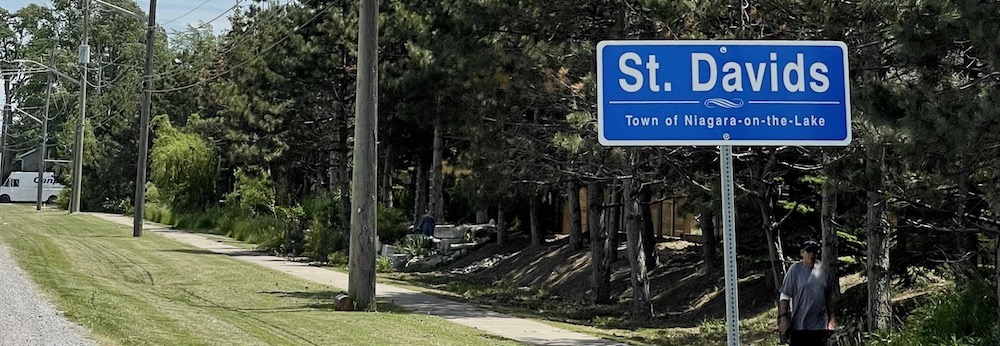
Fun Fact #2: Throughout this post you may see the name Davids spelled two different ways. It’s a complicated story, but to simplify it, the town is spelled with no apostrophe while the sub-appellation, due to an error by VQA when the term was legally enshrined as a viticultural area and spelled it St. David’s, with the apostrophe. As a bit of a wink-wink, Ravine spells it St. Davids on its labels without the apostrophe when referencing the sub-appellation, the only winery to do so. It’s a fun story with twists and turns and I wrote about it here in this post.
I sat down with Johnston, Harber, and Dixon for a tasting of back vintage wines in the new, cosy tasting room set up for the experience and later in the restaurant to taste a couple of current releases matched to a range of chef prepared dishes.
Note: There are a few bottles of all four of these back vintages available to purchase. Just ask in the tasting room if interested in purchasing. Here’s what I liked:
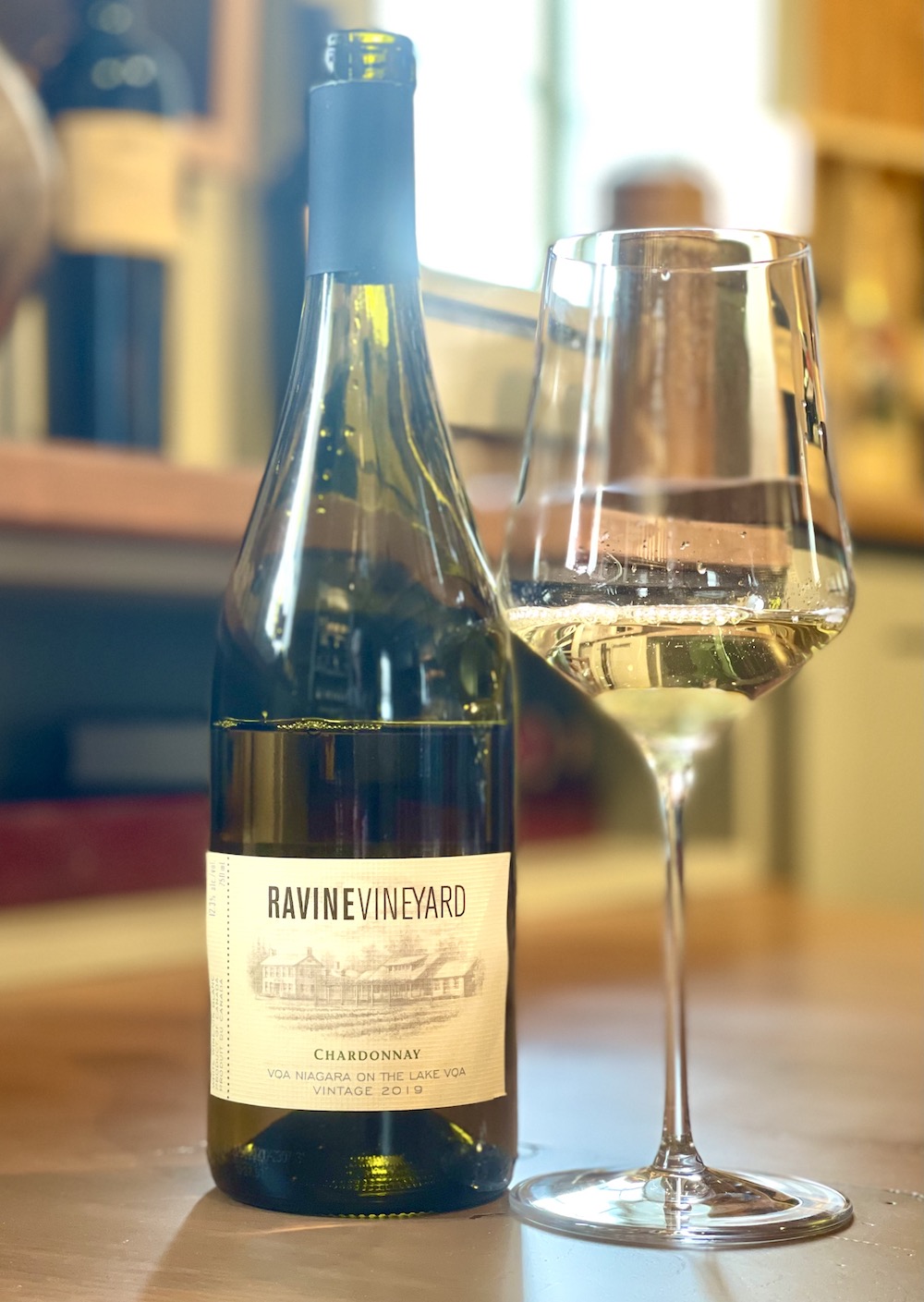
Ravine Chardonnay 2019 ($35 for the current 2022 vintage, made by Lydia Tomek) — This Chard was barrel fermented and aged for 14 months in French oak. The nose lights up with pear, yellow apple, creamy/spicy notes, citrus zest, toasted vanilla and a nice vein of salinity that has all integrated nicely with a few years in bottle. It’s caressing on the palate with a rich and creamy texture and loaded with ripe orchard fruits, toasted oak spices and still plenty of acidity keeping it lively on the finish.

Ravine Patricia’s Block Riesling 2019 ($29 for the current 2023 vintage, made by Lydia Tomek) — Patricia’s Block is from the estate’s organic home vineyard, which can be viewed behind the restaurant. There’s a little dip in the vineyard where all the magic happens — a tiny pocket that traps moisture causing a small amount of botrytis on the grapes. The 2019 has about 10-20% botrytised fruit. It has a nose of lemon oil, ripe yellow pear, lime, wet stones, subtle floral notes and emerging petrol. It’s expressive, focused and pristine on the palate with fleshy apple, lemon chiffon, lime, a touch of pear, grapefruit and wild honey that’s all perfectly balanced by the racy acidity on the finish. Can age this another 5+ years to amplify the petrol and soften the acidity.

Ravine Merlot 2012 ($39 for current 2021 vintage, winemaker Marty Werner) — For the reds, Harber opened a couple of bottles from two of the best vintages in Niagara for Bordeaux red varieties. The Merlot from the hot 2012 vintage spent 10 months in a combination of new and older French oak barrels. This is really in a nice spot right now, perfectly balanced, subtle tertiary notes, and depth on a lifted finish. The flavours range from strawberry tart, ripe purple plums, and savoury/earthy notes to charred cedar, kirsch and spice. The finish is bright, vibrant, still lively and should continue to deliver interest for another 5-7 years. From another hot and dry vintage that was ideal for the late-ripening varieties in Niagara.

Ravine Reserve Red 2007 ($65 for the current vintage, winemakers Peter Gamble and Ann Sperling) — The top red from Ravine, a blend of 50% Cabernet Sauvignon, 30% Merlot and 20% Cabernet Franc, spent 10 months in French oak (mainly new barrels). It’s simply gorgeous and really at its peak of perfection after nearly two decades in bottle. It’s seductive, silky and penetrating from the nose to palate with integrated and compoted dark berry fruits, kirsch, cocoa, and savoury spices that echo on the luxurious finish for minutes. A beautiful thing and a testament as to why we need to keep at least some of our bigger Niagara red wines from key vintages until they reach their full potential.
Two current releases over lunch …


Over lunch at the estate restaurant, the chefs prepared a few dishes to pair with both the Cabernet Franc and Gamay Noir below. The “Royale” charcuterie and cheese board is a well-curated mix of chicken liver parfait, cured meats, duck and pork terrine, cornichon, sweet preserves, crostini and your choice of cheeses. We also enjoyed a short rib tartine with grilled sourdough and a Philly cheese steak pizza.

Ravine Cabernet Franc 2022 ($45, 92 points) — Ravine’s Cabernet Francs have always been made in a classic Niagara style, with pure concentration and nicely balanced between fruit, herbaceous notes and savoury accents. The nose on the 2022 version shows ripe cherries, brambly raspberries, anise, violets, herbs and lightly toasted spice notes. The palate has some structure from the ripe tannins in support of ripe red berries, currants, black licorice, mulled herbs and spice on a lifted, long finish. Can cellar through 2035.

Ravine Gamay Noir 2023 ($29, 90 points) — This Gamay is sourced from Ravine’s Creek Road Vineyard in the Four Mile Creek sub-appellation. No tricks here, just a pure expression of this versatile grape that shows juicy, plump cherries, strawberries, plums, red currants, and savoury-earthy notes. It’s rich but lifted and finessed on the palate with a medley of red fruits and plums that’s nicely integrated through the vibrant finish. Drinking nicely right now.
First winemaker at Ravine, working with Peter Gamble, was Shauna White, who established an impressive line up of single varietal wines from the estate as well as a few select neighbouring vineyards
Forget about Shauna … added her to the list on the post. Thanks, Ann!
Winemaker palooza as always at Ravine..lol
But they all make great wine.
Good luck to the current batch.