By Rick VanSickle
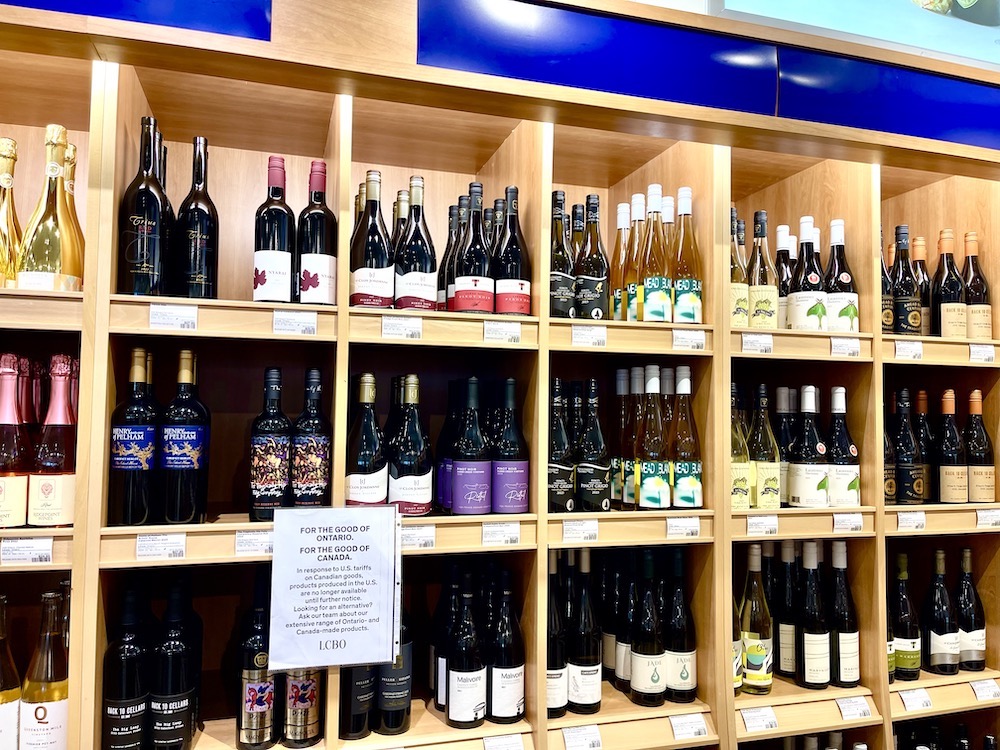
It looks like Ontario VQA wines will continue to enjoy the thrilling journey they’ve been on since March 4, 2025, when Doug Ford yanked U.S. wines off the shelves during an on-going tariff dispute with the U.S.
Note, also in this Canadian Wine report: Our recommendation from the Niagara wines being released at Vintages stores on Saturday, including the spectacular top red wine from Henry of Pelham, plus grape grower Bill George honoured by the Ontario Fruit and Vegetable Growers, and Ontario and Nova Scotia agree on a DTC wine deal.
After a year of never-ending tariffs from the U.S. president — on again, off again, up, down and all around — that country’s Supreme Court ruled in a 6-3 decision that the sweeping tariffs were invalid. President Donald Trump then quickly imposed a new 10% global tariff after the U.S. Supreme Court loss, though Canada is largely exempt (but not entirely) from the new tariffs.
Ontario Premier Doug Ford, who imposed the ban on U.S. booze in Ontario, said recently that the American booze ban will remain in effect at LCBO stores while any tariffs placed on Canada remain in place. “Get rid of it, and we’re good to go,” he told reporters a Queen’s Park news conference.
So, here we are. Trump’s new tariff plan, yet untested in American courts, has a term limit of 120 days. With Ford not budging until all tariffs are lifted, it would seem U.S. booze will not be on LCBO shelves for at least another four months.
The “buy Canadian, elbows up” movement has dramatically moved the needle down on U.S. wine exports. In the wake of the U.S. president’s trade war, American beer and wine exports dropped by $472 (US) million in 2025, a 26% decline from 2024, a new report from the U.S. Census Bureau shows. Wine exports alone reportedly decreased by one-third from 2024 to 2025, primarily due to a decline in shipments to Canada.

Meanwhile in Ontario, where the Ford provincial government had steadfastly held its ground on the U.S. wine ban at LCBO stores, the numbers continue to swing in favour of VQA wines.
Over the last 12 months to last November (called the rolling 13), the newest figures from the LCBO show VQA Ontario wines up 32.4%. “It’s been huge,” Michelle Wasylyshen, president and CEO of Ontario Craft Wineries, told the CBC recently. “We call this a once-in-a-lifetime opportunity.”
Part of huge success of Ontario VQA wines is due in no small part to the swift reaction from the LCBO getting more VQA wines listed at stores across the province once California wines were yanked from shelves. There have never been so many new Ontario wines introduced through the bi-weekly Vintages wine releases. And consumers seem to be gobbling them up at an alarming rate.
Our recommendation for the Niagara wines being released this Saturday at Vintages stores is a blockbuster, a bold flagship red from Henry of Pelham that comes from the perfect 2020 vintage in Ontario. This is a red that will change your mind about Niagara’s ability to produce full-bodied Bordeaux grape blends at a world-class level. You can buy this now or hold for at another decade. Here’s what I recommend from the release.
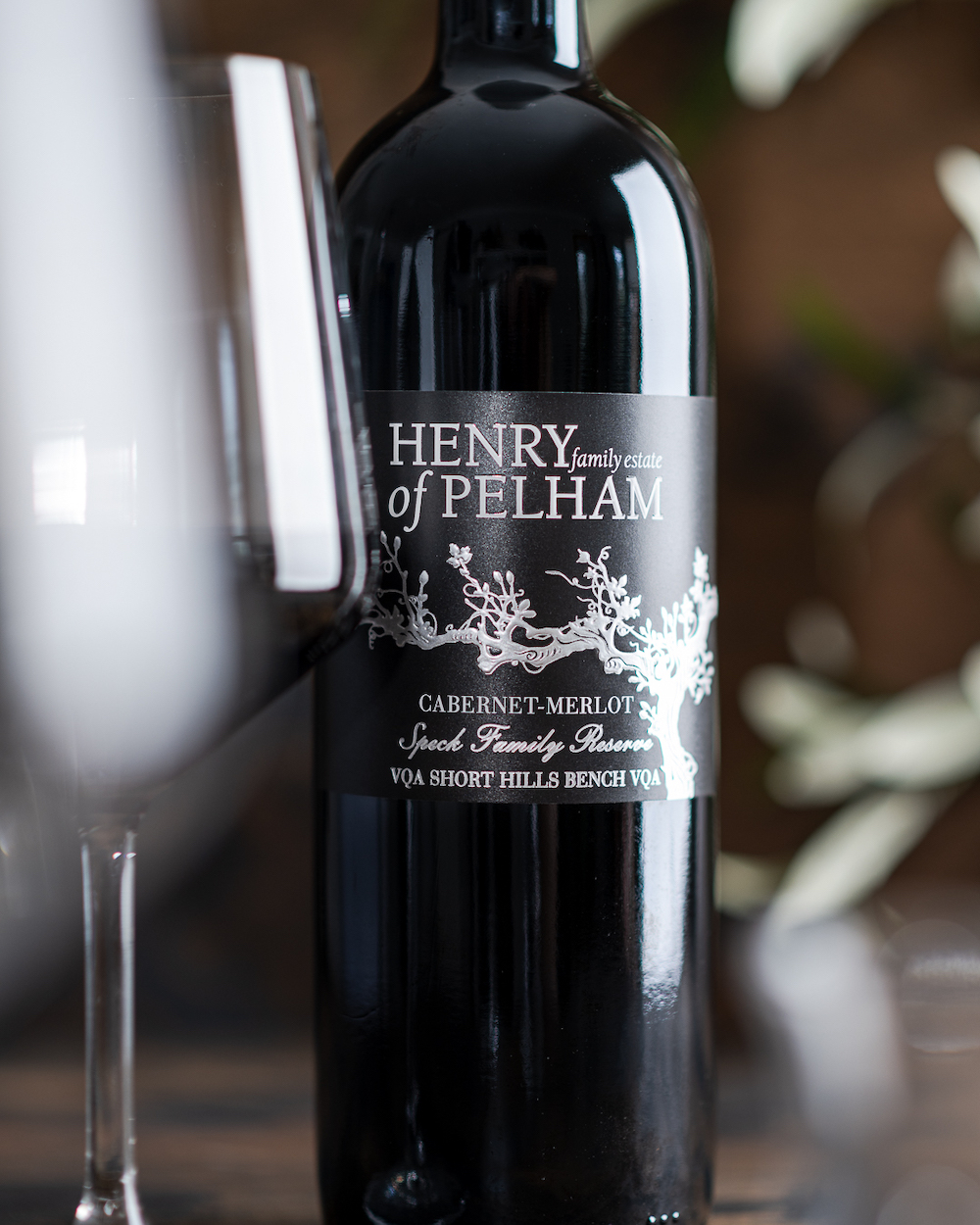
Henry of Pelham Speck Family Cabernet-Merlot Reserve 2020 ($48, 94 points) — In many ways, the 2020 version echoes the 2007 vintage, which were both near perfect, warm vintages in Niagara. The wine was aged in French and American oak barrels, 40% new, for 18 months. What a beautiful, full-bodied red from the 2020 vintage. It has an inviting, expressive nose of black raspberries, dark cherries, ripe plums, cocoa, cassis, and cedary/perfume notes with rich spice box accents. It’s dense and juicy on the palate with a firm tannic backbone that displays an array of mature red berries, blackberry preserves, anise, smoky cedar plank, mulled herbs and toasty spices that are all carried through the long, finessed finish. This is still evolving and cellaring is recommended. It will keep improving through 2039, if the 2007 is any indication. Buy, hold and be blown away!
The Thrill factor: This wine was named as one of 10 Most Thrilling Niagara Red Wines of 2024. Henry of Pelham makes various iterations of the Cabernet-Merlot, from entry level to this top expression. At $48, it’s the least expensive wine on the 2024 red thrilling list and offers incredible value for what you get. A candidate for long-term cellaring to drink like a pro over the next decade.
Other Niagara wines released Saturday, but not reviewed by Wines in Niagara:
• Hinterbrook Nomad Humble 2023 ($20)
• Konzelman Barrel Aged Reserve Series Cabernet/Merlot 2022 ($25)
• Ravine Cabernet Franc 2021 ($30)
• Stratus Gamay 2024 ($35)
• Inniskillin Riesling Icewine 2024 ($44 for 200 mL)
• Cave Spring Estate Chardonnay 2024 ($25)
• Flat Rock Good Kharma Chardonnay 2024 ($18)
• Hare Riesling 2024 ($23)
• Magnotta G. Marquis Silver Line Deux Blancs Pinot Grigio/Sauvignon Blanc 2024 ($18)
• Thirty Bench Small Lot Wood Post Vineyard Riesling 2021 ($29)
Ontario and Nova Scotia sign
historic DTC alcohol agreement
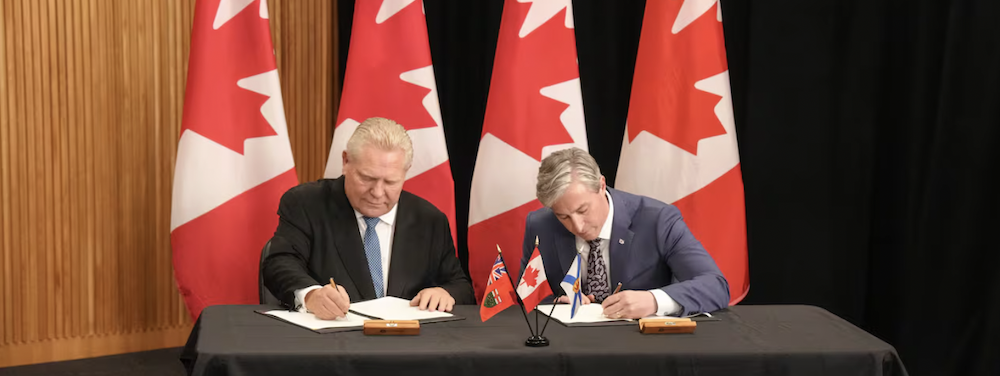
Ontario Premier Doug Ford and Nova Scotia Premier Tim Houston on Monday signed a first-of-its-kind agreement to allow consumers to purchase alcohol directly from the other province’s local producers, including breweries, wineries and distilleries.
Allowing direct-to-consumer (DTC) sales between the provinces is part of the province’s plan to tear down barriers to interprovincial trade, which will give consumers greater choice and convenience, while creating more opportunities for producers.
“With President Trump taking direct aim at Ontario companies and workers, it has never been more important to boost interprovincial trade and support local businesses,” said Premier Doug Ford. “Ontario is leading the way to unlock free trade within Canada. Our agreement means Nova Scotia residents can conveniently purchase any of their favourite Ontario craft beers, wines and more, while Ontario residents will be able to buy the very best Nova Scotia has to offer.”

Before the agreement, Ontario consumers could only purchase alcoholic beverages from another province if they were listed by the LCBO, ordered via the LCBO’s private ordering program or bought in another province and transported by the purchaser to Ontario for personal use.
In the coming weeks, authorizations will begin to be issued to Nova Scotia producers to provide consumers in Ontario with direct access to conveniently purchase their favourite Nova Scotia spirits, wine, beer and other alcoholic beverages online and have them delivered to their doors. Ontario will continue to lead the way for a pan-Canadian DTC sales framework for alcohol products.
“Nova Scotia is committed to dismantling internal trade barriers, piece by piece, but my goal is to have free trade, nationwide,” said Premier Tim Houston. “This agreement is a stepping stone that will give our local producers more access to Ontario markets and open a broader customer base. We will continue to work with other provinces and territories to reach agreements so that our companies have more opportunities and customers have more choice.”
Starting now, producers in Nova Scotia and Ontario will be able to begin applying for the necessary authorizations to sell in each province, giving greater market access to Ontario and Nova Scotia’s producers and giving consumers the ability to conveniently purchase their favourite Ontario alcoholic beverages in Nova Scotia and their favourite Nova Scotia alcoholic beverages in Ontario.

“Ontario’s vibrant alcohol sector and beverage alcohol manufacturers are an important part of our economy, and we are committed to seeing them grow and thrive while consumers get greater access to their choice of alcohol beverages,” said Peter Bethlenfalvy, Minister of Finance. “I am pleased that Ontario and Nova Scotia are partnering to set a precedent for other provinces to follow by enhancing interprovincial trade of alcoholic beverages in a way that works for consumers and businesses and is consistent and fair to Ontario producers.”
Monday’s agreement builds on Ontario’s leadership in strengthening internal trade and expanding economic co-operation within Canada, signing agreements with 10 other provinces and territories to help unlock $200 billion in economic growth. Ontario will continue to work with other provinces and territories to launch a pan-Canadian DTC sales framework for Canadian alcohol products.
Quick Facts:
• Under the agreement, Ontario’s LCBO and the Nova Scotia Liquor Corporation will authorize producers from the other province to sell directly to the reciprocating jurisdiction’s consumers, who may purchase their beverage of choice for personal consumption.
• Ontario and Nova Scotia will both implement a mark-up structure that ensures fairness and competitiveness for domestic producers and aligns with existing domestic tax rates.
• Last year, Ontario passed the Protect Ontario Through Free Trade Within Canada Act, 2025, which includes legislative changes to enable a framework for DTC sales of alcohol.
• Since July 2025, Ontario and 10 other jurisdictions have signed a memorandum of understanding (MOU) committing them to advance pan-Canadian DTC alcohol sales with an implementation deadline of May 2026.
• Ontario has also signed economic cooperation MOUs with seven provinces that include commitments to work together on bilateral DTC frameworks.
Note: Information provided by the Ontario government
Grape grower Bill George honoured
by Ontario Fruit and Vegetable Growers
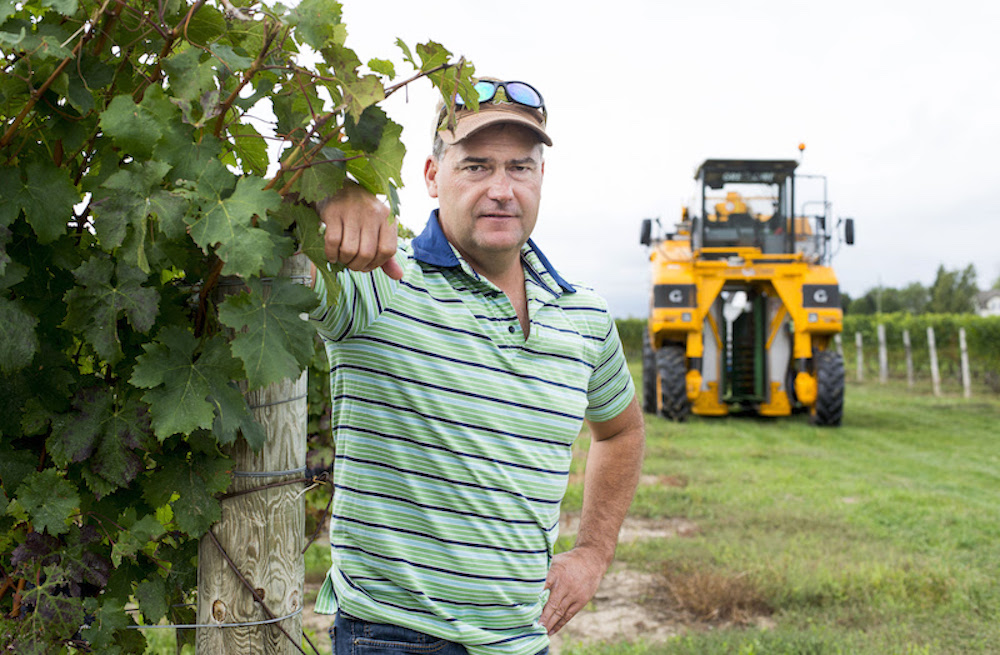
Bill George Jr., a longtime agricultural leader and Niagara grape grower, has been named the 2026 recipient of the Ontario Fruit and Vegetable Growers’ Association Industry Award of Merit.
The award, presented at the organization’s annual banquet in Niagara Falls on Feb. 17, recognizes his decades of service to Ontario’s fruit, vegetable, and wine industries.
A defining part of George’s career has been his extensive leadership within the grape sector. Most notably, he served as chair of the Grape Growers of Ontario from 2007 to 2016, guiding the organization through nearly a decade of industry change and growth. His work in this role helped strengthen Ontario’s grape and wine industries and solidify the province’s position as a leading grape-growing region.
“Bill has been a great mentor and an exceptional leader in our industry,” said Matthias Oppenlaender, chair of the Grape Growers of Ontario. “His commitment exceeds expectations, and much of his success would not have been achievable without the unwavering support of his wife and family.”
The Grape Growers CEO, Debbie Zimmerman, said “Bill led the Grape Growers of Ontario through incredible challenges and change as his time of board chair. He sought to build relationships and outcomes that would benefit the collective grape and wine industry. It was a privilege to work with him, and this award is a recognition of his incredible leadership.”

Alongside this major contribution, George also served as chair of the OFVGA from 2019 to 2022. He currently chairs the labour issues co-ordinating committee, sits on the Farm Products Marketing Commission, and serves on the board of Workplace Safety and Prevention Services. Although he retired from the OFVGA board in 2022, he soon returned as an ex‑officio member to lead the labour committee.
His past service includes roles with the Vintners Quality Alliance, the Niagara Grape and Wine Festival, and the Fruit and Vegetable Growers of Canada.
Beyond his advocacy efforts, George is deeply rooted in farming as president and owner of George II Farms. Together with his wife, Lesliann, he cultivates 160 acres of wine grapes and oversees the harvesting and processing of icewine juice on a family farm that dates to 1796. In 2001, he earned the prestigious Grape King title for vineyard excellence. He also holds a diploma in horticulture from the University of Guelph.
The Industry Award of Merit is presented annually by the OFVGA to an individual or organization that has made outstanding contributions to Ontario’s fruit and vegetable sector in strategic leadership, technical input or innovation, and/or dedication to the industry.
The OFVGA is the voice of Ontario’s 3,500 fruit and vegetable farmers on issues affecting the horticulture sector. The sector grows produce in fields and greenhouses across the province for fresh and processed consumption.
Note: Information for this report was provided to Wines in Niagara.
Comment here