By Peter Rod
One night. 17 wines. All Merlot ranging from 2007 to 2020. Estimated value of well over $4,000. And only 90 minutes to enjoy them all. Sheesh.
I’ve been teaching for over 20 years and one of the great injustices in the wine world is the time we allocate to assessing wine quality. I understand the reason, but unlike great whiskey, rum or craft beer, which is fully expressive and ready to show its best immediately upon opening, great red wines take time to reach their apex.
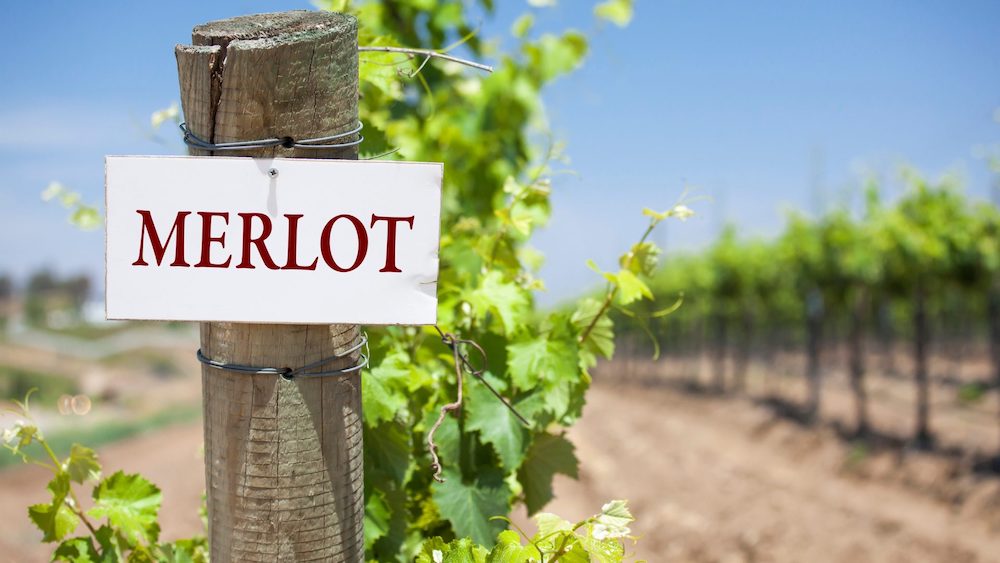
Wines go through stages as they evolve from closed, young, chunky, and clumsy to supple, perfumed, developed, and accessible. Sometimes this evolution is a few years but more often, for great wines, it takes decades.
Consider this for a moment. It takes a minimum of 5 to 7 years for a vine to reach full maturity. For premium production, many suggest a vine younger than 25 years is too young to produce wines in the highest echelon of quality. It takes a full season to ripen fruit, and no two vintages are the same requiring the wine grower to make important and difficult choices day after day until harvest finally arrives.
Producing great red wine takes years considering fermentation, maceration, malolactic fermentation, and aging. A wine harvested in 2026 won’t be released until at least 2028 and often a year or two after that. It’s a long process to get a great wine into a bottle and then into the hands of its consumer.
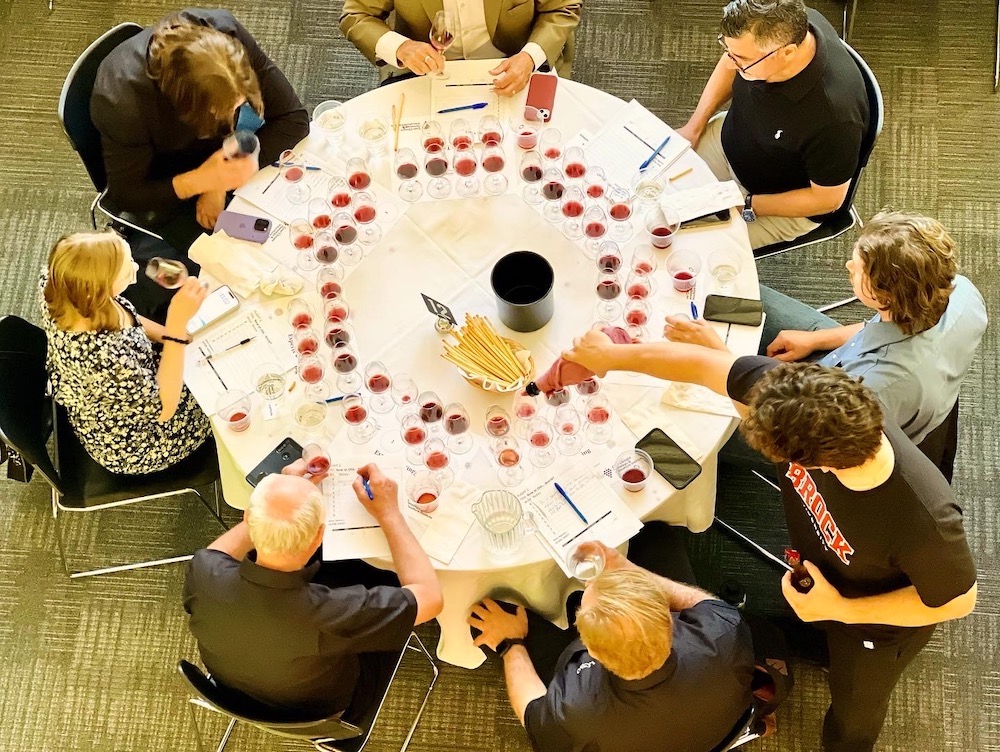
When that wine is put in front of a wine critic, competition judge, or wine student it is often assessed in a stark, lab-like setting with numerous other wines sampled before and after it. It is typically tasted from a small, narrow industry standard ISO tasting glass. Quantitative and qualitative measurements are made judging the wine’s appearance, structure, balance, complexity, concentration, aromatic and flavour intensity, length, and age worthiness.
Depending on the exact nature of the tasting, the wine’s varietal typicity and authenticity of expression of origin might also be critiqued. All of that happens in less than 10 minutes.
When we purchase that wine as a consumer, we will ideally enjoy it over an evening or two and in an environment conducive to maximizing pleasure whether with friends, food, music, or a combination of all three. It might be decanted and served in varietally-appropriate stemware. The wine will have time to breathe and evolve, and we will have an opportunity to enjoy the entirety of the wine’s character over that time.

I guess what I’m trying to say is we shouldn’t rush wine. It takes time to grow and make, and we should give it the appropriate time to tell its whole story. It’s a commitment.
Some would even say a sacrifice but in the end, great wines, well-aged, and savoured over time create emotions, memories, and provide pleasures like nothing else on earth can do. In my book, it’s worth the sacrifice.
In the meantime, as much as it all happened so quickly, the Merlot tasting was eye-opening. While I was very impressed overall, I can only imagine just how magnificent many of those wines would have been if given the time and environment to show their very best.
A summary of my notes is below. Due to time constraints and the need to get the heart of the matter, I’ve kept my notes extremely short but still, hopefully, informative.
For the record, the wines were sourced from a private cellar and for the most part are no longer available to purchase. They were decanted three hours before being served in four flights, each with its own regional theme.
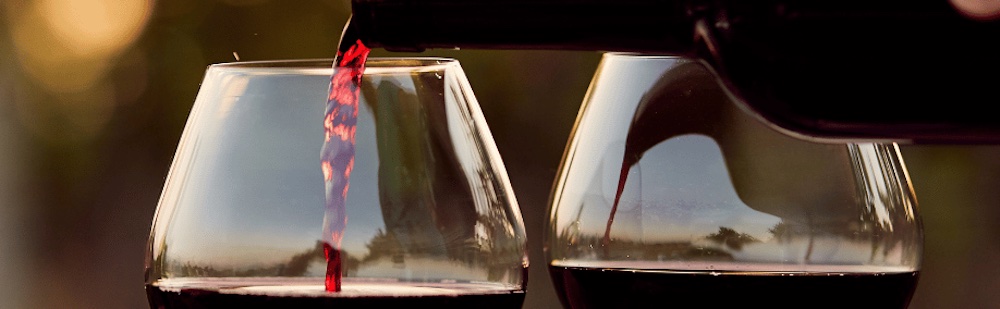
They were served in oversized glasses which were designed for Pinot Noir but allowed the wines to mix with plenty of oxygen and express their aromas. I’ve categorized the four flights by style. Alcohol levels consistently sat at 14% or higher with one topping out at 15.7% and yet, the alcohol didn’t stand out in a single wine proving that the rich and dense fruit of Merlot can easily handle the elevated alcohol that often accompanies it.
The Merlots, by flight
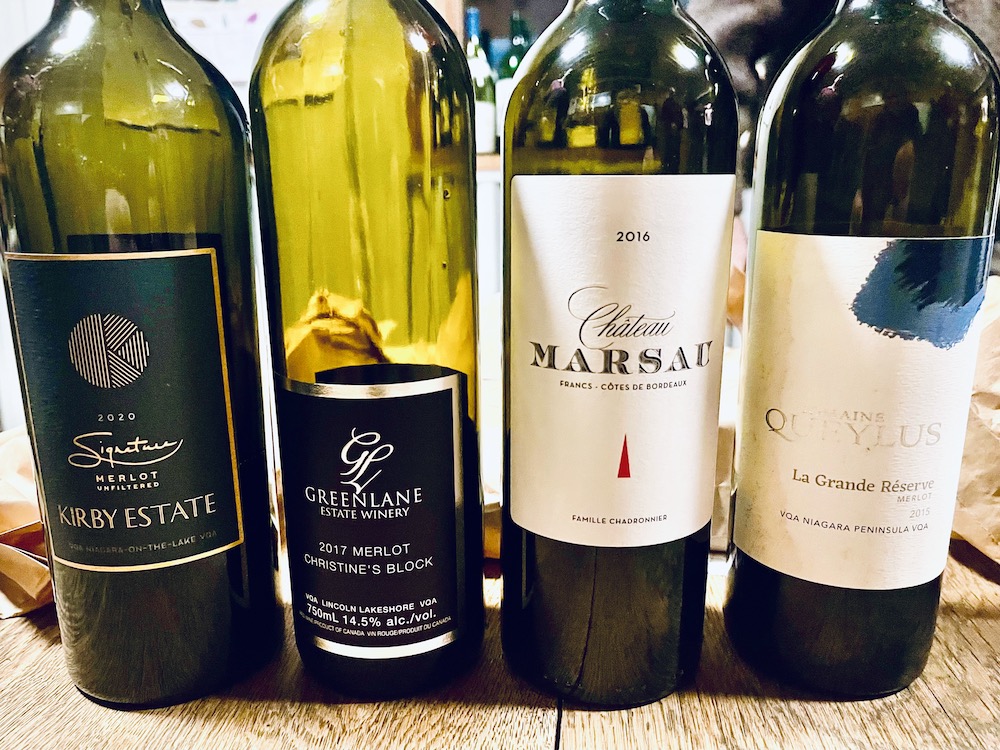
Flight One — fresh and diverse wines of Canada (plus a ringer)
2020 Kirby Signature, Niagara: Densely fruited, with super fine velvety tannins. Plum, anise, chocolate with new wood char and spice. Classic expression of this variety. $106
2017 Greenlane Christine’s Block, Niagara: Brighter and more candied with some roasted meat notes, tobacco leaf, and subtle oak. Lighter with fresher acid and edgier tannins. Aromas expanded with time. $40
2016 Chateau Marsau, Bordeaux: Darker fruit in this one with some resinous herbal notes, mocha. Tight, leafy tannin with subtle barnyard funk adding complexity. Needs time. $45
2015 Domaine Queylus Grande Reserve, Niagara: More tertiary here with fig, dried cherry, hint of roasted pepper, red fruits. Lighter tannin. Perhaps a little less complex on palate but very impressive nose. $63

Flight Two — fleshy, dense, and full bodied from the west coast
2018 Leonetti, Walla Walla Washington: Toasty oak, chocolate, mocha, dried cherry, blueberry. Rich, soft, dense mouthfeel with fine fruit tannin and refreshing acid. Tobacco and cedar notes linger in warm finish. $165
2018 PlumpJack, California: Ripeness pushing towards sun dried with tomato, beef broth, umami, and chocolate-mint notes. Lovely, lush, sweet fruit with fine tannin. Quite succulent with wood, toast, and cherry custard notes in a medium finish. $138
2017 La Jota, Howell Mountain, Napa, California: Deeper ruby hue, moderate intensity with olive, bay leaf, blackberry, more mint and chocolate. More substantial oak and fruit tannin with acid core. Needs time but will be excellent. $170
2015 Checkmate Silent Bishop, Okanagan Valley: Deeper hue with savoury and fruity notes. Grilled meat, floral and dried fruit. Lovely mix of primary and tertiary aromas. Quite lush with decent grip. Some leather in the finish. $106
Flight Three — aromatic and complex from Tuscany
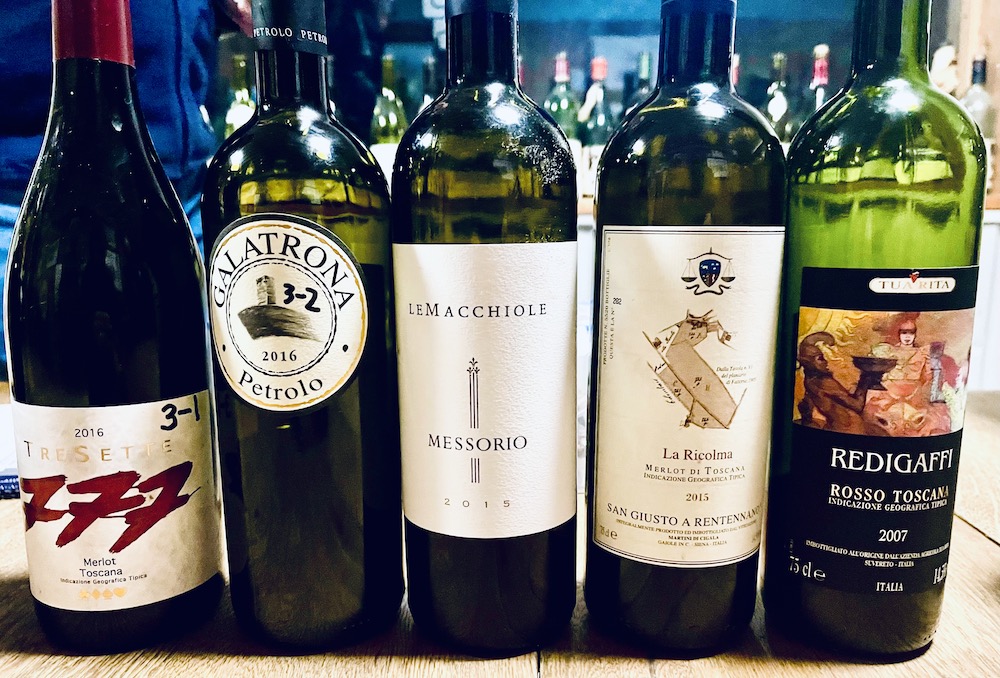
2016 Riecine Tresette, Toscana: Flawed $156
2016 Petrolo Galatrona, Val d’Amo di Sopra: Penetrating aromas. Very complex with toast, oregano, damp earth, red fruits, earthy spice, and tobacco ash. Brighter acidity — fresher juicy style. So elegant. $207
2015 Le Macchiole Messorio, Toscana: Elegant mix of soya, dried fruits, fig newton, roasted mushroom. Continues to open and change. Such remarkable complexity here. $378
2015 San Giusto a Rentennemo La Ricolma, Toscana: Roasted walnut, chocolate, prune, supple and more extracted with dense dark cherry, succulent acid and tannin make it a touch hard and astringent right now. Long finish, however. Best days are certainly ahead. $350
2007 Tua Rita Redigaffi, Toscana: Medjool dates, vanilla, sweet cereal aromas. Loads of retronasal aromas too with floral, minty dark chocolate. Very perfumed and complex. $397
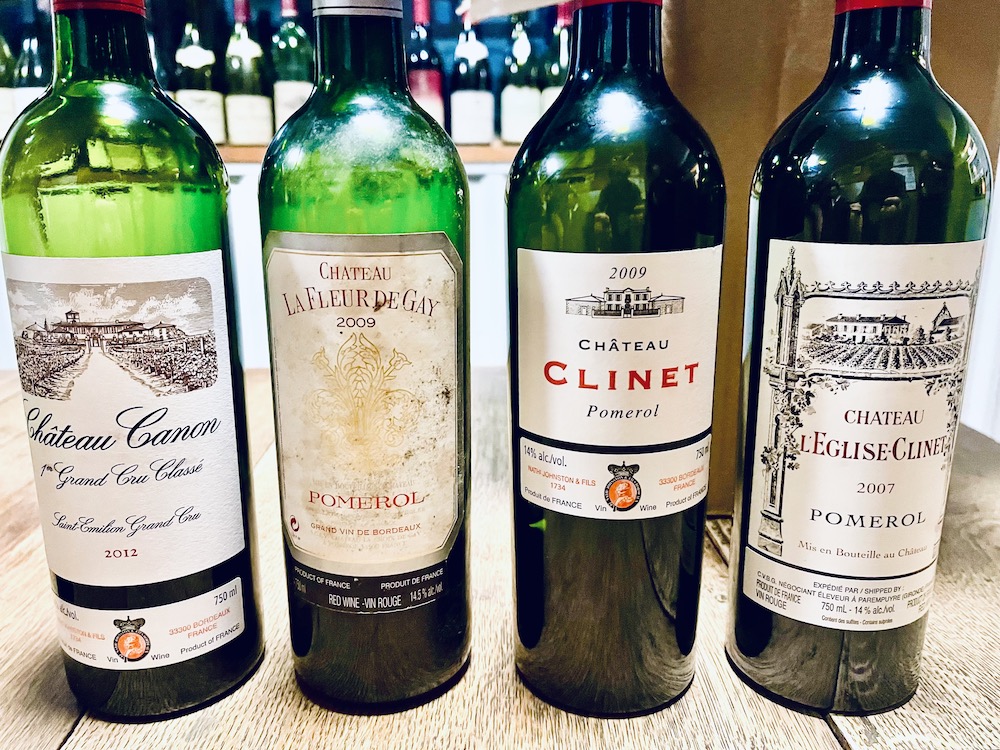
Flight Four — floral, maturing, and elegant from Bordeaux’s right bank
2012 Chateau Canon, St. Emilion: English rose, dark cherry, cacao, baking spice. Medium weight with some warmth. Tight and restrained right now. Needs time. $345
2009 Chateau La Fleur du Gay, Pomerol: Gorgeous expressive raisin, coffee, mincemeat tart, spicy oak. Tannins grippy and linger through medium plus finish. $156
2009 Chateau Clinet, Pomerol: Nose is deeper and more restrained. Plum paste, fig, beefy umami, roasted portobello. Soft and mouth filling but not heavy. Woodsy, earthy tannins with a little lingering bitterness. Plenty of years left. A stunner. $398
2007 Chateau l’Eglise Clinet, Pomerol: Fully developed with savoury dried herbal notes, dried red fruits and cedar wood. May be in a quiet stage as it’s a little shy. Very elegant overall. $345
About Peter Rod
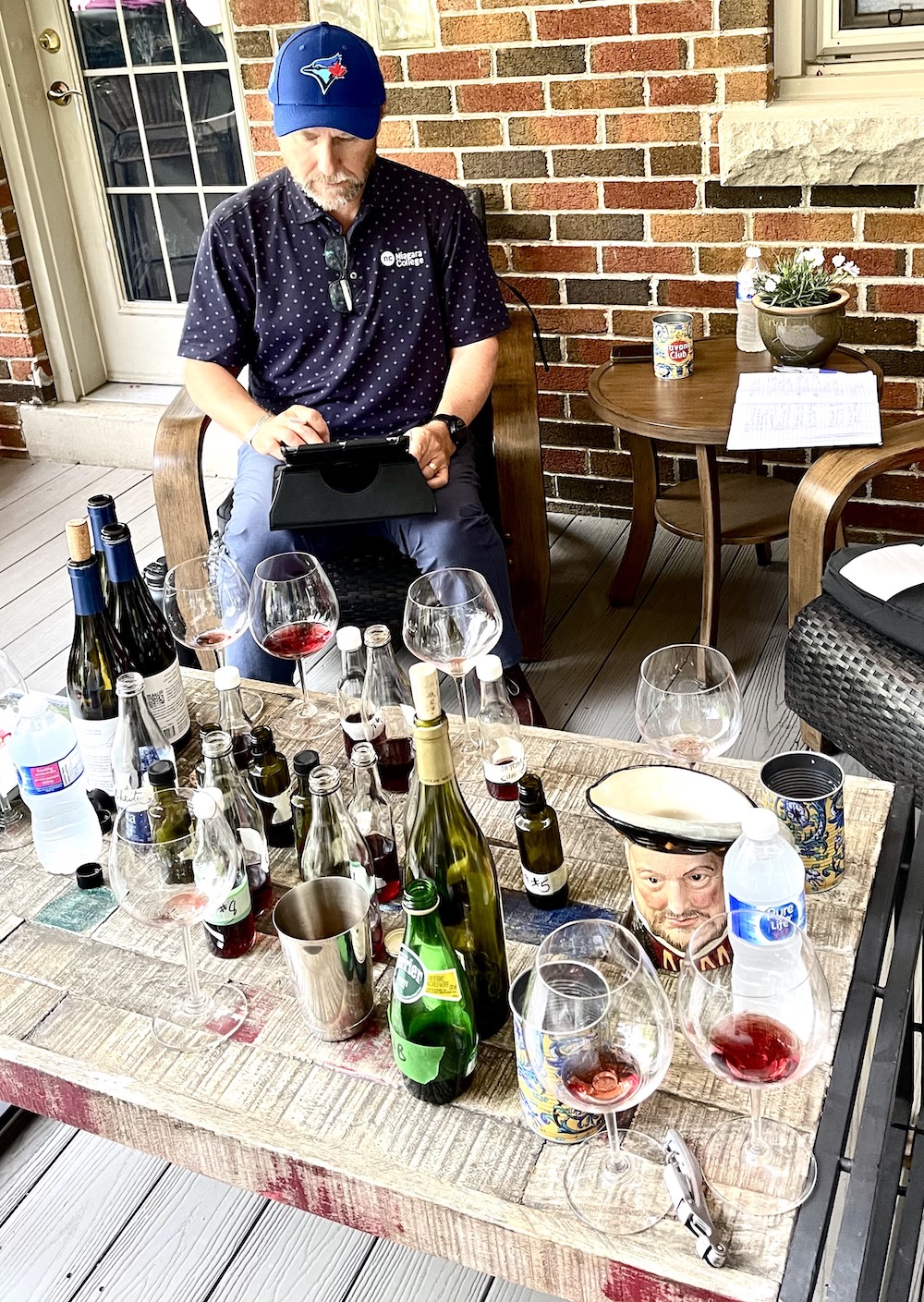
Peter Rod is a 35-year veteran of restaurant management, the wine trade, winery consulting, and beverage alcohol education in both B.C. and Ontario. He has studied hotel and restaurant management at the University of Guelph and completed his sommelier certification through the International Sommelier Guild in 1993.
Rod worked and competed as a professional sommelier until 2001 after which time he shifted his focus toward the wine trade. He was named top sommelier in western Canada in 1996, 3rd best sommelier in Canada for French wines and spirits in 1997 and won the Ontario Wine Award Sommelier of the Year in 2006. He completed his WSET Diploma in 1998 and earned the Society of Wine Educators Certified Wine Educator and Certified Specialist of Spirits awards several years later.
Rod completed his master’s degree in education at Queen’s University in 2020 and has been teaching WSET Level 2 and Level 3 certification at Brock University since 2010. He is in his 12th year as a member of the Faculty of the School of Wine, Beer, and Spirits at Niagara College. He is also a contributor to Wines in Niagara.
Comment here