By Rick VanSickle
When the last of the 1,500 cases of wine are sold sometime thing spring, it will be the end of the line for three generations of the Lenko family on the Beamsville Bench.
“Major Announcement! It’s official! I will be open for wine sales this weekend (it started last weekend) and selling Vintage wines from our library. I will be open Saturdays and Sundays 12-5 p.m. (closed weekdays) until Dec. 27 and then retiring from the wine business. Here is your chance to get some vintage Lenko wines from the vineyard that started it all with the oldest vinifera in Niagara,” wrote Daniel Lenko on his Facebook page.
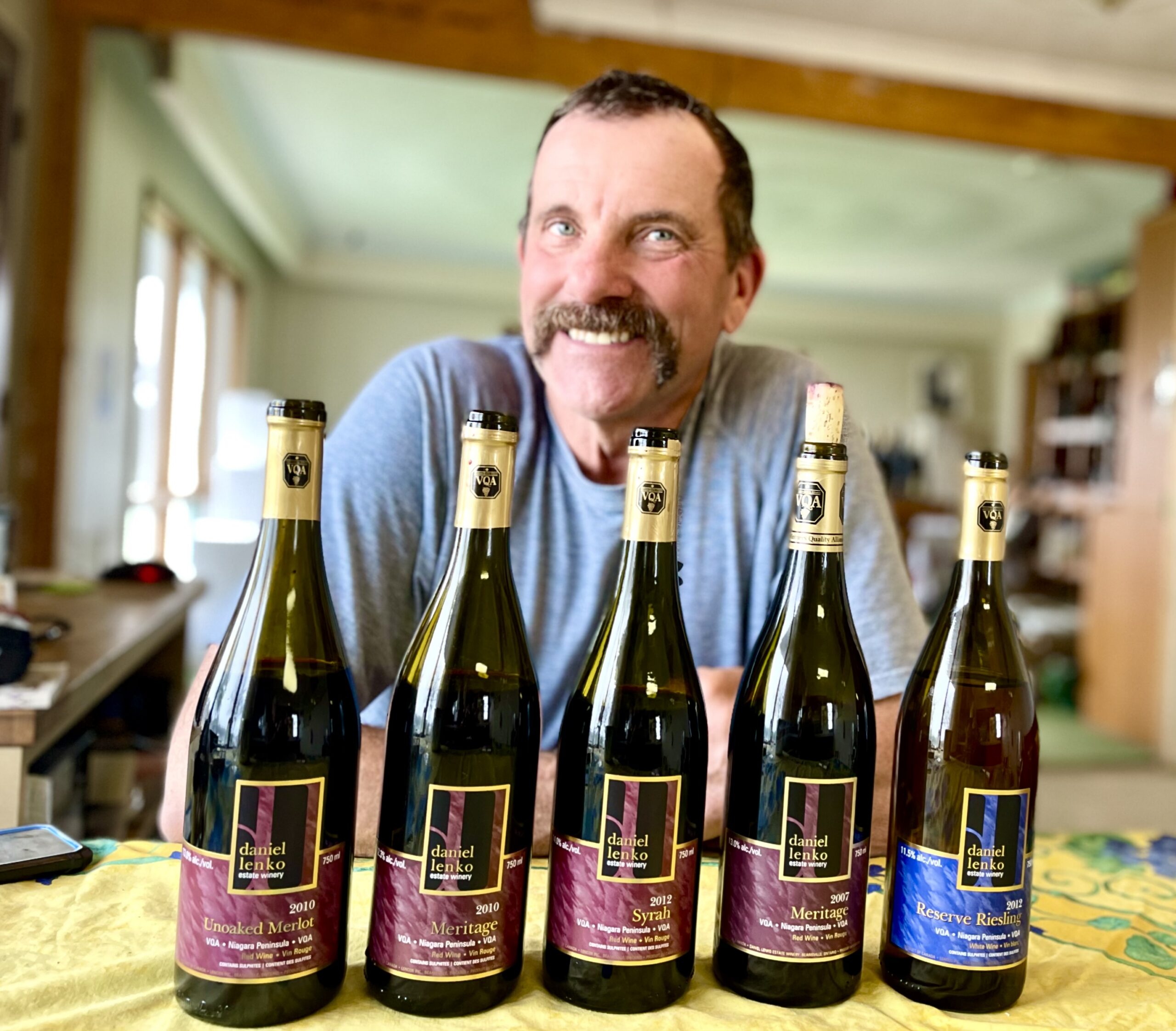
“These are some Heavy Hitters! 2007 Meritage, 2010 Meritage, 2012 Merlot Cab, 2012 Syrah and a small amount of 2010 Merlot and a great aged 2012 Riesling. SOLID! Limited quantities on all these wines, first come first served weekends only. Delta Lima Out!”
Also in this post: An introspective look at a life of wine in Lenko’s own words, plus what to expect from the very best vintate bottles left in the Lenko’s cellar.
It was in 1959 that Daniel Lenko’s grandfather John and father William planted the first Chardonnay vines in Canada. The vineyard thrived in the unique microclimate of the Beamsville Bench. The first two generations of Lenkos were primarily grape growers, with William named Grape King in 1990 and Daniel given the same honour in in 2002.
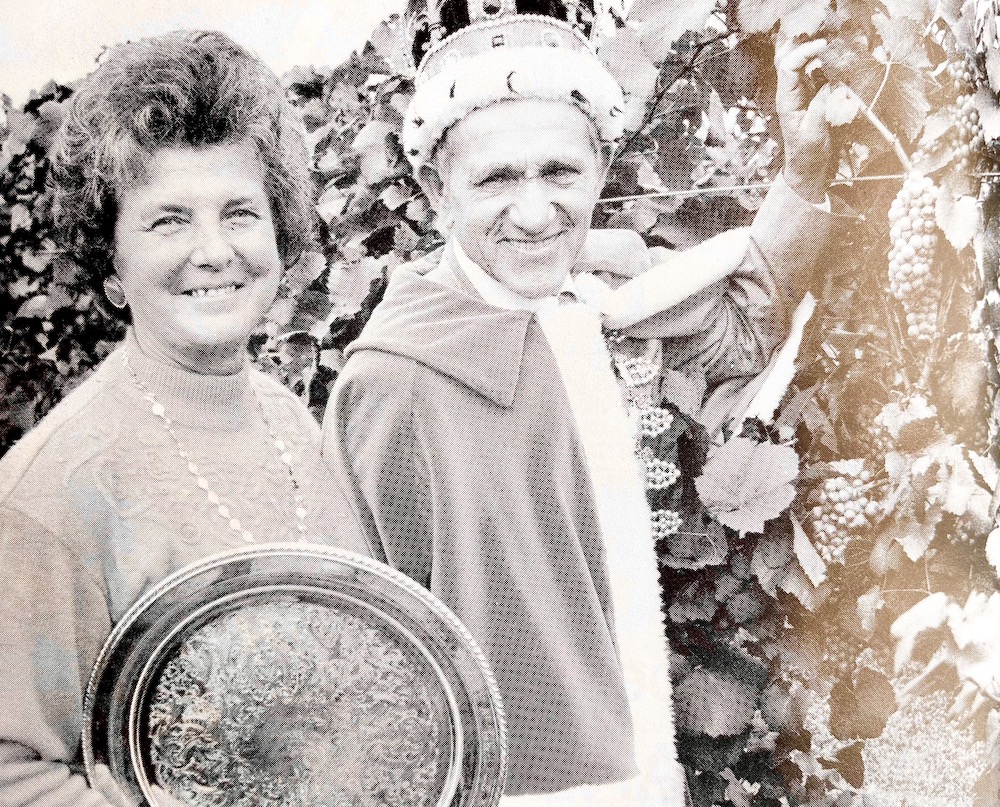
A message from “King William” appeared in a local newspaper with his wife Helen (above) in full regalia on the last days of his time as the grape king with these words: “I thank my wife Helen and our four children — Marie, Danny, Lesia and Taras — for working with me and helping to bring such world-wide recognition to the little piece of land that God has entrusted to our care.”
Daniel’s father William passed away in 2011 and Helen in 2006, leaving the vineyards and the Daniel Lenko Estate Winery, founded by Daniel in 1999, in the hands of the third generation of the family. In 2012, Wines in Niagara wrote that the Lenko family had always been involved in agriculture, originally located in Manitoba and then moving to Beamsville in 1947.

After planting the first Chardonnay vineyard in Canada in 1959, he added Merlot vines in 1974 and Viognier in 1990. Riesling, Gewurztraminer, Syrah, Pinot Noir, Cabernet Sauvignon and Cabernet Franc have also been planted — and all pulled out now — over the years on the property. The wines were made by Ilya Senchuk (Leaning Post) as the first winemaker followed by Thomas Laszlo.
William and Helen were still greatly involved in the daily farm action before their passing, and once they began making their own wine would welcome guests into their home will creating a memorable experience that was not to be forgotten. Tastings were conducted at the small kitchen table, sometimes served with warm apple pie or fresh-baked cookies right out of the oven. There were no bells or whistles common today on the Beamsville Bench, no elaborate canapés to pair with the wines, and no fancy glassware or complicated wine-speak, but it was homey and inviting for visitors who knew the wines and came to get it in a steady stream.

It the first cult winery before there were cult wineries in Niagara and beloved by local wine lovers, those in the know beyond Niagara and certainly caught the attention of the wine critics of the day — including one of the most influential writers in the world, Jancis Robinson, MW, a British wine critic.
In January of 2007, Lenko’s 2002 Syrah was voted best red wine in Canada by Robinson in a blind tasting of wines conducted in Toronto and a few sent to her in London. “I tasted about 70 wines in all, 17 of which I felt were world class wines from any point of view,” said Robinson at the time. “One of them, Daniel Lenko’s 2002 Syrah from the Niagara Peninsula, was so delicious that I felt it was truly outstanding.”
Zoom ahead to April 2026, and you can imagine that the 2002 vintage of that Syrah is long gone now. But get this! Lenko never officially released the next great vintage of the Syrah from 2012, a similar warm vintage to the 2002, and “never seen or tasted in the wild until now,” Lenko told me as we tasted the five vintage wines he is selling until they are gone. And trust me on this, it’s a blockbuster wine drinking at its peak of its performance and will impress even the savviest of wine lovers who appreciate older wines. They are being sold now until they are gone. And they will be gone fast.

“Our focus and determination have not changed since we opened our tasting room doors in 2000,” Daniel told Wines in the Niagara in a previous story. “The best grapes make the best wines. We don’t buy any grapes; we grow them ourselves. With cropping levels of two tonnes per acre our wines have the varietal intensity and body that appeals to the true oenophile.”
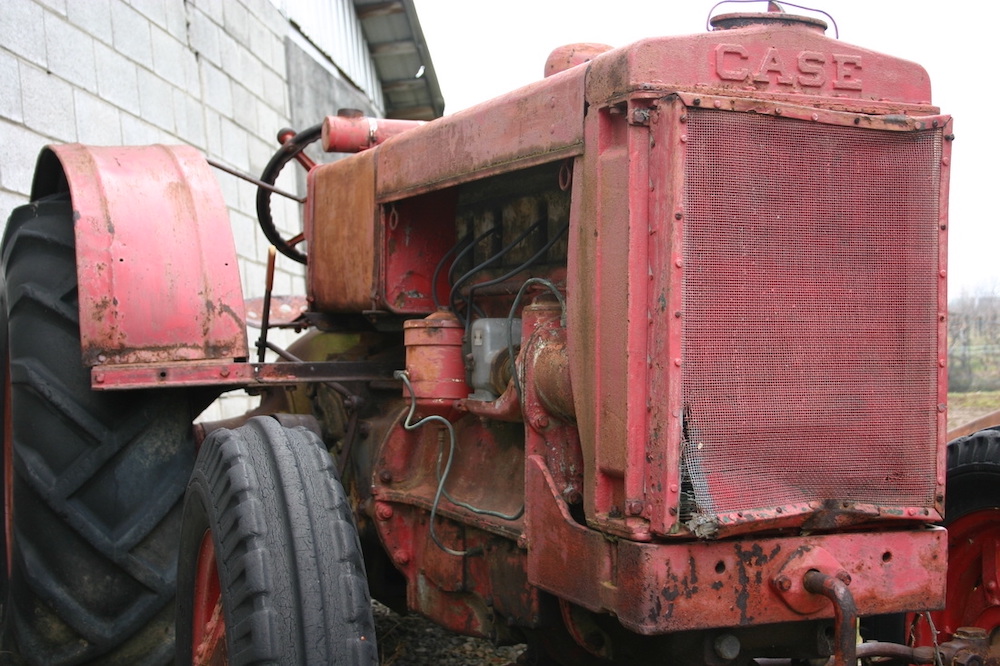
In another story on Wines in Niagara, published in October 2014, Lenko said that his areas of interest include fast cars, cooking and restoring antique machinery, but his day-to-day life was consumed by the farm, working with staff in all areas of the winery and farm business. By working together with employees, living onsite, and with the winery being his only occupation, Lenko created a unique workplace culture and a very different experience for wine lovers who find their way into the simply yet inviting kitchen tasting room on the farm.

It wasn’t the prettiest property in Niagara wine country, even with frontage on the coveted Beamsville Bench. It was a more a mix of various big machinery, small tasting room (the family home back in the day) sometime only open by chance, and a fleet of pickup trucks, mud and signs of a busy, fully operating hybrid farm focused on multiple aspects of the wine business. It was a working farm, after all, not a showcase estate with fancy gates, greeters and charcuterie boards served in the vineyard on warm summer days. If you were a fan of Lenko wines, you went for the wine, not the ambiance.
Lenko’s wines are old school, made with old-vine grapes and built for long-term drinking. He doesn’t have a Plan A and a Plan B; all his wines are top-tier and made only from estate fruit. When the fruit isn’t up to Lenko standards, he just didn’t make it.

In recent years, even when Lenko still had vines, he was taking a pass on entire vintages and releasing his wines strategically to make sure there was always something new on his shelves.
He skipped the 2011 vintage (selling all the fruit but a bit of Merlot to make a White Merlot), made a full complement of 2012 wines (minus his oak-aged Chardonnay), and decided not to make any wine from the 2014 vintage. “It’s all about economics,” said Lenko. He watched his inventory carefully and skipped what he thought were weaker vintages in Niagara for the style of wines he wanted to make.
The old vine Cabernet Sauvignon grapes were the last to be pulled up after the 2024 vintage. He had no buyers for the fruit and decided that was it for making any new Lenko wines going forward beyond the 2016 vintage but continued to sell whatever grapes he still had growing on the farm.

Lenko hasn’t been controversy free over his years at the farm. He’s known to be a bit of a rebel (understatement) and a fighter when it comes to regulatory challenges.
In July 2011, he was ordered to cease and desist from discharging winery production waste into an unapproved septic tank. He was told to apply to the Region for a permit to construct a sewage system and, upon application, submit a detailed design plan from a qualified engineer or sewage systems designer and, upon approval, proceed to install the new system by Sept. 14, 2011.
He had no choice but to lay off his winery staff, including his former winemaker, Laszlo, while he charted a new course. Lenko eventually met the conditions of his licence to manufacture wine at his property after working out a compromise with regional officials on a new septic system.
He called the entire dispute “a big misunderstanding” that hurt his business because the story continues to play out on high up on Google searches when consumers go looking for Lenko wines online.
“People are starting to understand I’m open for business again,” Lenko told me at the time. “It was a long road. The story (of the septic tank woes) stays on the internet forever. At the time, it was THE story. But the story now is we’re open. It was a bit of a hiccup but I’m on the up climb.”
There was a touch of serendipity in Lenko’s decision to skip the 2011 vintage. The grapes from 2011, in his opinion, wouldn’t have produced the kind of wines he likes to make.

To announce his comeback, Lenko decked out a 53-foot trailer and parked it along the South Service Road just before the Ontario Street exit along the QEW.
The wines were made by Laszlo in 2010 but, going forward, were crafted by Lenko and a consultant, who he didn’t want to name.
Lenko was one of the first to market a wine directed at the LGBTQ community through the shelves of the LCBO. His Unoaked “ChardonnGAY” was successfully sold through the LCBO as well as at his winery and website, with some of the proceeds going to CANFAR, the Canadian Foundation for AIDS Research. A dollar from every bottle of the ChardonnGAY sold went to AIDS research.
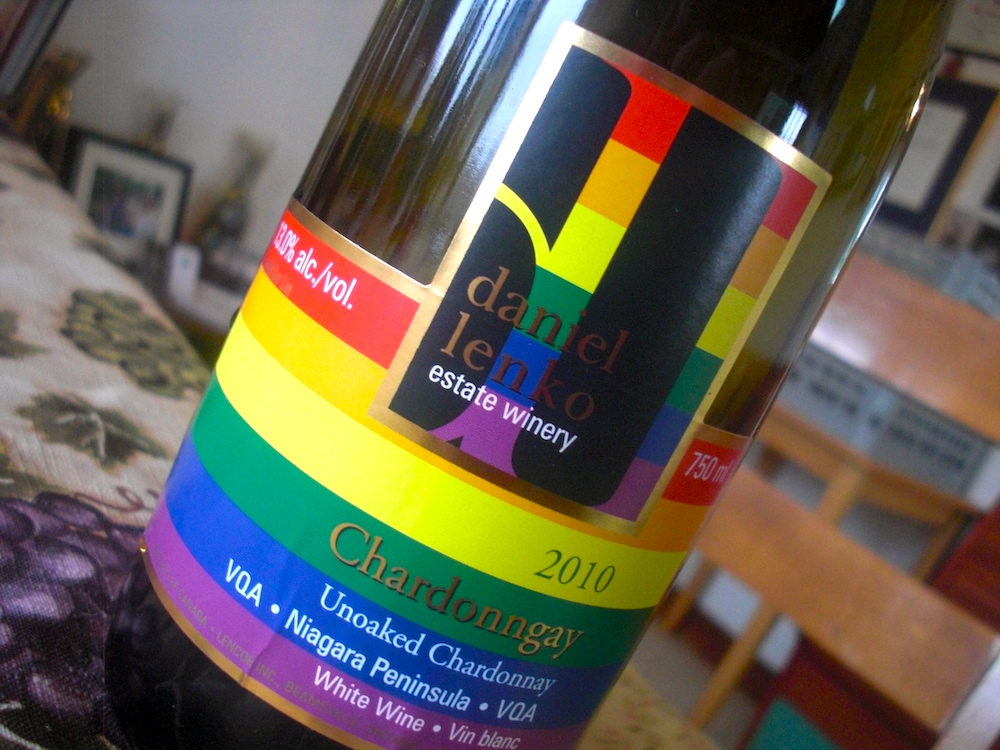
The bottle label on the wine is all dressed up in bright pride colours, and vinified in celebration of Canada’s diverse gay culture, but was essentially the same wine as his “green” label unoaked Chardonnay. It quickly became a popular seller at the LCBO and winery not only because it tastes good, but also because of the cause behind it. “We have gay marriage in this country, why not gay wine,” he mused.
The last of the Chardonnay grapes went to the Two Sisters Winery, where winemaker Adam Pearce brilliantly used the old-vines Lenko fruit up to the 2020 vintage before its own estate Chardonnay grapes came online.
While Lenko has essentially been out of the wine production side of the family business for nearly a decade, selling sporadically over those years, he has turned his full attention to his agricultural drainage business, which involves bigger trucks, a more lucrative and endless stream of revenue and less headaches than what he encountered with the grape growing and winemaking side of the business.
Exit statement from the colourful
Daniel Lenko — in his own words

Wines in Niagara: It must be with a tinge of sadness to sell off the remaining bottles of Lenko Wines before officially retiring from the wine business. How does it feel to close a chapter of one of the most historic wineries in Ontario?
Daniel Lenko: No sadness. The making of wine is creative, similar to cooking or painting. Winemakers take pride in people enjoying our finished wines. Every bottle is made for the oenophile. When it comes to how I feel about closing the winery … that’s complex. I was thrilled to work alongside my parents farming and taking it further with the fulfilment of their winery dreams. I do believe that every dog has his day, and we were fortunate to have the wine world’s attention while we were in business. As far as history goes; history is written by the victors. Someone else will step in and claim that they have older vineyards, did things first etc. and that’s fine. I accomplished everything that I needed to do, I am content.
WIN: How did you ever keep the 2012 Syrah in the cellar without ever selling it? That must have taken some patience on your part. What is the significance of that bottle?
Lenko: The release of the 2012 Syrah had a lot to do with COVID. We were just winding up sales on the 2009 Syrah, as we would age these wines 5-6 years minimum before release and the pandemic hit. The tricky social distancing rules and the downturn in engaging with the public resulted in the winery being closed for 1.5 years. In a post pandemic world when the customers re-emerged, I was busy with my farm drainage business, a custom service business that is part of my farm. Those that know me are aware that I am a lone wolf type and typically work alone, and I made a choice to table the wine sales until I could “find some time to sell some wine.” The 2012 Syrah was just waiting to be sold and has turned out to be my ace in the hole.”

WIN: What are some of the bottles that you made that you are most proud of over the years?
Lenko: Bottles that made me proud … well there was the one that everyone knew about the 2002 Syrah reviewed in a blind tasting by Jancis Robinson and chosen #1 red wine in Canada that really propelled us forward. There were a bunch of other wines that really stood out a short list 1999, 2002, 2007, Old Vines Chardonnay (French oak version), 2002, 2010 Old Vines Merlot, 2002 Viognier, 2002 Viognier Icewine, 2002, 2007, 2010 Meritage 2009, 2012 Reserve Riesling, 2012 Unoaked Chardonnay. I’m certain that a lot of people will be shouting out their favourites while reading this article as we had a huge following for a lot of niche wines such as the White Cab and White Merlot series.

WIN: Do you exit the wine industry with fond memories or are there aspects of it that you would rather forget?
Lenko: Let’s call this people are kind, people drive you crazy. I have to say that without a doubt I enjoyed everything about the wine industry. I liked watching my mother work the room and ask everyone’s name, their spouses, kids, and dogs and then getting all of their names correct six years later upon their return — it was a talent that I do not possess. The first five years were magical as there were only a handful of really small wineries, and we were fortunate to be one of the trailblazers.
People would come and buy wine for their wedding, have a baby and then name him Daniel after me. Mother’s Day would drive me crazy. The concept of Mother’s Day is great but in the wine world at a place that offers free tastings potential customers would show up with the entire extended family go wild. I could never explain it … it was just that one day of the year.
The people that I met and befriended in the restaurant world were first class — they helped in making Daniel Lenko talked about VQA favourite.
I would deliver wine after hours in a $500 van that I bought and fixed up. It was only later that I figured out that if I took the seats out of my dad’s ’86 Cadillac it could hold 35 cases and it had air ride. I would leave at 6 p.m. for Ottawa and return at 4 am.
I guess the one thing that the people don’t understand is that there is an identity conflict, and I had to turn to Al to explain it to me properly. “It’s when your business has become part of who people think you are but inside you want something different.” I am Daniel Lenko, a person who wants to do person things. I have people using words such as “you’ve gotta keep going,” or “it’s your passion” and all of these statements are appreciated but resonate like a life sentence in a salt mine. I just smile and wait for the person who says: “You did great, I hope you enjoy your retirement.”
It was interesting that most of the wine world had an idea of who Daniel Lenko was. I was pouring at a wine tasting in Toronto and an expert type taster walks up to a 34-year-old Daniel Lenko and I overheard him telling his friends: “That guy isn’t Daniel he’s just a wine pourer. Daniel is a tall, old guy with muscles … So now as we come full circle I feel he may be right.
WIN: Your wines have always been noted for their longevity. Why was your vineyard so proficient in producing long lived wines?
Lenko: The long game. Consistency counts. Niagara is not and arid climate, we get all the moisture from the Midwest, eastern seaboard, and the Great Lakes influence. The Lenko site has limestone-based clay soils that require systematic farm drainage. When you lower the water table down to 2.5 feet then the soils become aerobic, and a free exchange of minerals and nutrients can occur. When the grape vine grows uniformly it will have access to all of these nutrients which in turn will lead to complete maturation and flavour developments. Deeper water tables aid in deep root development reducing water dependency and promoting acid retention on critical varietals such as Chardonnay.
In a nutshell, old plantings, dry farmed, tile drainage in every row to wick away excess water especially at harvest to keep fruit quality at its best, use of new and near new barrels, traditional winemaking and the use of sulphites. Sulphites get a bad rap but are necessary to help wines reach their full aged potential, they do dissipate in time and anyone who claims that they have trouble drinking wines with sulphites should try aged wines or wines with low tannins as the public has a hard time separating these two culprits.
The last five vintage wines on
offer from Lenko (tasted last
Saturday with Daniel Lenko)

It’s always sad to see such an historic winery come to an end, but it is ending on Lenko’s own terms as he “just wants to exit the wine industry gracefully,” he told me on the weekend as I tasted the five wines from the 1,500 cases of wines he has left to sell.
Here’s what to expect from of the last five Lenko wines on Earth after a speed tasting last Saturday. The tasting room is open only on Saturdays and Sundays from 12-5 p.m. (closed weekdays) until Dec. 27 if necessary. It’s likely these historic wines will be all be sold much before that. “Here is your chance to get some vintage Lenko wines from the vineyard that started it all with the oldest vinifera in Niagara,” said Lenko.
Daniel Lenko Syrah 2012 ($60) — The superstar of the tasting, a mind-blowing experience from first sip to last swallow. It shows a deep, vibrant purple colour in the glass with aromas that build in momentum as you swirl, revealing peppery dark berries, purple plums, violets, spice box and woodsy/forest floor notes. It’s far more open knit on the palate, showing a fully ripened Syrah at its peak of perfection (with room to grow!) with elevated dark berries, floral notes, savoury/meaty/spicy accents, opulent texture, rounded tannic structure and still holding on to sizzling, mouth-watering acidity. Love Syrah? Love them aged? This is a must for drinking now or enjoying over the few years. This is the last bottle of wine Lenko ever made. He a rack of lamb with candied carrots.
Daniel Lenko Unoaked Merlot 2010 ($25) — You will notice a trend here with these Lenko library wines. They are all from some of the finest vintages ever produced in Niagara. Warm years, ripe tannins, and concentrated fruit flavours for the red wines. This is offered as a curiosity at a very smart price. This has maintained the high fruit content and light tannins but showing its age a bit. I would even serve slightly chilled for a pure look at older Merlot wines without the oak spices and tannins.
Daniel Lenko Meritage 2007 ($60) — Both meritages on offer from excellent vintages are gems that should not be overlooked. They will appeal to those who prefer well-aged reds and crave those tertiary flavours these Bordeaux grape varieties impart. The 2007 is hanging on with plenty of dark and red berries, somewhat compoted, and showing age, but hanging on nicely for now with plush tannins and woodsy spices. Near term drinking.
Daniel Lenko Meritage 2010 ($60) — The 2010 version of the above shows similar fruits all integrated and fully mature. It’s silky on the finish with those lovely woodsy spices and finesse.
Daniel Lenko Reserve Riesling 2012 ($20) — For lovers of mature Riesling (me!) this might surprise you … and for $20 a bottle, why not take a chance? 2012 might be ideal for the Bordeaux varieties and Syrah, but not necessarily for Riesling. Older Rieslings from warm vintages tend to show those love-them-or-hate-them savoury/petrol notes earlier than the cooler vintages. This one is more subtle with more dominant notes of lemon curd, lanolin, dried apricots and ginger. It still has plenty of verve on the palate with dried fruits, lemon tart, wild honey notes and a waxy/creamy feel on a lingering finish. Well worth the money.
Great extensive article Rick.
Also Jim Warren consulted from day one the start up, of the winery. Ending about 2002.I worked with Jim in the 2002 harvest at the Niagara College winery (well a corner of the Landscaping building.) And Teaching a couple of courses with Jim.
Jim had know the family for years and sourced grapes there for Stoney Ridge and other projects.
Thanks, Arthur. Such a rich history for Lenko and all the twists and turns and all those connections over the years. They don’t build them like Daniel anymore! Rick