
By Rick VanSickle
One of the most influential wine critics in the world just visited the Okanagan Valley for the first time, leaving some wineries giddy with excitement and a few a little puzzled over his brief exit video.
“I tasted about 200 wines from across the region, with Riesling and Pinot Noir among the clear highlights, said James Suckling after five days of tasting in B.C.’s most famous wine region. “We visited about a dozen wineries and spoke to even more winemakers,” “Watch this video here for my thoughts about the trip and the wines we tasted. I’ll be back to the Okanagan next year! Thanks for all your good wishes … and stay tuned for the report.”
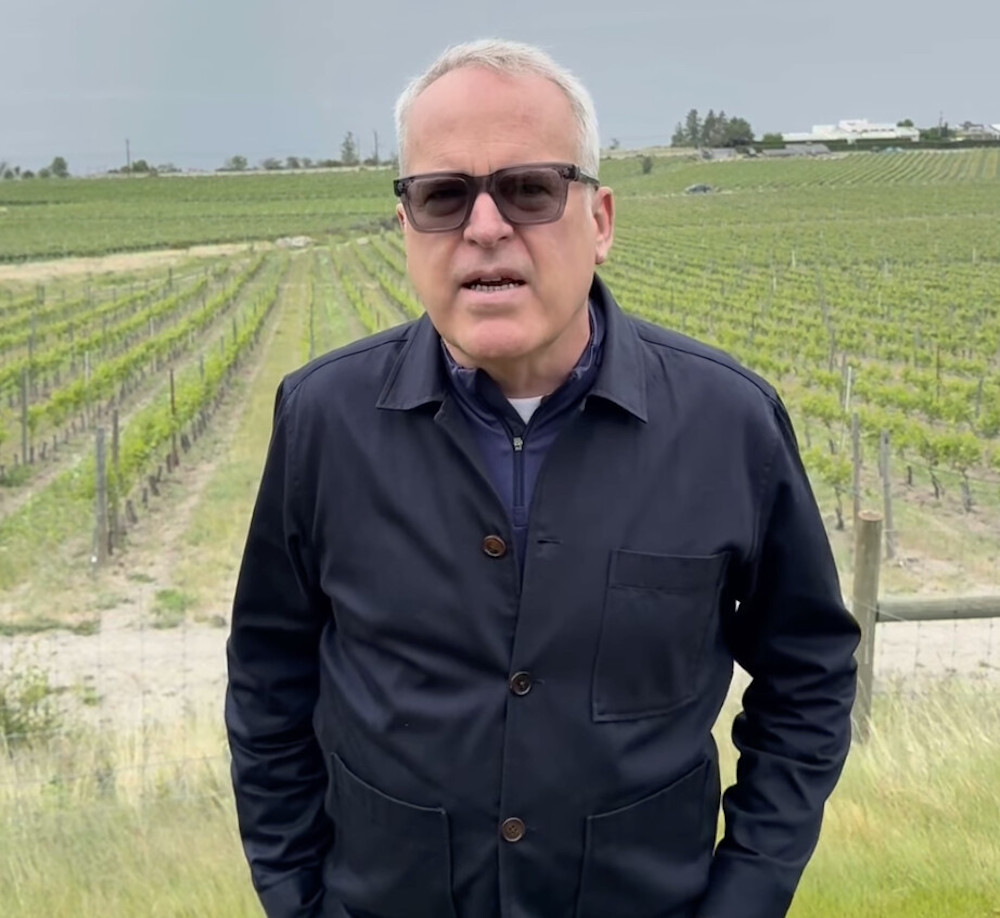
In case you weren’t aware, Suckling is considered the reigning, most important, or certainly most influential, wine critic in the world. If your wine earns one his coveted high scores and slap his badge on your bottle … let the good times roll. He moves wine.
I don’t mind those higher scores because Suckling is consistent — when he loves a wine, he justifies it with higher-than-most critics’ lofty numerical points in the high 90s. He is someone you want to welcome to your wine region — for good or bad.
So why are some just a little wary about his parting video and the report yet to come? He kind of hinted at a flip flop of what many believe traditionally does best in the Okanagan. Here’s what he said before jetting off to his next destination.
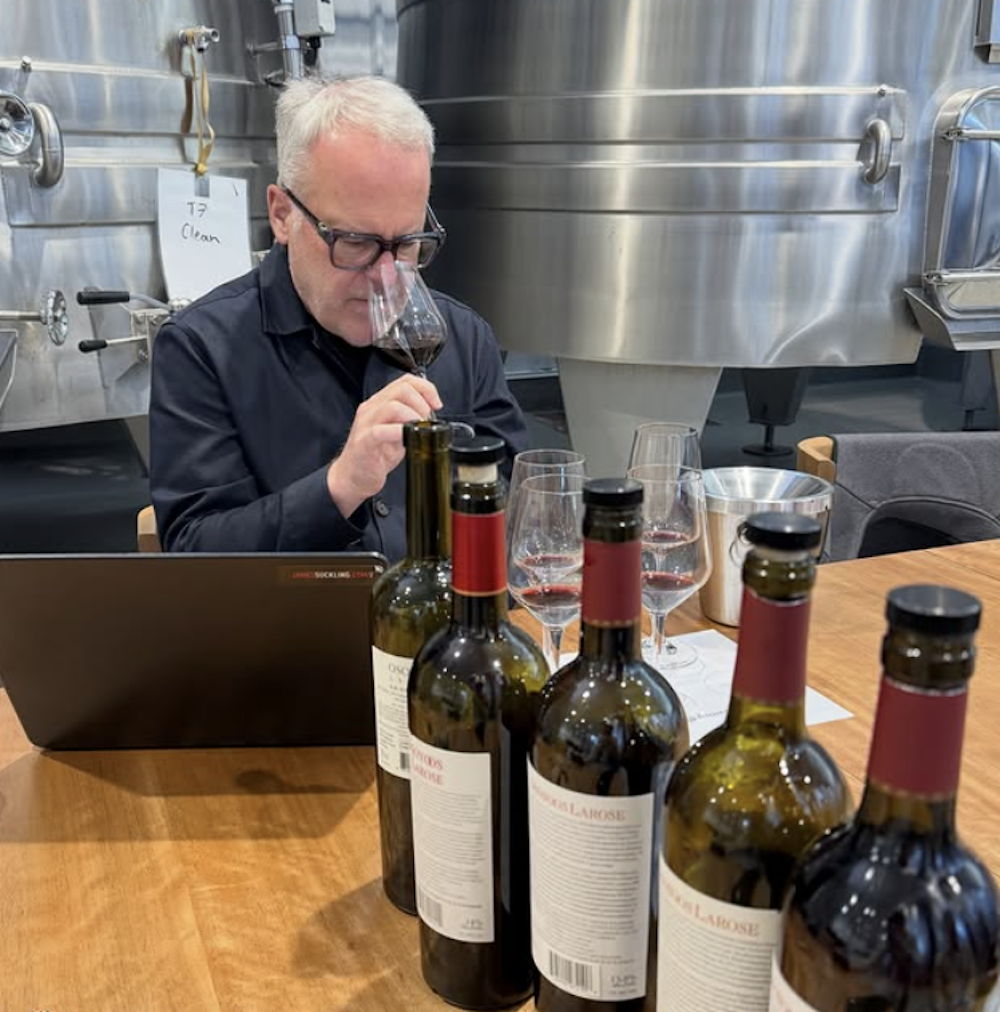
After saying he was impressed with the Okanagan’s “beautiful, balanced wines” for the most part and especially with the Rieslings and Pinot Noirs, he sent a bit of dagger through the heart of the Okanagan Valley that many feel has been and is the signature style — the big red wines.
“I would say the only downside,” Suckling said of his tasting, were “maybe the Bordeaux inspired wines. A little too much extraction or wood … but talk about a beautiful wine region. It’s small, so many friendly, dedicated people, viticulturists and winemakers. Hey, I’m coming back.”

Ouch. I have always loved the Bordeaux red varieties and blends from the Okanagan Valley. It’s what I first fell in love with when I was just starting to taste Canadian wines over 25 years ago. And I loved them for the very reasons Suckling didn’t — highly extracted with the weight to carry more oak and age gracefully. Pinot Noirs and Rieslings were not exactly on most Okanagan wine lovers’ radar back in those days, but I realize that a few more wineries are now crafting top-notch examples and making them their priority — but they are still in the minority. It’s not easy crafting delicate, nuanced Pinots and Rieslings in the heat of the valley.
Suckling said the B.C. Rieslings he tasted showed “clear fruit … we were really excited with the Riesling. Wow I can’t think of many places in the world that can make Riesling at the level of great German wines.” High praise, indeed.
Of the Pinot Noirs, he noted: “Some really excellent, clear balanced wines … there’s so many good wines made (here).”
Fans of B.C. wines will have to wait for Suckling’s full report, and I suspect it will have a fair amount of influence and, at the very least, discussion in both the cellars, vineyards and marketing departments of the Okanagan wineries. It is a badge of honour to have a top international critic such as Suckling visit your wine region. There are a lot of regions out there and the man only has so much time to get everywhere.
The last time (that I can find anywhere with Google searches) I see Suckling paying any attention to Ontario wines was way back in 2011. He didn’t even visit Ontario but urged all Canadian wineries to send a range of its top wines to join a tasting at the SAQ in Montreal.
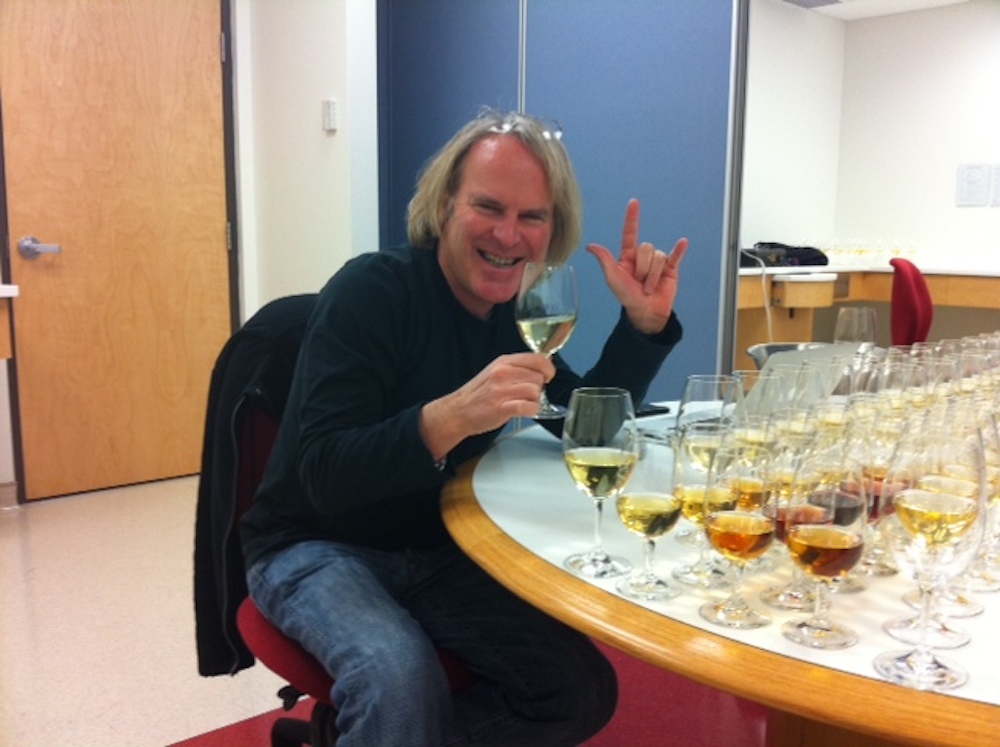
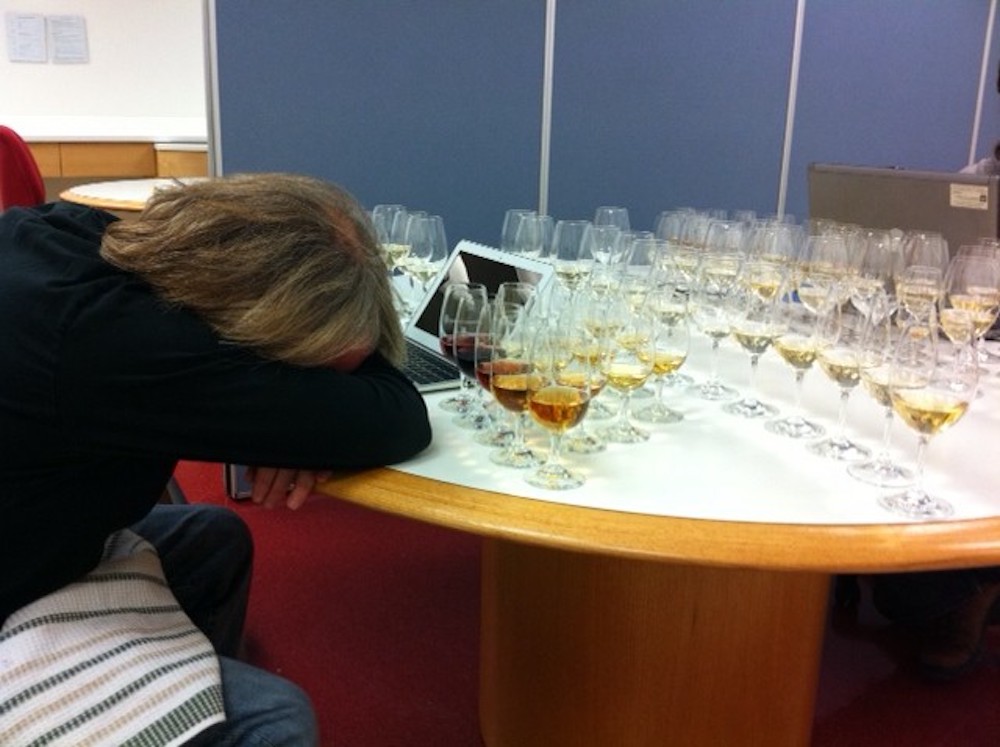
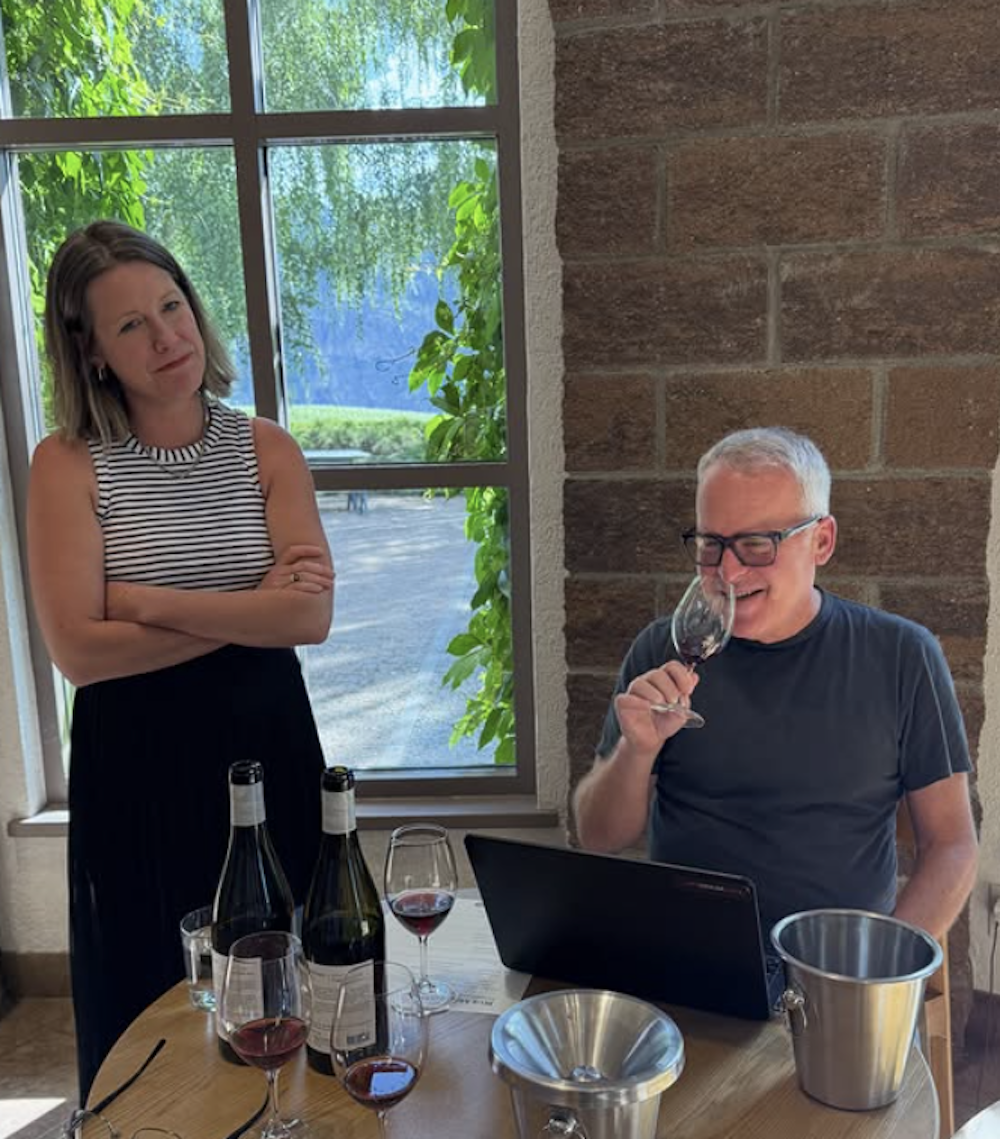
Niagara was a big part of a collection of 84 samples from across the county that were tasted blind. Suckling, above at the tasting before and after, noted that 39 of the 84 wines rated 90 points or more — or outstanding. “Granted, I only scored one wine 95 points; it was a red blend from Okanagan (from Mission Hill)”, he said. “But I found many other interesting wines. I am really psyched about the Rieslings. I tasted a range of Rieslings, which were mostly from Niagara, in different styles like those from Germany, Austria and Alsace. Some reminded me of different appellations from Germany, such as Rheingau and Rheinpfalz.”
His tasting wasn’t all about the love. “The icewines at the end of the tasting almost killed me! I had to put my head down at the end. And just one thought: Does Canada really need to make a sparkling ice wine?” Fortunately, for Niagara, sparkling icewine is doing quite nicely 15 years later.
Now, if I were to advise either of our two wine marketing associations — Wine Country Ontario and Ontario Craft Wineries (and let’s be honest, they change top paid staff so often, that a) no is there long enough to get on top of this stuff; b) they don’t know who the hell I am or that this website even ever existed and haven’t in the last few years shown any interest in independent journalists; and c) I’m putting it out there anyway — I’d tell them to jump at the chance to invite Suckling to Ontario to contrast what the Okanagan Valley does compared to what we have right here in the heart of the nation’s top wine regions.
And you know what? While I have always believed that Niagara’s strengths are with Chardonnay, Cabernet Franc, Riesling and Pinot Noir with Gamay, traditionally made sparkling wines, and some Rhone varieties coming on strong, it’s the big, bold reds that are finally coming out of the shadows. Or should I say, re-emerging from the shadows? And that’s what I would emphasize with Suckling.
While Ontario’s icewines put Canada on the world wine map (you can see how that worked out for Suckling, above) it was the red Bordeaux blends that really caught the eye of consumers of day — Cabernet Sauvignon, Cabernet Franc and Merlot made with judicious use of oak, high extraction, alcohol usually in the 13.5 abv range and built to last. I am still finding enjoyment from wines as far back as the amazing warm vintage of 1998; so beautiful and drinkable(!) even today.
With temperatures rising across the globe, especially in regions such as Bordeaux, California and the Okanagan Valley, Niagara with its influence from Lake Ontario, is experiencing a less profound impact from the killer heat waves that are robbing the big red wines of the world of their finesse, balance and tolerable alcohol levels.
If the 2020 vintage in Ontario, especially in Niagara, is any indication, we are witnessing a re-birth of the golden era for Bordeaux-variety red wines.
The warm, dry 2020 vintage provided ideal conditions for ripening the big three grapes that make up many of the top flagship reds in the region. While Cabernet Franc never seems to disappoint in Niagara, Cabernet Sauvignon doesn’t appreciate cold or wet weather and needs extended hang-time in the vineyard to reach phenolic ripeness. Merlot simply hates cold temperatures in the winter months and seems to die off every 10 years or so, but when its healthy and thriving, it’s a good fit for Niagara. And the warm, welcoming vintages seem to be coming more frequently than not of late.
So, if Suckling does accept an invitation to sit down with winemakers in Niagara for a tasting, here is what I would put in front of him:

Start with a range of great bubbles from top Niagara estates. No politics, no pretentions, just the best. He loves Rieslings, so give him a fair representation of Niagara’s terroir-driven Rieslings and then move to our world-class single-vineyard Chardonnays and Pinot Noirs — and lean heavily on the smaller, boutique projects specializing on just those Burgundian examples from key vineyards.
Then hit him up with a full range of big red wines from all corners of Niagara and leaning heavily, but not exclusively on the 2020 vintage. Niagara is aligned closely with top Bordeaux classified reds, and some with the price-tags to match. Suckling covets his Bordeaux reds and looks for elegance, finesse and balance in his red blends. Here’s a list I think he’d love to see poured for him in Niagara. It includes some iconic reds from older estate’s, made in only the best red vintages, as well as new wineries showing promise right out of the gate.
Here’s a Suckling inspired list of some of our top Bordeaux reds from Niagara that we should pour when someone finally asks the critic to visit our region (in no particular order with original scores):

Stone Eagle Special Selection 2020 ($195, 96 points) — The Stone Eagle name was originally derived from the two Italian stone eagle carvings that stand proud at the entrance of the Two Sisters winery and now the single eagle that welcomes guests at the new winery. “This is the wine Benny (Marotta, winery owner) challenged me to make … but it’s Niagara,” winemaker Adam Pearce told me when I first tasted it years ago before it was ready to review. Marotta likes his reds big and bold (a hint might be found in the name … the “special selection” used by Napa’s Caymus Vineyards), and Pearce has done that while keeping the integrity of its Niagara roots (which shows in the finesse of his bigger red wines). It’s hard to imagine a better Bordeaux style Niagara wine made from the 2020 vintage, and there were many, but when first published, this was my highest scoring one to date. It bests the 2013 Special Selection I rated 95 points and named the Most Thrilling Red Wine in 2018 by Wines in Niagara. It’s a blend of 46% Merlot, 45% Cabernet Sauvignon and 9% Cabernet Franc.
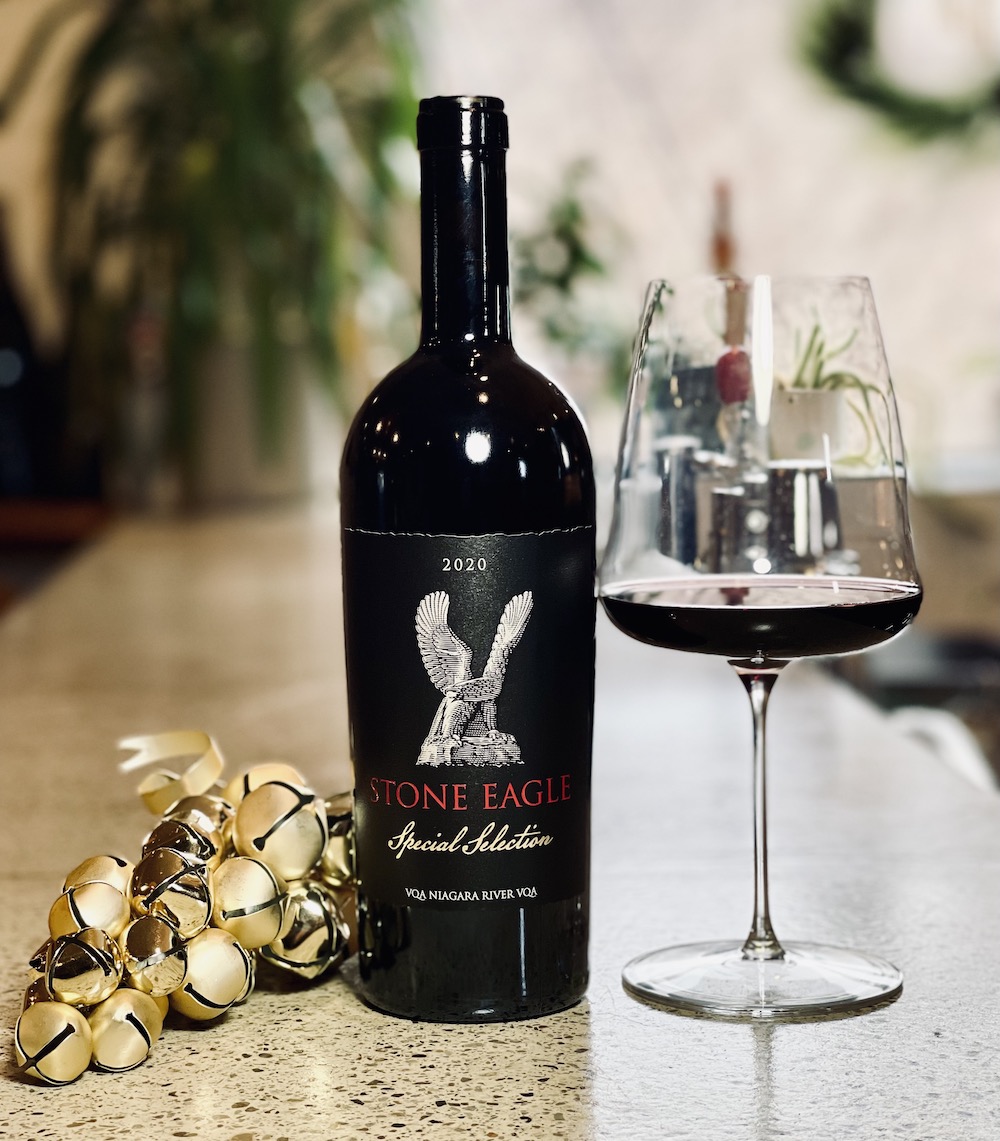
The Special Selection is only made in what Pearce feels are the best vintages. The grape varieties were aged individually for three years in French oak barrels, then carefully blended to reflect the vintage. A bit of American oak is used in the Merlot portion of the wine, and a small amount of appassimento (dried grapes) were also incorporated into the blend. It’s deeply coloured in the glass with a powerful, intense nose of macerated black currants, cherry/kirsch, black raspberries, crème de cassis, plums, cocoa, roasted espresso bean, damp earth, dried cigar leaf, eucalyptus, and an intriguing array of sweet baking spices. It’s highly structured, and built for the ages, but swirl and taste deeply and the melange of super-ripe dark berries emerge on top of the grippy tannins along with kirsch, dark chocolate, toasty vanilla, and savoury herbs, with lavish oak barrel spices all leading to an extremely long, echoing finish with sizzling acidity to keep it lively and integrated for many years to come. This is a wonder, a truly great wine that will age like a great Bordeaux for the next 20 years.

Hidden Bench La Brunante 2020 ($90, 97 points) — This signature red blend from Hidden Bench is only produced in years when the estate believes that optimal vintage conditions have resulted in exceptional grapes. It’s a blend of 50% Merlot, 33% Malbec, and 17% Cabernet Franc with barrel aging in a combination of new and used French oak for 20 months and bottled unfiltered and unfined. After tasting this with proprietor Harald Thiel and winemaker Alex Baines a word comes to mind: blockbuster. It is that and more. It’s not so much that this is a “big bruiser” typical of say, Napa Valley, rather, it shows far more elegance and finesse than that, along with perfectly ripened cassis, plums, blackberries, black cherries, sun-drenched black raspberries, graphite, leather, mocha and generously sprinkled with toasty vanilla bean and baking spices. The fine-grained tannins on the palate are evident in spades, but not over-powering, allowing the concentrated red and black berries to share the spotlight with tertiary notes of anise, pencil shavings, smoky cedar, leather and toasted spices. All of that and an exceptionally long finish, bolstered by mouth-watering acidity, that seems to last for minutes and longer. This is a unicorn wine that we will be still talking about 20 years from now. As I said, a blockbuster that will live happily in your cellar until 2040 and beyond. If you just can’t wait, decant overnight and serve with a big, juicy, rare hunk of beef, and save a bottle or two for down the road.

Stratus White Label Red 2020 ($145, 97 points) — Sourced from specific blocks within blocks in the 55-acre Stratus Vineyard comes this ethereal new top of the table red blend that has been 20 years in the making from a vintage that has no equal in Niagara. “It’s beautiful to have a vineyard like this to make wines like these,” said co-winemaker J-L Groux (above) as we tasted this wine at the estate, referring to the new White Label wines. The blend is 40% Cabernet Sauvignon, 27% Cabernet Franc, 13% Merlot, 13% Malbec, and 7% Petit Verdot that spends 676 days in French oak (26% new).

Not wanting to bury the lede here, I will just say this off the top, this is one of the finest red wines I have ever tasted from Niagara and hence tied for the highest scoring wines I have awarded. It’s a Left Bank leaning blend, but really sits somewhere between the Medoc and Napa Valley, combining the power of Napa and the grace of Bordeaux, and capitalizing on Niagara’s most inspiring red vintage since the modern-day wine industry began in the region. Comparisons to other regions seem lame, but this is a wine priced to draw those comparisons, and consumers will. In reality, it’s a 100% Niagara tour de force that has been decades in the making. From the first impression of dreamy, perfumed notes, you are drawn into this wine on the nose and beyond. It’s richly fruited with black currants, dark cherries, blackberries, and plums followed by foraged truffles, forest floor, savoury dried herbs, earthy notes, leather, graphite, and enticing spices notes that are elegant and persistent. It opens on the palate to firm, chewy tannins in support of a rich, luxuriously textured array of dense dark berries, damson plums, cherry/kirsch, dried tobacco, herbs, underlying earthy/savoury notes and gorgeous toasty, vanilla-tinged, elegant spices all leading to an echoing, velvety smooth and finessed finish that seems to last for minutes. This blockbuster, highly structured red is the epitome of grace and power and has what Groux calls a drinking window that can improve for three decades. He could be right, but I would safely suggest 15+ years, based on some of the greatest older Niagara reds I have tasted in the past.

Southbrook Poetica 2022 ($70, 94 points) — The blend for the flagship red at Southbrook is 79% Cabernet Sauvignon, 15% Merlot and 6% Cabernet Franc. It spends 18 months in French oak, with 25% new barrels. “We are trying to make a very ageable Bordeaux style red wine,” winemaker Casey Hogan said. To make the Poetica, the winemaking team carefully chooses the best grapes from the estate’s biodynamic and organic vineyards, and then picks from the best barrels. Such an intriguing nose of ripe cassis, blackberries, cherry/kirsch, charred cedar, violets, a touch of earth and generous sweet spice notes. It’s already nicely integrated on the palate with firm structure and ripe tannins married to ripe dark and red berries, subtle licorice, earthy/savoury notes, elegant spices and remarkably balanced for a wine that will improve for 15 years or more. The vibrant, lifted finish lasts for minutes. One of Niagara’s top red blends that will continue to integrate and get better through 2040 and maybe beyond. The flagship red from Southbrook is always one of the top Bordeaux blends in Niagara, and winemaker Hogan is doing a great job living up to its lofty reputation.

Bella Terra Meritage Unfiltered 2020 ($49, available in myriad bottle sizes all the way up to 6-litres, current vintage, retasted, 94 points, and tasted beside the 2017 vintage) — The blend for this special meritage is 40% Cabernet Franc, 25% Cabernet Sauvignon, 25% Merlot and 10% Malbec sourced from the best barrels made at the estate. It’s magical on the nose with such an elegant array of sweet oak spices, black cherries, warm blueberry pie, black currants, mulberries, lifted perfume notes, and beautifully integrated spices. It all comes perfectly together on the palate in a melange of blackberries, blueberries, black currants, macerated cherries, wild summer raspberries, brambly, subtle earthy/forest floor notes, lovely spice, polished, yet still assertive, tannins, and a smooth, long finish with finesse. Tuck some away in the cellar in forget about them for a decade, maybe more.
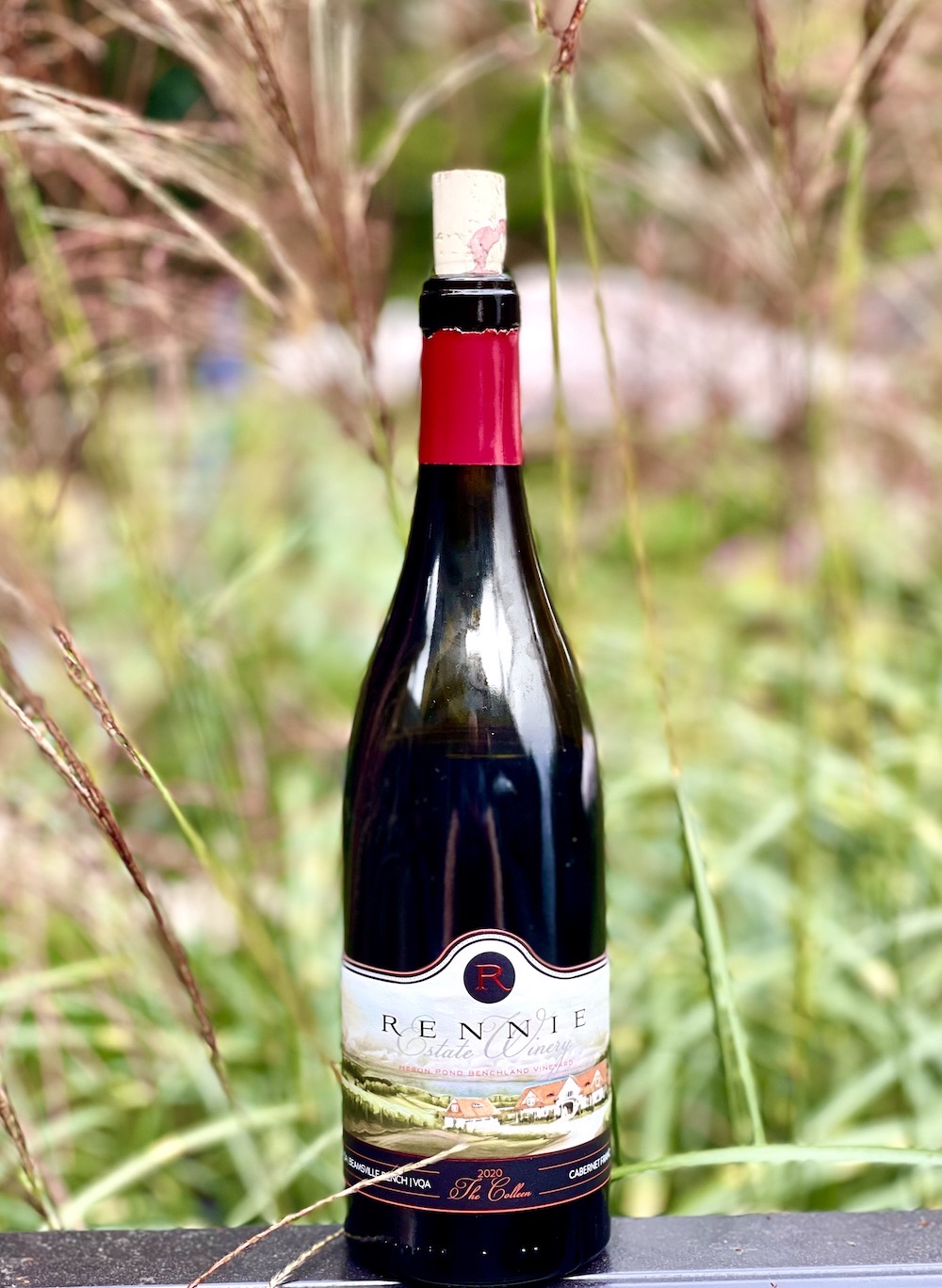
Rennie Estate Winery The Colleen Cabernet Franc 2020 ($125, 95 points) — In the Graham Rennie world of his appassimento wines, the Super G, made from 100% Cabernet Sauvignon from vines located on a select, west-facing shelf at the estate’s Heron Pond Vineyard, is his flagship wine for this style. The Colleen, which debuted with the 2016 vintage, now shares the spotlight (in my opinion), expressing itself from a Cabernet Franc point of view. Both are fabulous, benchmark wines made from grapes that spend 82 days on drying racks and 29 months in French oak barrels. The grapes are picked at 25.5 brix and come out of the drying chamber at 29.2 brix with a maximum abv of 17.5%. So, yes, these are big wines for those with big appetites and shining examples of the Amarone style. The wine is named after Colleen Rennie, the daughter of Graham and Christine. I tasted this wine with Rennie at The Crush and retasted it a day later at home. It is a marvel on the nose with incredibly rich, powerful notes of blueberry compote, cassis jam, raspberry/cherry tart, campfire and tar notes, sweet herbs and perfumed spice box. On the palate, it’s highly concentrated, layered and structured with ample tannins followed by a rich mix of compoted dark berries, jammy/ripe red berries, espresso bean, dark chocolate, touches of herbs and eucalypt, fine oak spices and a long, luxurious finish that lasts for minutes. This extraordinary wine should improve for a decade, and maybe even fit nicely in the cellar to 2039.
Note: Now, I know this is a risky wine to show Suckling because of the high abv and concentration, but appassimento is part of what Niagara is doing to attract big red wine lovers. These wines have their place in a wine region as versatile as Niagara. Rennie has unabashedly been turning out these beefy appassimento wines made from grapes grown at his stunning Beamsville Bench vineyard since he started his Rennie Vineyard project, and he has established a dedicated following.

Henry of Pelham Speck Family Cabernet-Merlot Reserve 2020 ($48, 94 points) — In many ways, the 2020 version echoes the 2007 vintage, which were both near perfect, warm vintages in Niagara. The wine was aged in French and American oak barrels, 40% new, for 18 months. What a beautiful, full-bodied red from the 2020 vintage. It has an inviting, expressive nose of black raspberries, dark cherries, ripe plums, cocoa, cassis, and cedary/perfume notes with rich spice box accents. It’s dense and juicy on the palate with a firm tannic backbone that displays an array of mature red berries, blackberry preserves, anise, smoky cedar plank, mulled herbs and toasty spices that are all carried through the long, finessed finish. This is still evolving and cellaring is recommended. It will keep improving through 2039, if the 2007 is any indication. Buy, hold and be blown away! Henry of Pelham has a proven track record for making top Cabernet blended big red wines and they have a history of aging from decades in the cellar. They should not be overlooked.
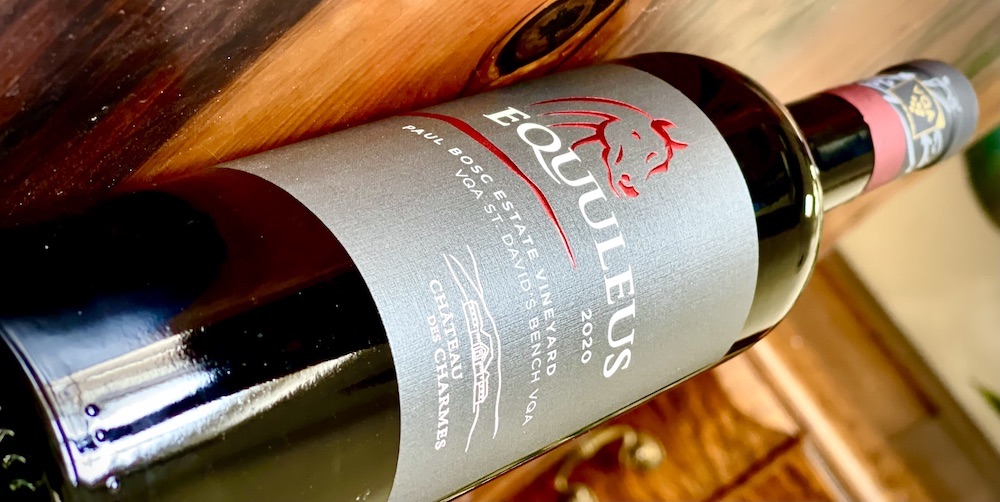
Chateau des Charmes Equuleus 2020 ($60, 95 points) — The Paul Bosc Vineyard is located on York Road (across the street from the chateau, and now owned by previous owner of CdC, Paul Bosc Jr.). It was planted in 1983 and 1984 with the first harvest in 1988. It consists of 44 acres planted to Chardonnay, Cabernet Franc, Cabernet Sauvignon, Merlot, Pinot Noir, Riesling, and Sauvignon Blanc. The soil is a combination of Smithville clay loam and small pockets of Haldimand clay loam. The blend for the Equuleus is 50% Cabernet Sauvignon, 25% Cabernet Franc and 25% Merlot. The three grape varieties must have achieved at least 23.5º Brix at harvest and is aged for 16 months in 1/3 new French oak, 2/3 in used French oak then the blend rests in French oak casks for several months. I recommend decanting for at least a few hours if opening soon. Seldom does a Cabernet Sauvignon-based red blend show such a fruit-laden nose as this does. It explodes with ripe blackberries, crème de cassis, cherry-kirsch and dark chocolate that is juicy and forward with subtle earthy notes and oak spices that offer a warm embrace. It is generous, complex, and layered on the palate with a bold profile of saturated dark berries, licorice, dark cherry extract, a hint of eucalypt, rich baking spices, mocha, toasted vanilla bean, caressing tannic structure a long, long finish lifted by electric acidity. This is one beautiful wine that comes with a caveat … to realize its full potential, give it the time it deserves in your cellar. Try a minimum of two years but you will be richly rewarded with 10-15 years of cellaring.

Fielding Estate Chosen Few 2020 ($110, 95 points) — The flagship red from Fielding is only made in what winemaker Richie Roberts feels are the best vintages, of which the 2020 is certainly one of them. The blend of Cabernet Franc (34%), Merlot (26%), Cabernet Sauvignon (26%), and Syrah (14%) is aged for 20 months in French oak barrels, one-third new with the rest older barrels, and another 18 months in bottle, and a sneaky Roberts delayed it further while “waiting on the labels.” Only 150 cases were made. Blockbuster comes to mind, as it did when I reviewed the last Chosen Few from the 2016 vintage. Such an enchanting nose of ripe Morello cherries and compoted wild black raspberries before the dark berries join the party with cassis and black currants and then the earthy, subtle herbaceous notes, toasty vanilla and spice kick in. It’s massive on the palate, a big, highly concentrated wine with ripe red and dark berries that come at you in layer after layer, all wrapped up in grippy tannic power, toasted spice notes, a touch of pepper, savouriness and a finish that goes on and on with enough mouth-watering acidity to give it lift and finesse to the last drop. Resist drinking it right now, or at least save a bottle for a special occasion a decade down the road. Can cellar to 2040 (maybe more).
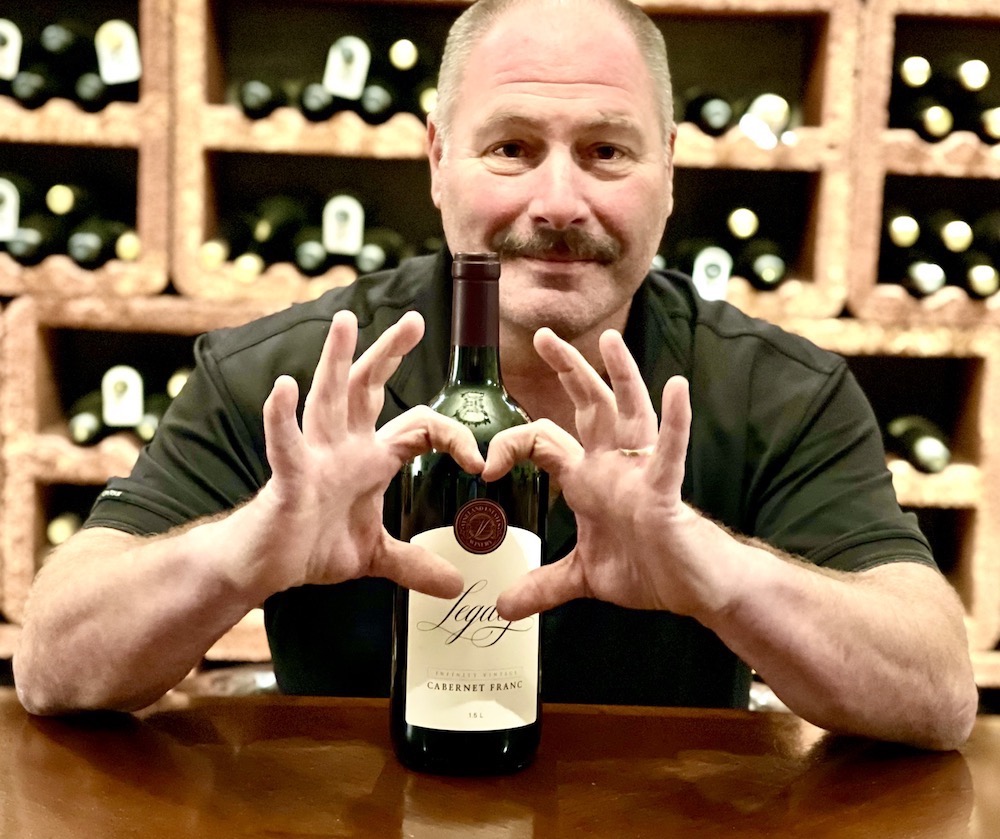
Vineland Estates Legacy Cabernet Franc Infinity Vintage ($300 for magnums only, 95 points) — If there has been a more unique or exciting wine made in Niagara, I do not know what it is. Winemaker Brian Schmidt (above) set out 10 years ago to answer one big question that nagged at him: “Ultimately, I wanted to say what does the Bo-Teek Vineyard taste like?” Bo-Teek is one of two main estate vineyards Vineland sources its key grapes from, and Schmidt began the quest of “seeking the truth to tell our story honestly so we don’t have to make it up.”
He identified a tiny block (less than an acre) with a rare (for Bench wineries) south-facing slope and planted his beloved Cabernet Franc grapes (Clone 214) in 2010 with a vision for create an “infinity vintage” red wine. The first grapes were harvested in 2012, which were pressed, vinified and put into a neutral oak barrel. This was repeated with all vintages up to 2020, aside from 2016 due to heat stress, until a reserve of 2,750 litres of wine was aging in 600 L barrels. Schmidt and his team bottled the first magnums after the 2020 grapes were added to the 10-year project with a total of 639 magnums for sale. Only enough of the multiple vintage wine is drawn off to leave behind precisely 1,800 litres (three 600 litre demi-muid barrels) for future blending with subsequent vintages. Schmidt calls the Legacy “a true expression of place. Vintage itself confuses the issue, vintage frames the discussion.”

He says the wine provides a consistent thread regardless of vintage. “I never dreamed I’d be bottling a wine like this.” The personality of the vineyard, the terroir, if you will, says Schmidt (above), is beginning to emerge. Tasting this magnificent bottle, Schmidt revels in the elegance of the wine, the blueberry pie notes, the fresh spring flowers, silky tannins (“no rough edges”), anise and fennel. I would describe it as a delicate and attractive Cabernet Franc on the nose with black raspberries, anise, cassis, some wild blueberry notes, floral accents, toasted, unobtrusive oak spice and nuanced. It’s beautifully balanced on the palate with profound cassis and anise, ripe red berries, depth and complexity with silky tannins, subtle savoury notes and fennel with a long, polished and lifted finished that promises a bright future in the cellar. I love everything about this wine, the innovation, the dogged dedication to a vision, the result and the fact that Schmidt insisted that a third of the cost of this wine is going to charity.
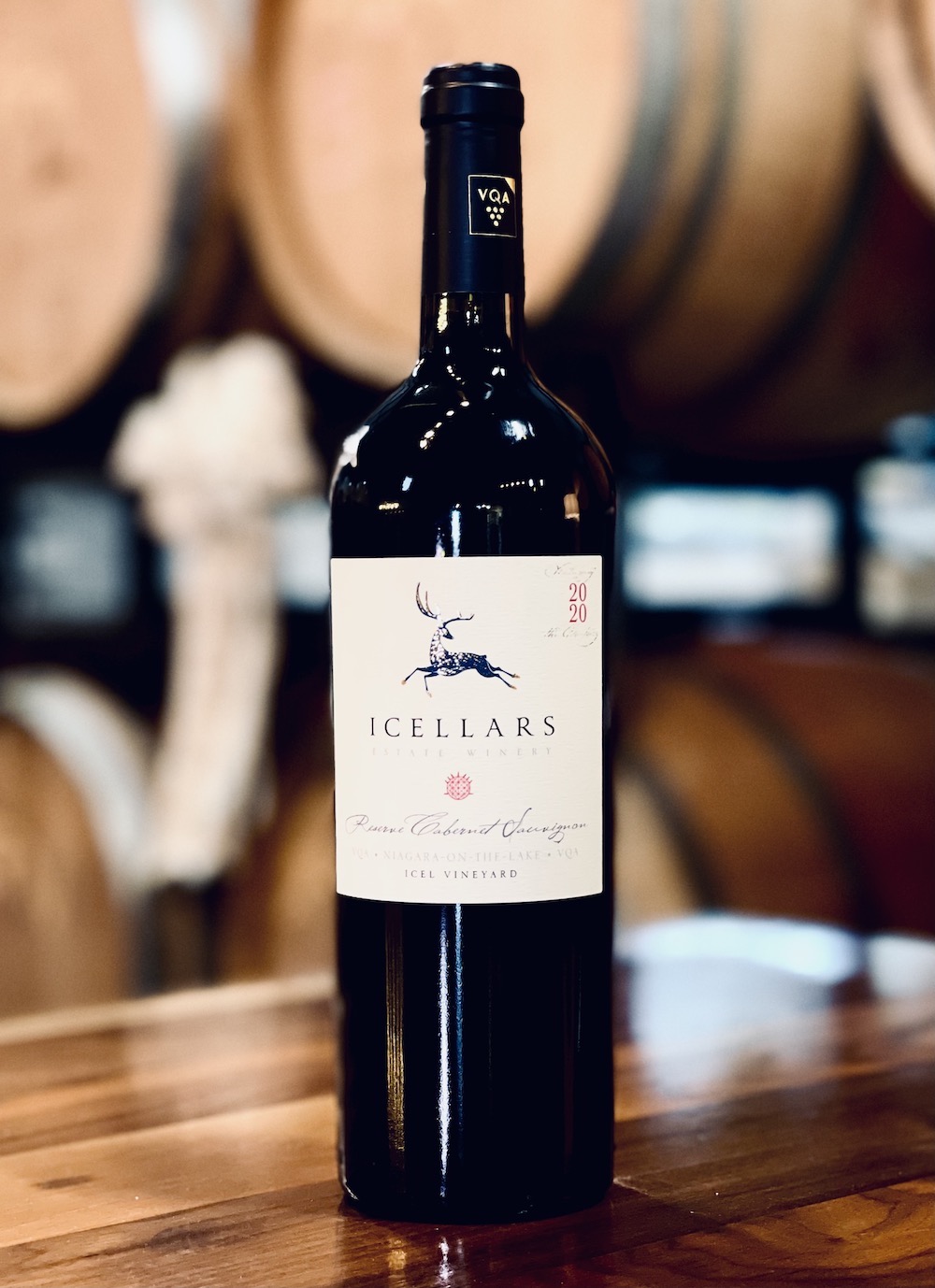
Icellars Cabernet Sauvignon Reserve 2020 ($106, 95 points) — Only made in “exceptional” vintages, the estate’s Reserve Cabernet Sauvignon grapes were sourced from the oldest vines and aged for 24 months in 100% French oak. 2020 was one of the warmest and near perfect vintages in Niagara’s history and late-ripening grapes such as Cabernet Sauvignon benefitted most from the heat even though yields were tiny. It has a stunningly beautiful nose of lifted oak perfume, concentrated cassis and kirsch notes in tandem with dense blackberries, dried tobacco, wild Muskoka blueberries, saddle leather, underlying herbaceous and forest floor accents and fine, toasty-vanilla tinged spice notes. It’s highly structured on the palate with grippy tannins that still need time to melt into the heady range of dense dark berries, thick dark cherries, cedar plank notes, toasty vanilla and all spice all culminating in a super long, echoing and lifted finish. Another thriller of a Cabernet Sauvignon from a region not noted for big cabs. Maybe that is changing? Can cellar through 2040.
Two on the watch list …
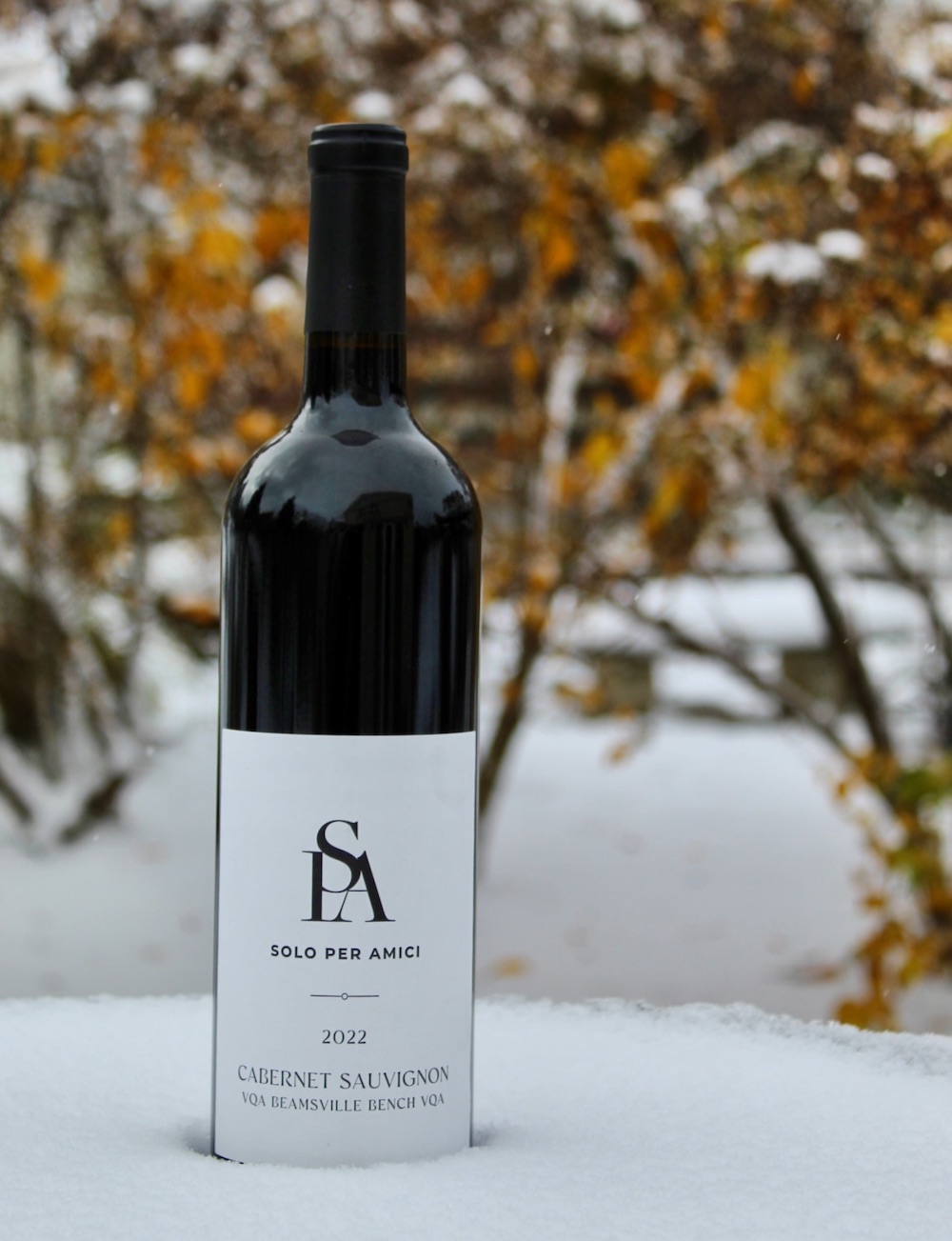
Solo Per Amici Cabernet Sauvignon 2022 ($85, 95 points) — Let’s be perfectly honest here, Cabernet Sauvignon grown in Niagara, generally speaking, is hard to ripen in anything but the warmest of vintages. What winemaker Kevin Panagapka has achieved here with this blockbuster wine is a perfectly ripe, concentrated and complex Cab Sauv that will stand the test of time and challenge any pre-conceived notions that it can’t be done in Niagara at the highest levels. Our sample was decanted for a minimum of three hours. The nose is densely fruited with ripe cassis, blackberries, leather, cocoa, graphite, dried Cuban tobacco, roasted espresso bean, a hint of black cherries, almost kirsch-like, with such beautifully elegant barrel spice notes. The fruits on the complex, textured and supple palate are deep, rich and layered with crème de cassis, ripe, plump blackberries, saddle leather, dark chocolate, boozy black cherries, vanilla-tinged spice notes, and subtle eucalyptus accents on a sturdy frame with ripe, fine-grained tannins and a such a long, echoing and lifted finish that shows both power and finesse. So much to love about this big, yet approachable, Cabernet Sauvignon that has a long, promising future ahead. I can’t remember tasting a better Cabernet Sauvignon from Ontario ever before. Can cellar through 2040 and maybe beyond, but don’t be afraid to open a bottle now with the right cut of red meat.
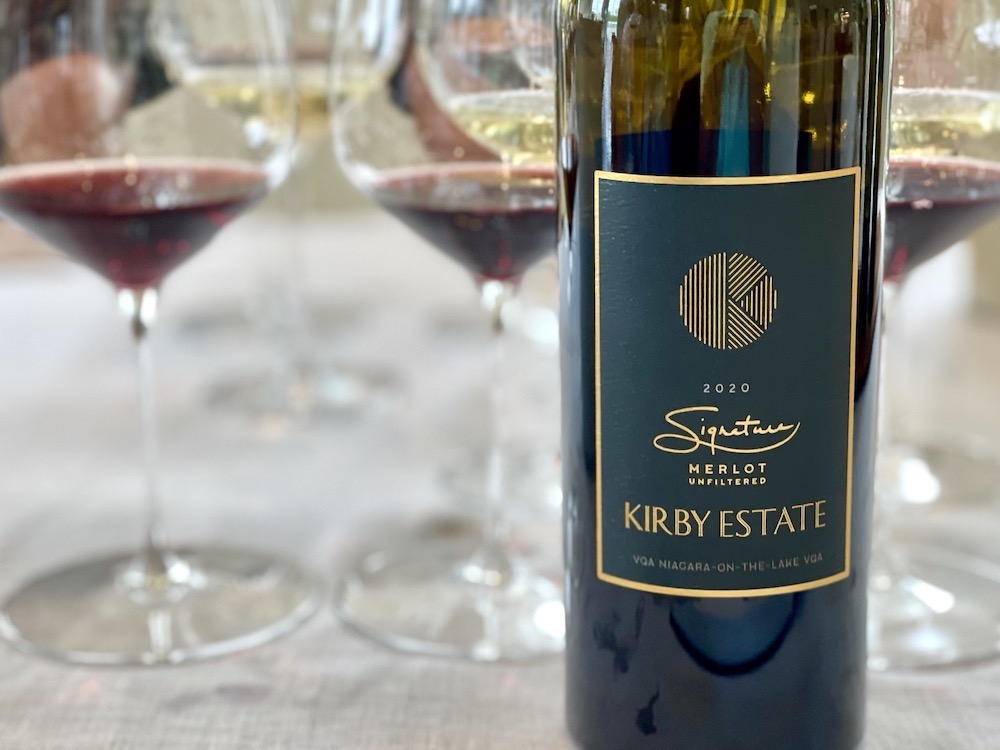
Kirby Estate Merlot Signature 2020 ($108, 95 points) — Simply stated, this “Signature” level Merlot is a blockbuster, maybe the finest 100% Merlot I have tasted from Niagara. It’s made from 16-year-old grapes planted on the property, wild fermented and aged for 20 months in 55% new French oak and the rest in neutral barrels. The wine is bottled unfiltered, and the wine is finished at 15.7% abv (though winemaker Peter Gamble says it’s more like 15% abv), that doesn’t feel like it at all. Such a beguiling and perfumed nose of meaty, ripe, and seductive red berries, plum pudding, figs, sweet tobacco, cloves, elegant oak spices, and sandalwood nuances. It is mouth-filling, rich, and layered with a silky texture, ripe tannins supporting a complex array of ripe/brambly red berries, anise, plums, truffles, subtle pepper, and lovely spice notes that are integrated and elegant. It’s surprisingly balanced through an incredibly long and finessed finish with little indication of the stated abv. What a beautiful Merlot that takes its inspiration from the top wines of Pomerol. To quote a certain ex-president: “And that’s no joke!” This can easily cellar for 10 or more years.
Comment here